Copyright © PeerMetals 2026
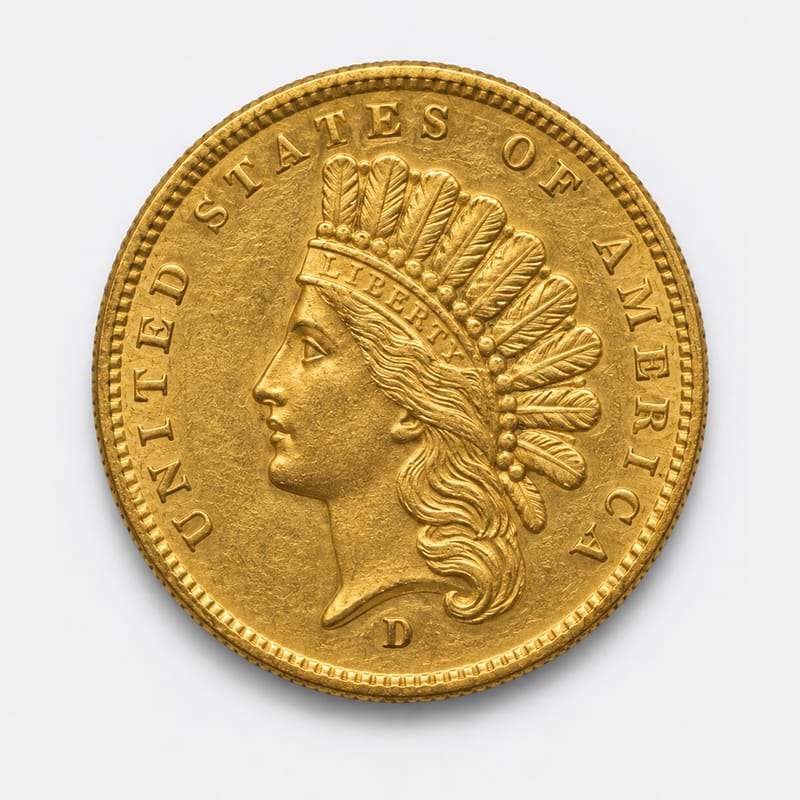
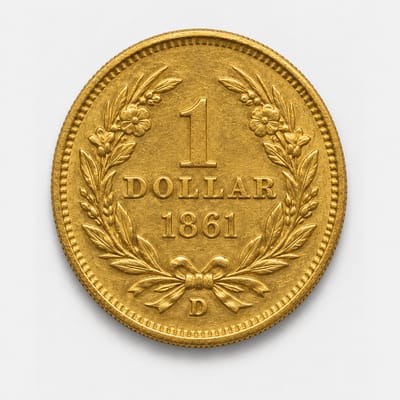
1861-D gold dollar value guide -- the only U.S. coin struck exclusively by the Confederacy.
Condition drives the price — full breakdown below.
1,250 struck — against the other key dates in the Gold Dollar series.
Bars are scaled to keep the smallest mintages visible; the exact figure is printed on every row. Mintage is coins struck, not coins surviving — melting and circulation wear thin those numbers further.
The only U.S. coin struck exclusively by the Confederacy: Georgia seceded and Confederate troops occupied the Dahlonega Mint in April 1861, and the roughly 1,250 gold dollars struck there that May used remaining Union bullion and a reused, worn obverse die from 1860.
Cross-referenced by Stack's Bowers Coin Resource Center, which notes production quality was poor -- weak strikes on the lower obverse are typical, a direct physical trace of the coin's chaotic origin.
Other dates and varieties in this series
What to check before you pay, specific to this date and its 1,250-coin mintage.
The same date runs from about $42,956 worn to $187,931 at the top of the scale — a 4× spread. Nearly all of that gap is condition, not the date on the coin, so work out where an example sits on the table above before deciding whether its asking price is fair.
Every figure on this page depends on that D. The same year from another mint is a far more common coin, which is exactly why added and altered mint marks are the usual way this date gets faked. Ask for a close-up of the mark itself — a listing title claiming it is not evidence.
A PCGS or NGC holder settles authenticity and grade in one go, which is most of what you're actually paying for at this level. The premium it adds is small next to the cost of being wrong about either.
Every Gold Dollar listed here is priced by an individual seller, so the same coin in the same grade can differ by a wide margin on any given day. Sort by price, check Metal Points and order history for a sense of the seller's record, and message them if the photos don't show enough to grade confidently.
About the 1861-D Type 3 Gold Dollar
Value depends heavily on condition. A well-worn example brings closer to —, while an uncirculated one can reach $187,931 or more.
The only U.S. coin struck exclusively by the Confederacy: Georgia seceded and Confederate troops occupied the Dahlonega Mint in April 1861, and the roughly 1,250 gold dollars struck there that May used remaining Union bullion and a reused, worn obverse die from 1860.
For anything you believe is a key date or an error, professional grading protects both buyer and seller by settling condition and authenticity before money changes hands.
The rest of the series, with what each is worth at the top of the grade scale.
List it free on PeerMetals — flat 2.75% seller fee, zero listing fees, 1–3 day payouts.