Copyright © PeerMetals 2026
Real mintage figures and grade-by-grade price estimates for classic US key dates, sourced from PCGS, NGC, and other numismatic references — not estimates.
What the finest known example of each is worth at the top of the grade scale.
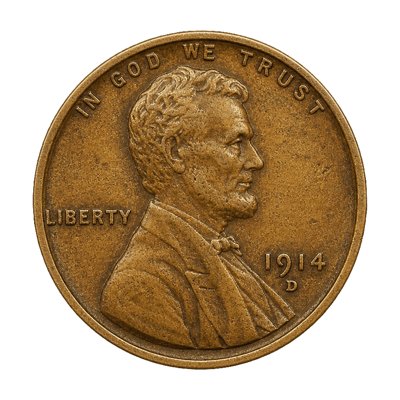
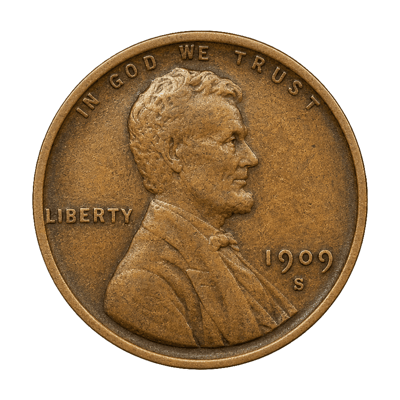
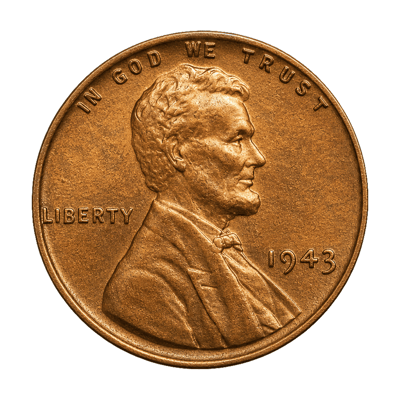
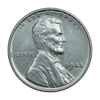
Designed by Victor David Brenner, the Lincoln cent replaced the Indian Head cent in 1909 -- the first US coin to depict a real person. The reverse (two wheat ears flanking ONE CENT) ran until 1958, when it was replaced by the Lincoln Memorial design. Struck at Philadelphia (no mark), Denver (D), and San Francisco (S) across the run, with a one-year wartime switch to zinc-coated steel in 1943.
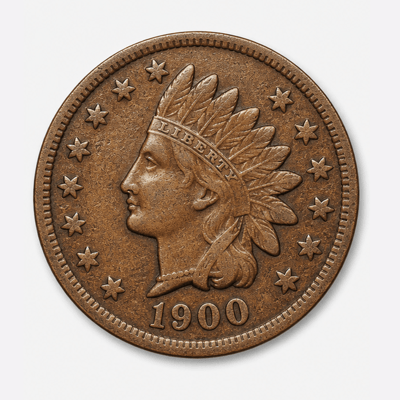
Designed by James B. Longacre, the Indian Head cent replaced the Flying Eagle cent in 1859 and ran for 50 years before the Lincoln cent took over in 1909. Its obverse shows a female Liberty in a Native American-style feathered headdress -- the popular story that Longacre modeled her on his own daughter Sarah is a long-repeated numismatic legend, not independently confirmed, so it's presented here as folklore rather than fact. The coin's composition changed twice: copper-nickel (1859-1864), then bronze for the remainder of the series (1864-1909).
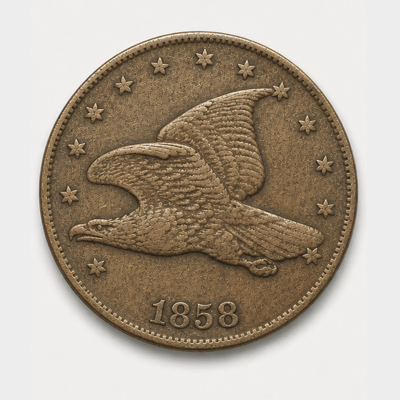
The first small-size US cent, replacing the old large copper cent that had grown too expensive to produce at face value. Struck for only three years, its short run and famous 1856 issue -- technically a pattern coin struck before Congress had even authorized the new size -- make it one of the shortest, most tightly collected series in American numismatics. James B. Longacre's flying eagle design was replaced by his own Indian Head design starting in 1859.
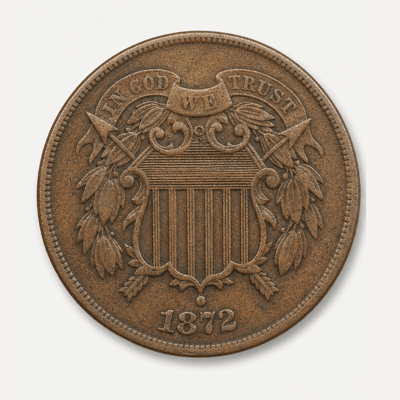
The first US coin to bear the motto "IN GOD WE TRUST," proposed by Mint Director James Pollock and approved in 1864 amid Civil War-era religious sentiment. Struck for only ten years before losing public favor to the nickel five-cent piece and the redesigned Indian Head cent, its final year (1873) was proof-only -- the denomination was retired before any coins were struck for circulation that year.
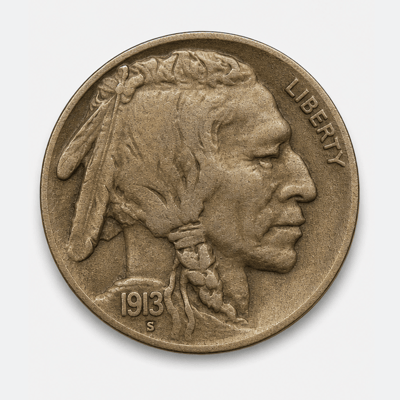
Designed by sculptor James Earle Fraser, the Buffalo Nickel (also called the Indian Head Nickel) paired a composite Native American portrait — Fraser said he combined features from several individual sitters rather than depicting one specific person — with an American bison on the reverse, modeled on a real animal named Black Diamond at the New York Zoological Park. The original 1913 design showed the bison standing on a raised mound, which wore down quickly in circulation and was flattened later that same year — creating two distinct 1913 varieties before the design settled for the rest of the series.
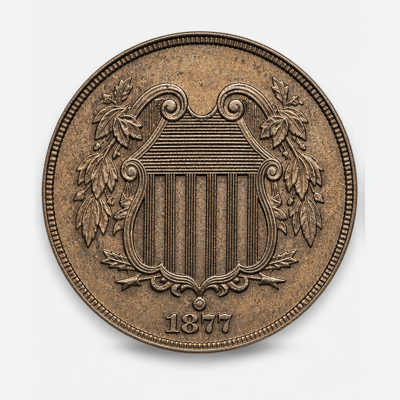
The first US nickel-alloy 5-cent coin, replacing the small silver half dime after the Civil War drove silver coinage out of circulation. Its obverse shows a Civil War-era shield, and its earliest issues (1866 and part of 1867) featured rays between the reverse stars -- quickly dropped after the design caused striking and die-clashing problems. The Liberty Head "V" nickel replaced it in 1883.
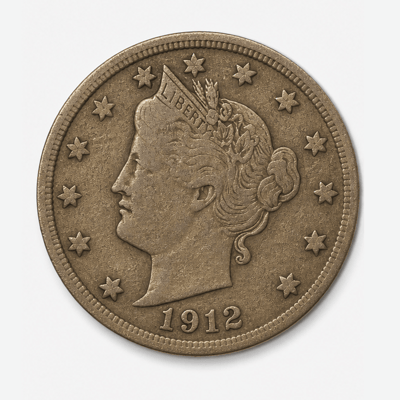
Nicknamed the "V nickel" for the large Roman numeral V on its reverse, this coin's very first design (1883) omitted the word "CENTS" entirely -- a mistake fraudsters exploited by gold-plating the coin and passing it off as a $5 half eagle, the famous "Racketeer Nickel" scheme. The Mint added "CENTS" within the same year to stop it. The series ended in 1912, but five specimens dated 1913 exist despite no Mint record of an authorized 1913 Liberty nickel -- among the most valuable coins in the world.
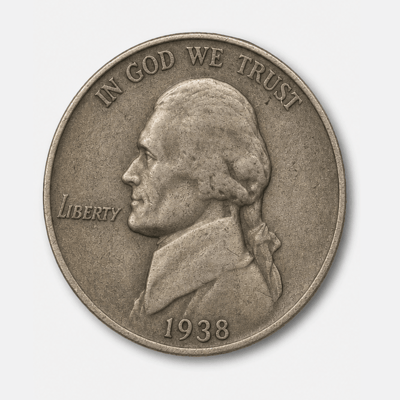
Portraying Thomas Jefferson on the obverse and his home, Monticello, on the reverse, this nickel replaced the Liberty Head design in 1938 and remains in production today. Its most collectible chapter is the wartime years (1942-1945), when the Mint pulled nickel out of the alloy for military use and struck the coin in 35% silver instead -- identifiable by a large mint mark above Monticello's dome, the first time Philadelphia coins ever carried a mint mark at all.
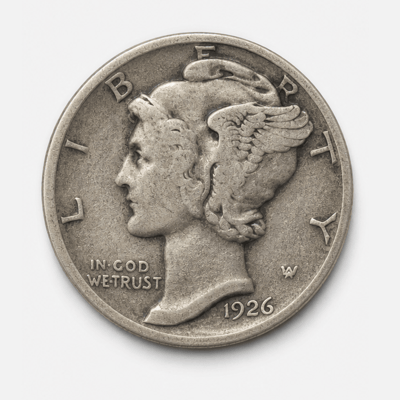
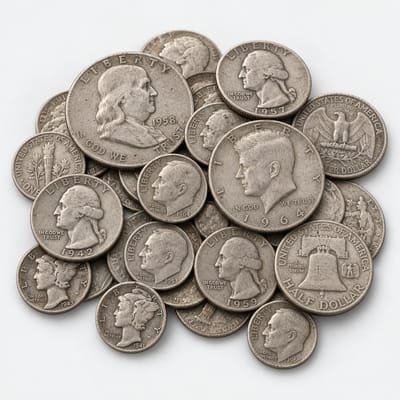
Mercury dimes, designed by Adolph Weinman and struck from 1916 to 1945, are 2.5 grams of 90 percent silver, and each one holds 0.0723 troy ounces of pure silver. At a silver spot price of $65.44 per ounce on 3 September 2026 that is about $4.73 in metal, and most dates from the 1930s and 1940s, struck in the tens of millions, trade close to that number. JM Bullion lists common dates such as 1944 and 1945 at $2.25 in Good, $3 in Fine, $3.25 in Extremely Fine and $4.50 uncirculated, figures that now sit below melt, and on PeerMetals on 3 September 2026 circulated Mercury dimes were listed at $5.15 to $5.83 each. Three dates carry real premiums. The 1916-D, with only 264,000 struck at Denver, lists at $1,000 in Good, $2,600 in Fine, $6,000 in Extremely Fine and $9,000 uncirculated on JM Bullion, and Premier Gold Silver and Coin warns it is the most counterfeited dime in the series. The 1921 lists at $65 in Good and $925 uncirculated, and the 1921-D at $80 in Good and $1,250 uncirculated. The 1942/1 and 1942/1-D overdates, made when a 1941 die was repunched with the 1942 date, are the other varieties worth checking with a loupe. To read the mint mark, look at the reverse near the bottom left of the fasces: no letter means Philadelphia, D means Denver and S means San Francisco. On uncirculated coins, the Full Bands designation, meaning the two horizontal bands across the fasces are fully separated, can multiply the price, especially on the 1945 Philadelphia issue. Before paying key-date money for a 1916-D, have it certified, because an added D on a common 1916 Philadelphia dime is the most common fake in the series.
Designed by Mint Chief Engraver Charles E. Barber, this dime shares its Liberty-head obverse design language with the Barber quarter and half dollar struck the same years. It's a series most collectors chase for one coin above all: the 1894-S, one of the rarest and most valuable American coins ever struck, with only 24 minted and roughly 9 known to survive today.
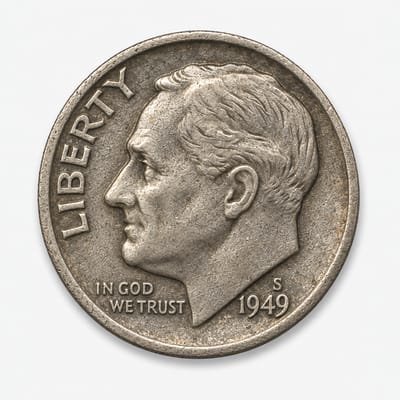
Introduced in 1946 to honor Franklin D. Roosevelt, in part for his founding role in the March of Dimes polio-research charity. Struck in 90% silver through 1964, then switched to copper-nickel clad in 1965 like the quarter and half dollar -- making every pre-1965 Roosevelt dime a genuine silver coin, not just a common find.
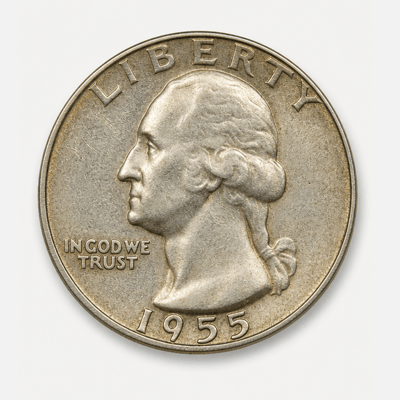
Introduced in 1932 to mark the bicentennial of George Washington's birth, the Washington quarter was meant as a one-year commemorative before becoming a permanent regular-issue design. It was struck in 90% silver through 1964, when rising silver prices forced the Mint to switch to copper-nickel clad -- this guide covers that classic silver era, where the real key dates and doubled-die varieties live.
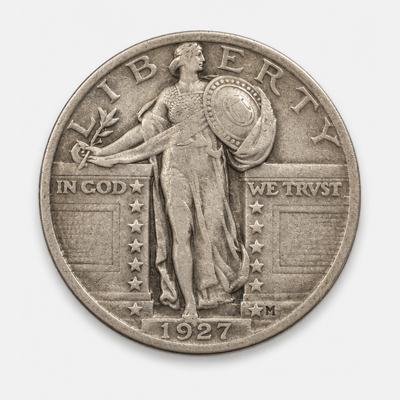
Designed by sculptor Hermon MacNeil, the Standing Liberty quarter shows a full-length Liberty holding a shield and olive branch, stepping through a gateway. Its original 1916/early-1917 design bared Liberty's chest -- a choice that drew public criticism and led the Mint to cover it with chain mail starting later in 1917, splitting the series into a scarcer Type 1 and a more common Type 2. It was replaced by the Washington quarter in 1932.
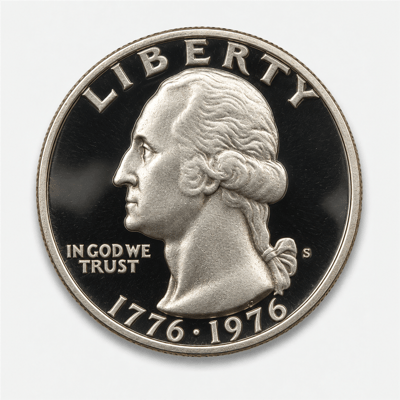
Every Washington quarter struck in 1975 and 1976 carries the dual date "1776-1976" and a colonial drummer boy reverse, minted to mark the 200th anniversary of the Declaration of Independence -- no quarters were dated 1975 at all. Most are common, worth only face or melt value, but San Francisco also struck a 40% silver collector version that carries real numismatic value.
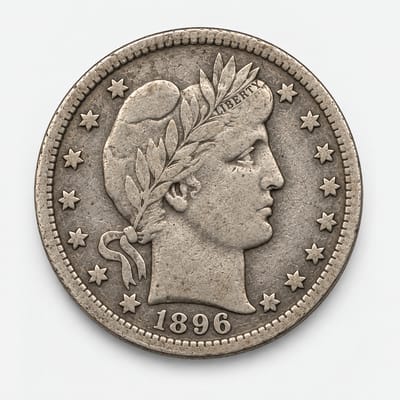
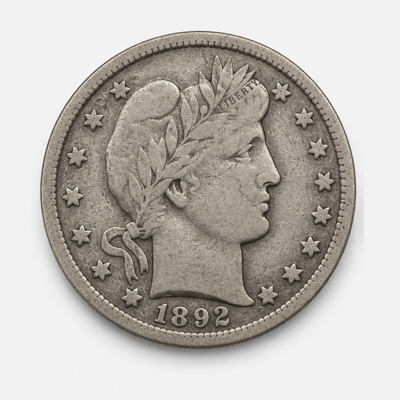
Designed by Chief Engraver Charles E. Barber, this Liberty-head design ran across the dime, quarter, and half dollar from 1892 through the mid-1910s. The quarter shares the dime's Barber portrait but carries a heraldic eagle reverse, and its low-mintage San Francisco issues from the early 1900s are some of the most sought-after dates in the whole 25-cent series.
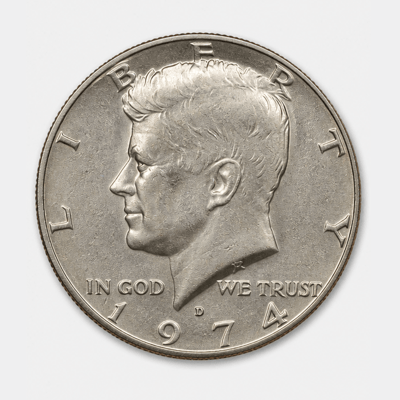
Designed by Gilroy Roberts (obverse) and Frank Gasparro (reverse), the Kennedy half dollar was rushed into production just weeks after President Kennedy's assassination in November 1963, replacing the Franklin half dollar. Composition changed twice: 90% silver in 1964 only, 40% silver from 1965–1970, then copper-nickel clad from 1971 onward. The 1976 Bicentennial issue used a special dual-dated (1776–1976) reverse by Seth G. Huntington instead of the standard design.
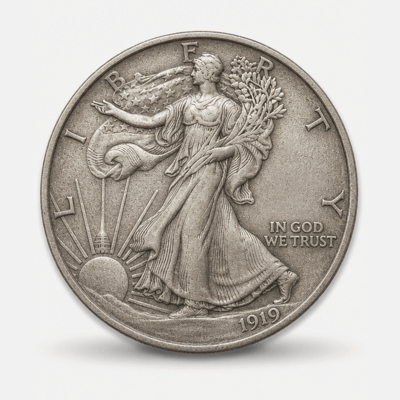
Designed by Adolph A. Weinman, the Walking Liberty half dollar shows Liberty striding toward the sun wrapped in the American flag, with a majestic eagle on the reverse -- widely regarded as one of the most beautiful US coin designs ever produced, and the direct visual inspiration for the modern American Silver Eagle bullion coin. Struck in 90% silver for three decades, its 1921 issues (Philadelphia, Denver, and San Francisco) form one of the most famous key-date trios in American numismatics.
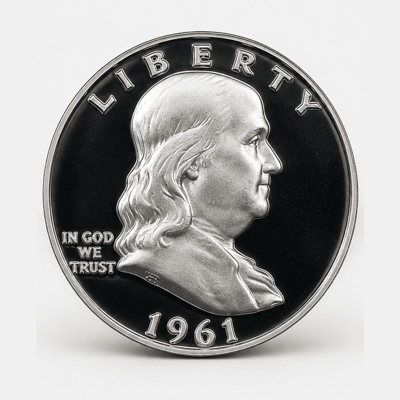
Designed under Mint Director Nellie Tayloe Ross, the Franklin half dollar was the first US coin to honor someone who never served as president -- Benjamin Franklin, chosen for his broad popularity and Founding Father status. Its reverse shows the Liberty Bell, with a small eagle added beside it only because federal law required an eagle on half-dollar-and-larger coinage. It was replaced by the Kennedy half dollar in 1964, struck as a hasty tribute after President Kennedy's assassination.
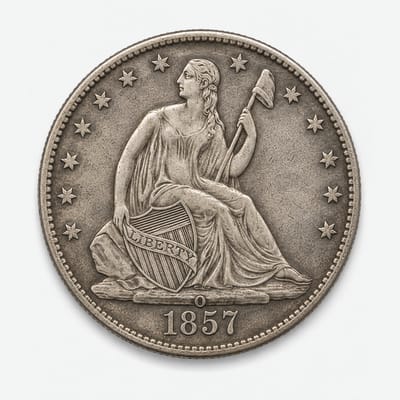
Designed by Christian Gobrecht, the Seated Liberty motif -- Liberty seated on a rock, holding a shield and pole topped with a liberty cap -- ran across the half dime, dime, quarter, half dollar, and dollar for over 50 years. The half dollar variant spans four design sub-types (No Motto, Arrows, Motto Above Eagle, Arrows and Rays) and a 52-year run through the Civil War and Reconstruction.
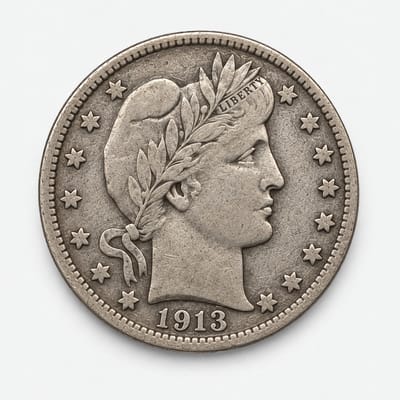
The largest-denomination member of Charles E. Barber's Liberty-head design trio (dime, quarter, half dollar), struck from 1892 through the coin's replacement by the Walking Liberty Half Dollar in 1916. Low mintages across the final years of the series, especially 1913-1915, make several dates in this run genuinely scarce.
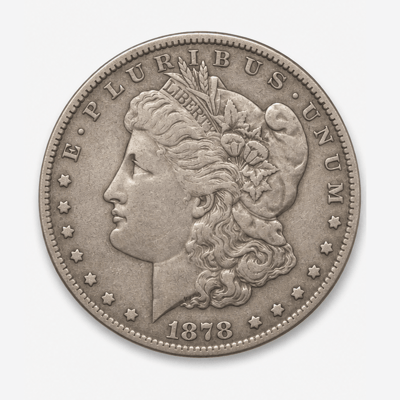
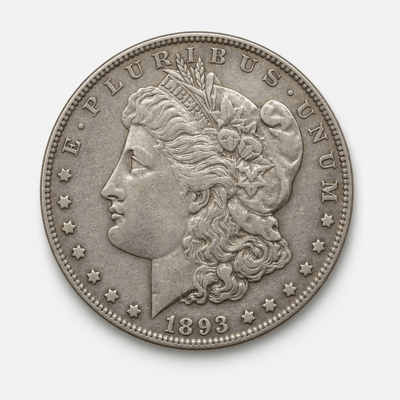
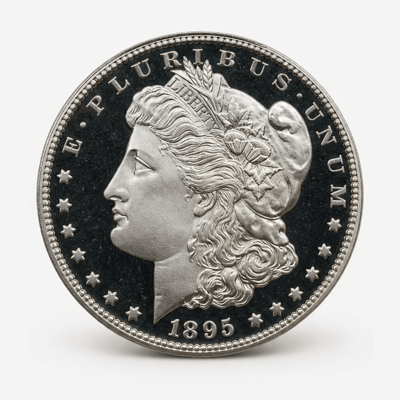
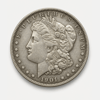
Morgan silver dollars were struck from 1878 to 1904 and again in 1921, and every one contains 26.73 grams of 90 percent silver, or 0.7734 troy ounces of pure silver. At a silver spot price of $65.44 per ounce on 3 September 2026 that is about $50.61 of metal in each coin, and that number is the floor under the whole series. Common dates such as 1880-S, 1881-S, 1885-O and 1896 list at about $34 in G-4, $65 in AU-50, $150 in MS-63 and $500 in MS-65 on PGS Gold and Coin's 2026 chart, while the 1921 Philadelphia coin lists at $92 in circulated grades, $110 in MS-63 and $175 in MS-65 on the PCGS Price Guide. Dealers usually pay a few dollars over melt for worn common dates, so around $55 to $60 is a realistic offer on 3 September 2026. The key dates are a different market. The 1893-S, with the lowest business strike mintage at 100,000, lists at $3,700 in G-4 and $72,000 in MS-63. The 1889-CC lists at $785 in G-4 and $38,000 in MS-63, and the 1895, a proof-only issue of 880 coins, starts at $38,000. The 1893-CC ($210 G-4), 1895-O ($95 G-4) and 1892-S ($48 G-4) are the next tier. To identify the mint, turn the coin over and look just above the DO in DOLLAR below the wreath: no letter means Philadelphia, S is San Francisco, O is New Orleans, CC is Carson City and D, used only in 1921, is Denver. Any CC coin is worth more than melt in any grade, and every Morgan is worth grading before you sell if it is uncirculated, because the price gap between MS-63 and MS-65 on a common date is more than three to one.
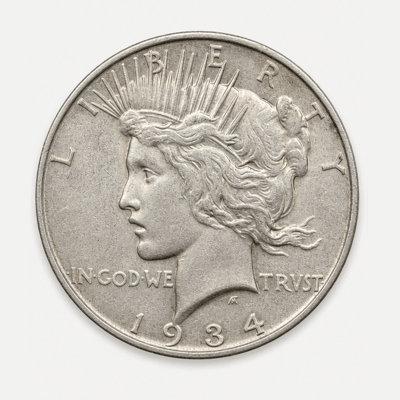
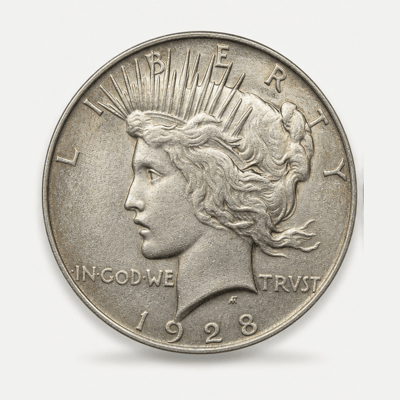
Designed by Anthony de Francisci and struck starting in late 1921, the Peace dollar replaced the Morgan dollar as a commemoration of peace following World War I -- Liberty's portrait on the obverse was modeled on the designer's wife, Teresa. The first year (1921) used a dramatic high-relief strike that proved impractical for mass production and was flattened to normal relief for 1922 onward. Production ran through 1928, paused, then resumed for a final two years in 1934-1935 before the series ended.
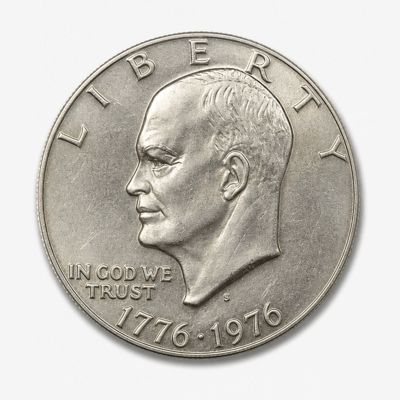
Nicknamed the "Ike dollar," this large copper-nickel clad dollar coin honored President Dwight D. Eisenhower, who died in 1969, and was the first US dollar coin struck since the 1935 Peace dollar. Its oversized 38.1mm diameter made it unpopular with the public and expensive to mint, and it was discontinued after 1978 in favor of the smaller Susan B. Anthony dollar. San Francisco also struck 40%-silver versions of most years for collectors only — those never circulated and are priced closer to their silver content than to rarity.
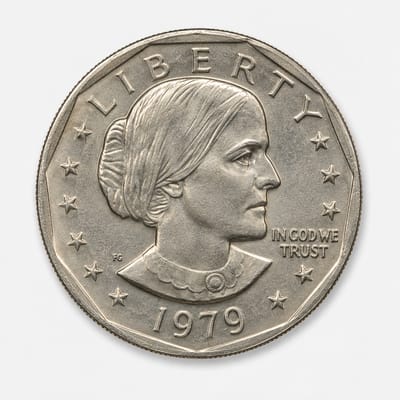
The first U.S. coin to depict a real, non-allegorical woman. A small, 91.67% copper / 8.33% nickel clad dollar introduced in 1979 to replace the unpopular Eisenhower dollar -- but its close size and color to the quarter caused widespread public confusion, and the Mint quietly ended regular production after 1981. A final 1999 run bridged the gap to the Sacagawea dollar the following year.
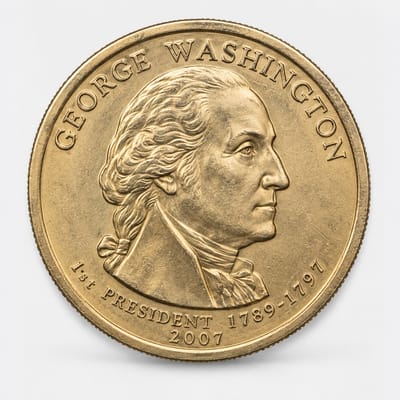
A golden-colored, manganese-brass dollar series that depicted four U.S. Presidents per year, in order of their term, from George Washington in 2007 through the program's conclusion in 2016. Best known today for its edge-lettering errors -- Congress moved the date, mint mark, and mottos to the coin's edge in a separate strike step, and early production mistakes made several 2007 issues genuinely collectible.
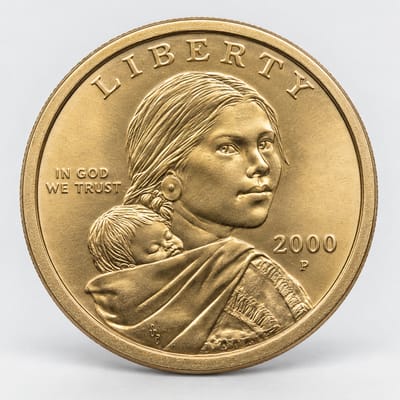
A golden-colored, manganese-brass dollar depicting Sacagawea, the Shoshone woman who guided the Lewis and Clark expedition, with her infant son on her back. Struck as the plain "Sacagawea Dollar" from 2000-2008, then as the annually-changing "Native American Dollar" from 2009 onward, each year honoring a different Native American contribution to U.S. history.
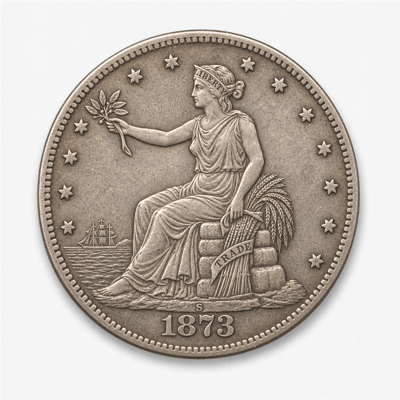
Struck heavier and finer than a regular silver dollar specifically to compete with Mexican and other silver trade coins in East Asian commerce, the Trade Dollar was demonetized for U.S. domestic use in 1876 after silver's price fell and merchants began redeeming them below face value. The final two years, 1884 and 1885, were struck in secret for collectors only and were unknown to the public for decades -- making them among the rarest and most valuable coins in American numismatics.
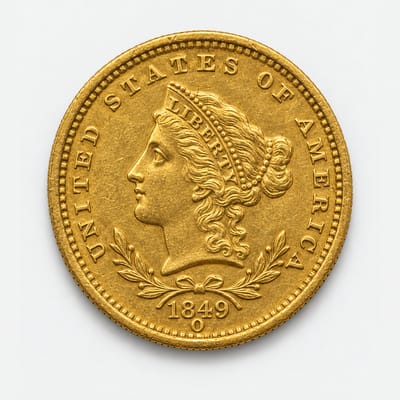
The smallest denomination gold coin ever struck by the U.S. Mint, produced across three distinct designs: Type 1 Liberty Head (1849-1854), Type 2 Small Indian Head (1854-1856, discontinued quickly because the thin, high-relief design wore down and struck poorly), and Type 3 Large Indian Head (1856-1889). Several branch-mint dates, especially from the Dahlonega, Georgia mint, are extremely rare today.
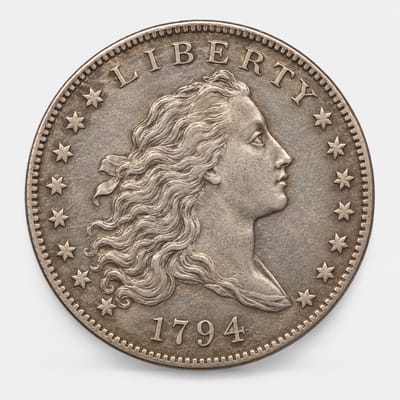
The first silver dollars struck by the United States, opening with Robert Scot's Flowing Hair design in 1794 and giving way to the Draped Bust design from 1795 through 1803. No dollars were struck for circulation dated 1804; the small number of "1804 dollars" that exist were actually produced decades later as diplomatic gifts and are, coin for coin, among the most valuable objects in American numismatics.
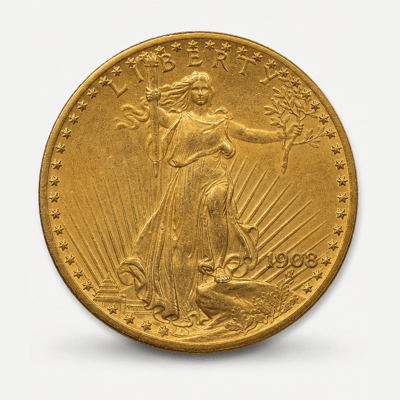
Struck at President Theodore Roosevelt's direct request to make "the most beautiful coin" in American history, sculptor Augustus Saint-Gaudens' $20 gold piece shows a full-length Liberty striding forward with a torch and olive branch, an eagle in flight on the reverse. Nearly a full troy ounce of gold, it was struck until the 1933 gold recall ended US gold coinage for circulation -- making the 1933 issue, almost entirely melted before release, one of the most famous and legally complicated rarities in the world.
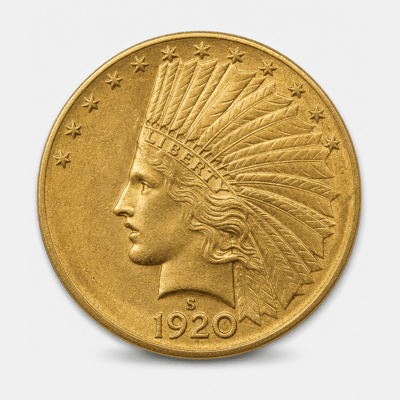
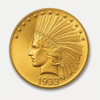
Also designed by Augustus Saint-Gaudens as part of his and Theodore Roosevelt's push to modernize American coinage, this $10 gold piece shows Liberty wearing a Native American-style feathered headdress on the obverse and a standing eagle on the reverse. Its first issues (the Wire Rim and Rolled Rim varieties) had only a few hundred struck each, making them among the great rarities of 20th-century US gold coinage.
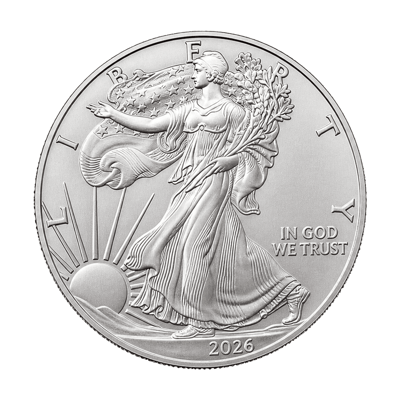
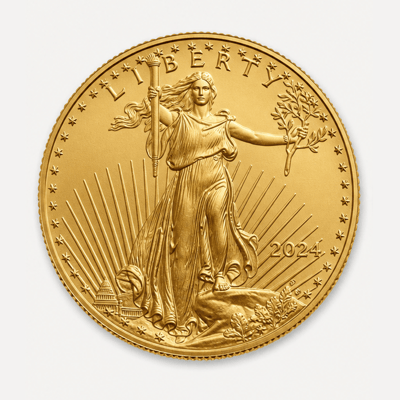
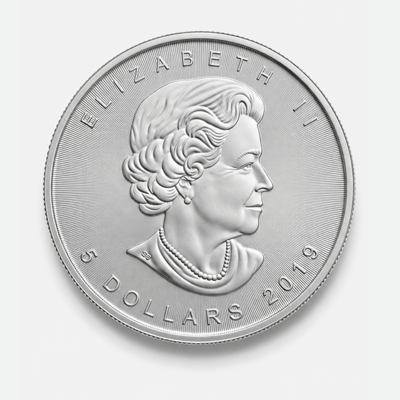
These guides cover collector coins priced on scarcity and condition. Common investment coins like the American Silver Eagle are priced almost entirely off the current metal spot price — see those live value charts instead.



About the coin value guides
Every grade-tier price is sourced from a named numismatic reference (PCGS CoinFacts, NGC, USA Coin Book) with the source and retrieval date shown on each coin's page — never estimated or invented. Where a source's data is incomplete, the page says so explicitly rather than filling the gap with a guess.
Coin value depends heavily on condition. A grade-tier table shows what the same date is worth from heavily worn (Good) up through uncirculated (Mint State) — the gap between those can be 100x or more, which is why grading a coin properly matters before pricing it.
These coin-value guides cover numismatic (collector) coins, where scarcity and condition drive the price — a common date and a key date of the same coin can be worth wildly different amounts. The live bullion charts track common investment coins like the American Silver Eagle, priced almost entirely off the current metal spot price instead.
Yes — list it free, set your own price or accept offers, and it's searchable by collectors browsing the numismatic marketplace. Photograph both sides clearly and mention the grade if you know it; buyers use exactly that to compare your listing against the value guide.
List it free on PeerMetals — flat 2.75% seller fee, zero listing fees, 1–3 day payouts.