What Is Junk Silver Worth? Face Value, Melt Value, and Real Prices

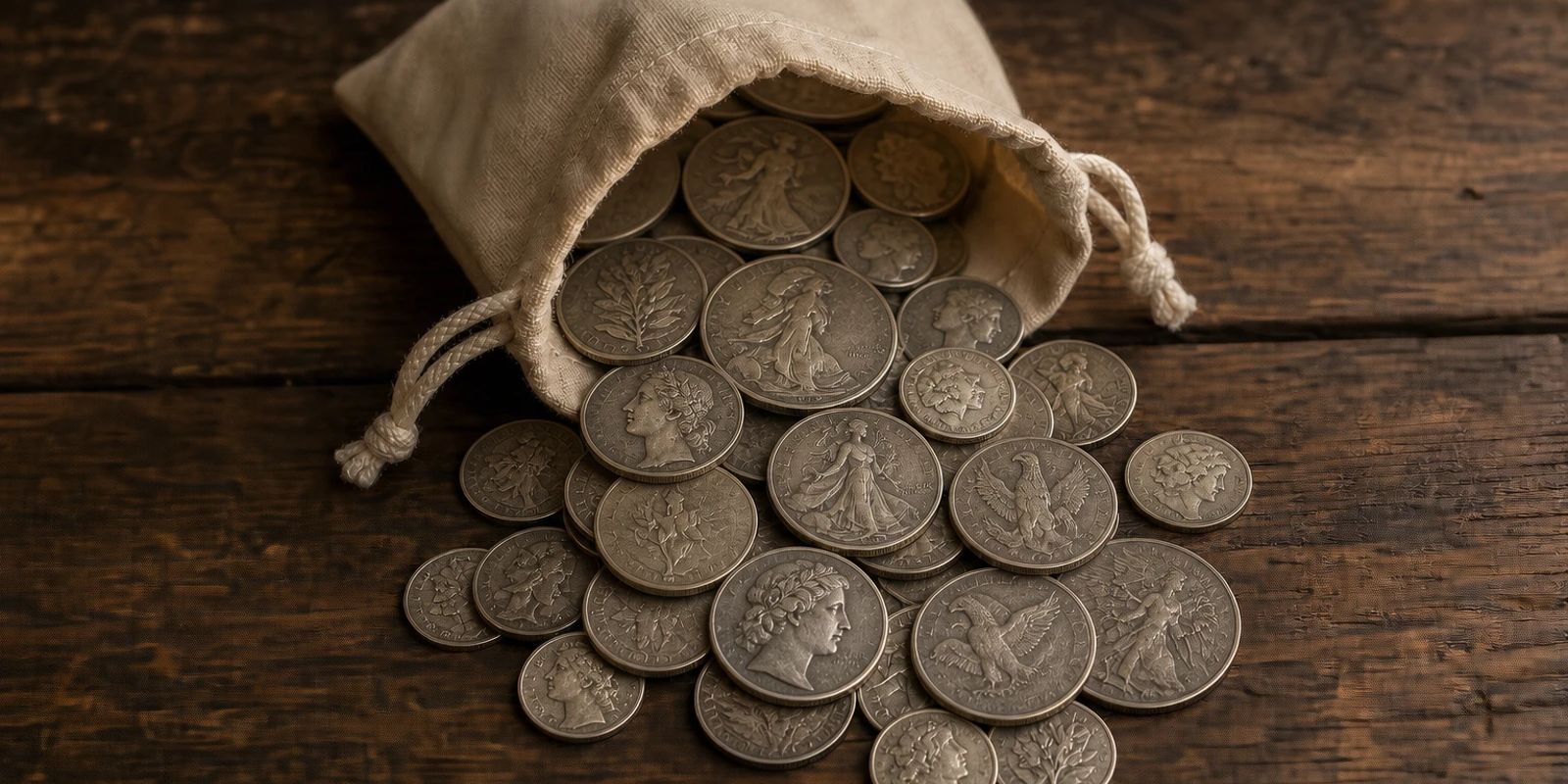
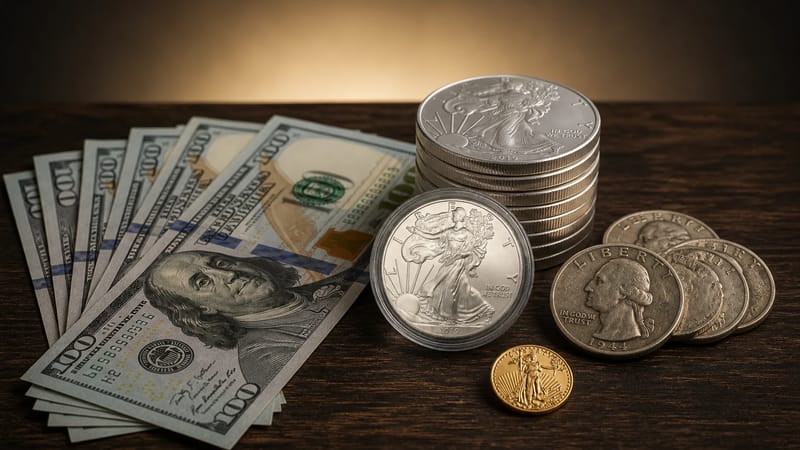
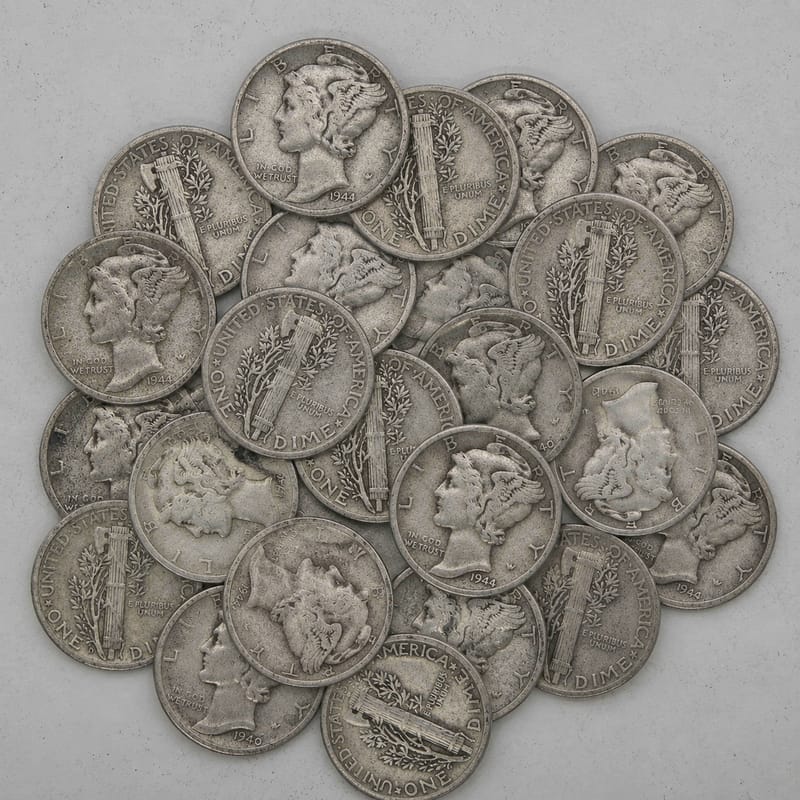
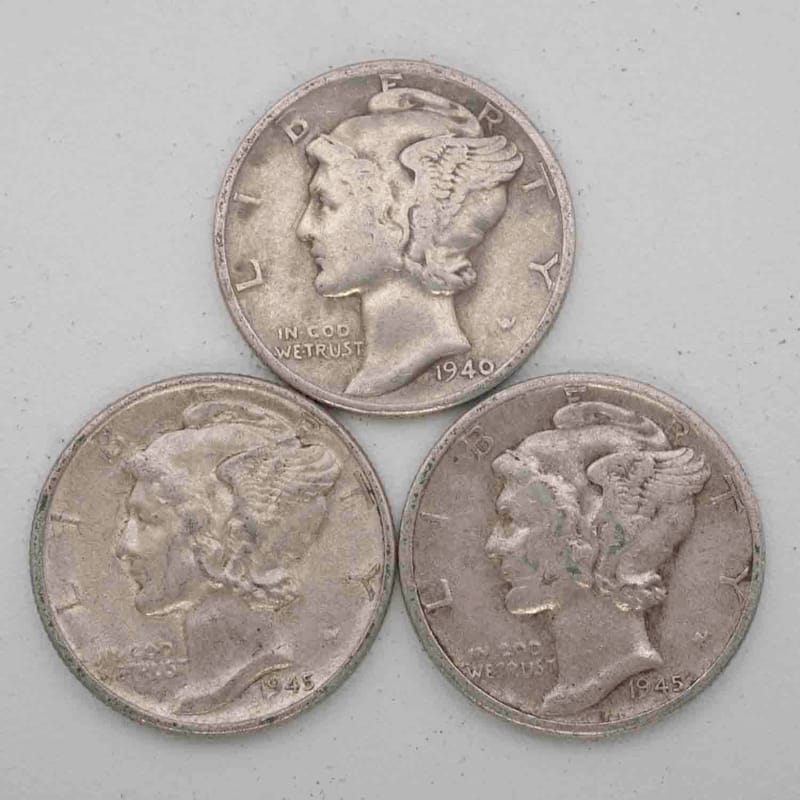
Pre-1965 US dimes, quarters, and half dollars are 90% silver, 10% copper. Collectors call them junk silver, but there is nothing junk about the math: this is government-minted, instantly recognizable silver that usually trades at the lowest premiums of any recognizable product.
What counts as junk silver
| Coin | Years | Silver | Silver per coin (ozt) |
|---|---|---|---|
| Dime (Barber, Mercury, Roosevelt) | 1892–1964 | 90% | 0.0723 |
| Quarter (Barber, Standing Liberty, Washington) | 1892–1964 | 90% | 0.1808 |
| Half dollar (Barber through Kennedy 1964) | 1892–1964 | 90% | 0.3617 |
| Kennedy half (40%) | 1965–1970 | 40% | 0.1479 |
| War nickel (large mintmark over Monticello) | 1942–1945 | 35% | 0.0563 |
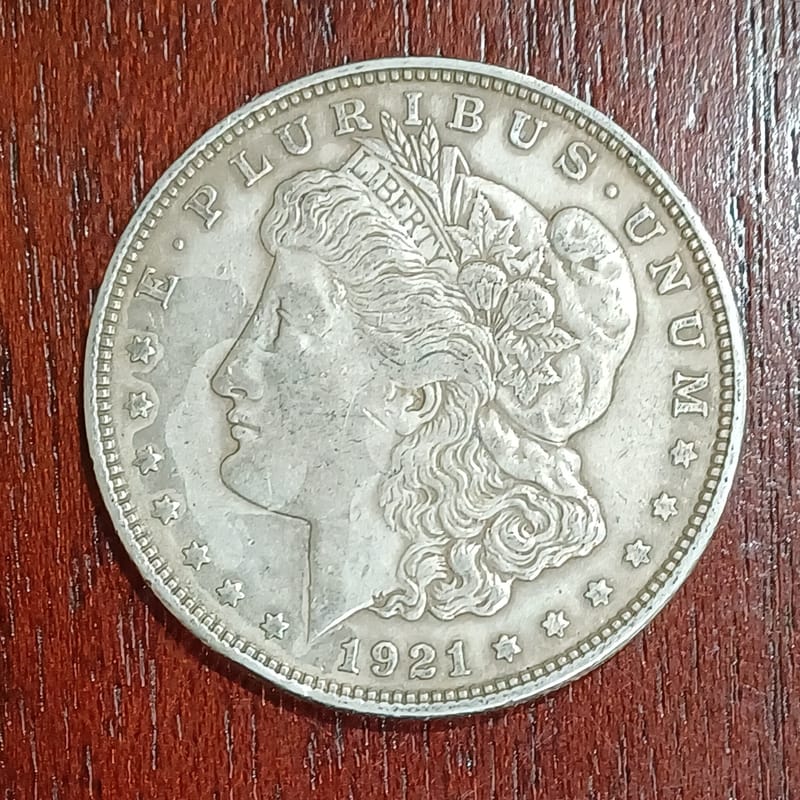
| Morgan / Peace dollar | 1878–1935 | 90% | 0.7734 |
The cutoff exists because the Coinage Act of 1965 — signed that July — removed silver from dimes and quarters entirely, switching them to the copper-nickel clad coins still minted today. Anything 1965 or later (outside the special cases above) is worth face value unless it carries a rare error.
The 0.715 rule
Freshly minted, $1 face value contained about 0.7234 troy ounces. The market trades on 0.715 because circulated coins have lost a little metal to pocket wear — a convention that already prices the wear in. The melt formula is simply: face value x spot price x 0.715.
Worked examples: a $10 face roll of quarters at $75 spot melts at about $536. A dealer $100 face bag is roughly $5,362. A full $1,000 face bag holds 715 ounces and weighs about 55 pounds — bring a hand truck, not a backpack.
What buyers actually pay
In calm markets junk silver changes hands at roughly 3–10% over melt, tighter than almost any modern bullion coin. In physical-demand surges those premiums expand sharply — during the late-2025 rally junk bags briefly commanded premiums that rivaled Eagles. Always compare offers as a percentage over melt, never on sticker price.
Check for key dates before selling by weight
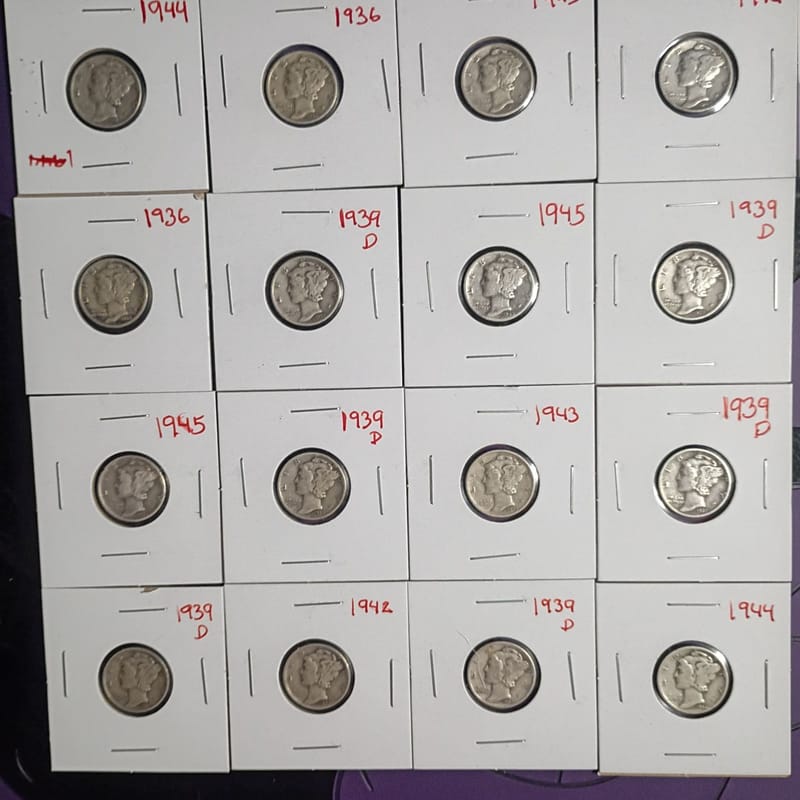
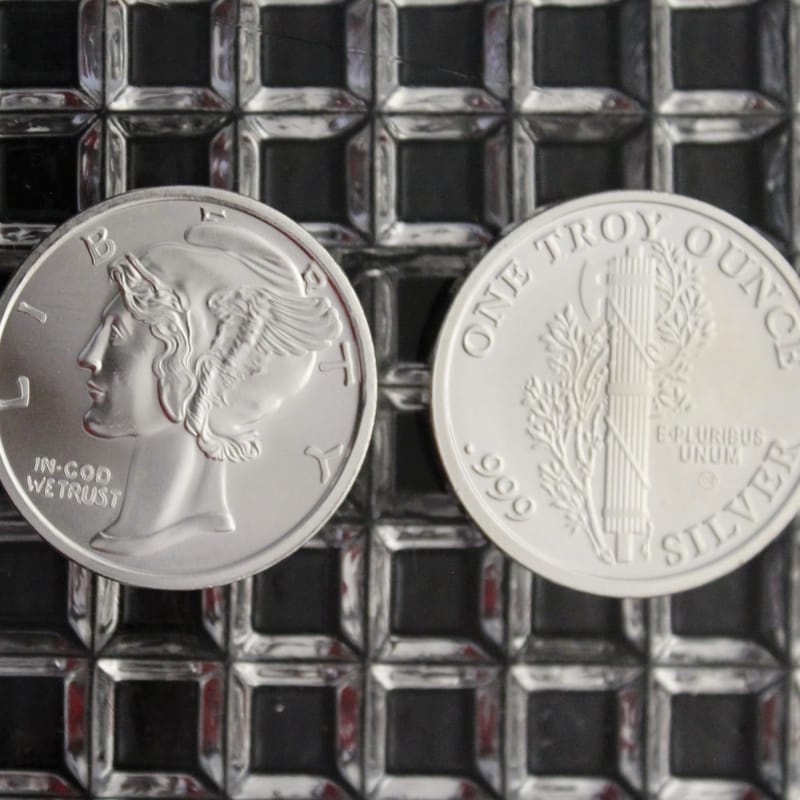
- Mercury dimes: 1916-D and the 1942/1 overdates are worth far more than melt.
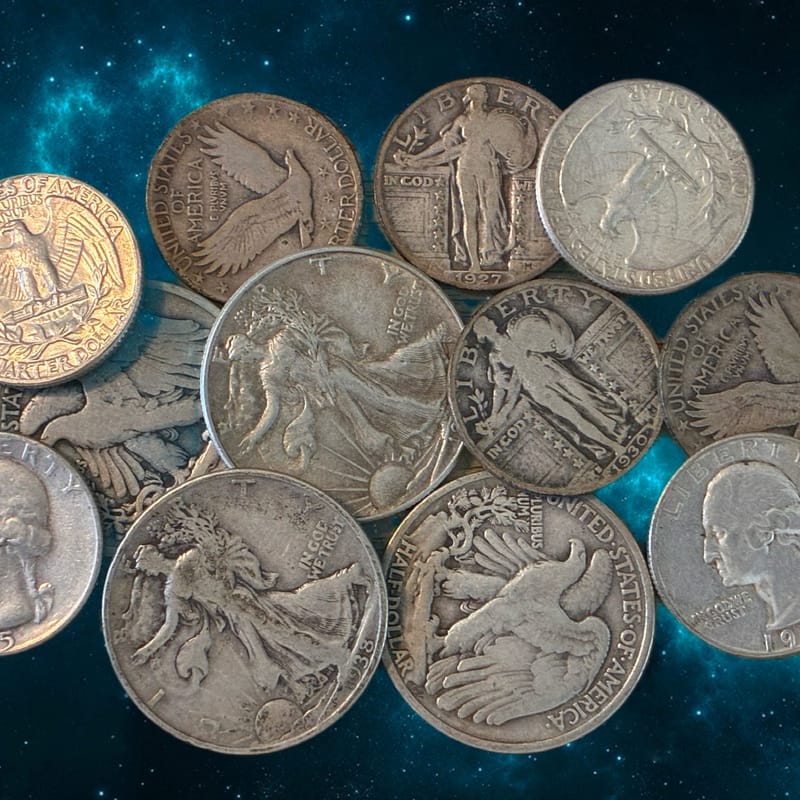
- Walking Liberty halves: 1921, 1921-D, 1921-S, and 1938-D.
- Washington quarters: 1932-D and 1932-S.
- Anything better than heavily worn: full-band Mercuries and full-head Standing Liberties carry collector premiums.
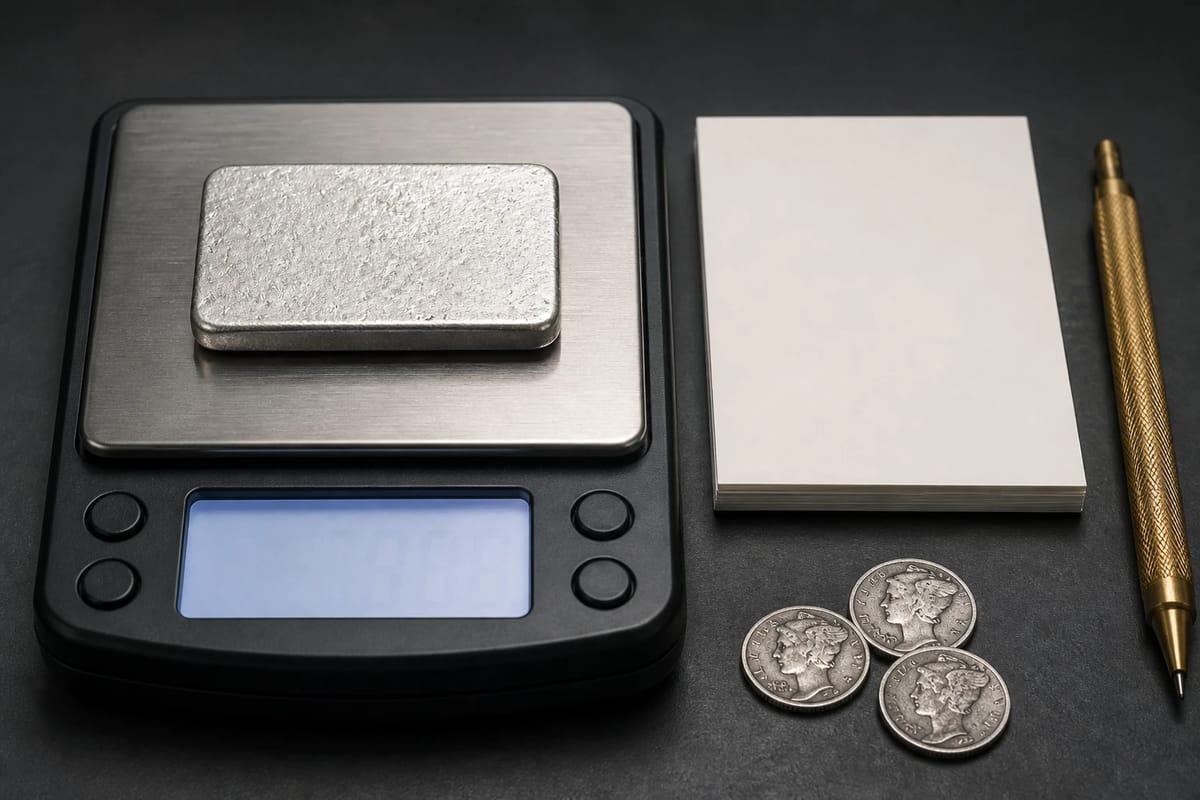
Weigh mixed lots before you buy or sell. Heavily circulated coins lose real metal — a well-worn $100 face bag can hold measurably less than its 71.5-ounce book weight, and the scale settles arguments that photos cannot.
Why stackers love it — and the trade-offs
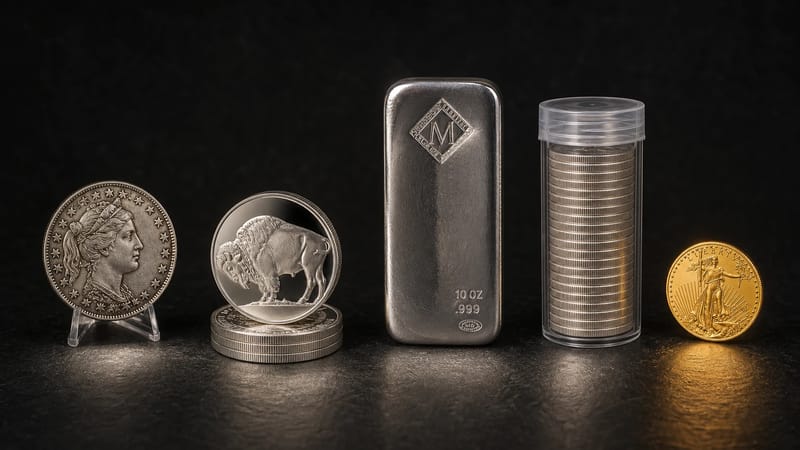
The case for junk silver: lowest premiums among recognizable products, built-in divisibility (a silver dime is about a $5 piece at $75 spot), and instant recognition as US coinage. The trade-offs: bulkier storage per ounce than .999 coins, and some dealers bid it slightly under modern bullion at buyback. One tax note for US sellers: the IRS treats physical silver as a collectible, with long-term gains taxed at a maximum 28% rate — keep your purchase records.
Junk silver lots are one of the most active categories on the PeerMetals marketplace, from single rolls to full bags, and small lots make an affordable way to add fractional silver without paying fractional-coin premiums.
Watch: 30-second takes from the PeerMetals channel
More shorts and weekly market recaps on the PeerMetals YouTube channel.
Frequently asked questions
Is junk silver the same as sterling? No — US junk silver coinage is 90% silver, while sterling (flatware, jewelry) is 92.5%. Both price off weight times fineness times spot.
Do half dollars carry higher premiums than dimes and quarters? Usually slightly — halves are the most collected denomination and Walking Liberty designs draw crossover interest.
Are 1965–1970 Kennedy halves junk silver? They are a separate 40% category with about 0.1479 oz per coin, trading at lower premiums than true 90% material. Never mix them into a 90% lot at the same price.