Best Silver Bars to Buy in 2026: What Actually Makes One "Best"

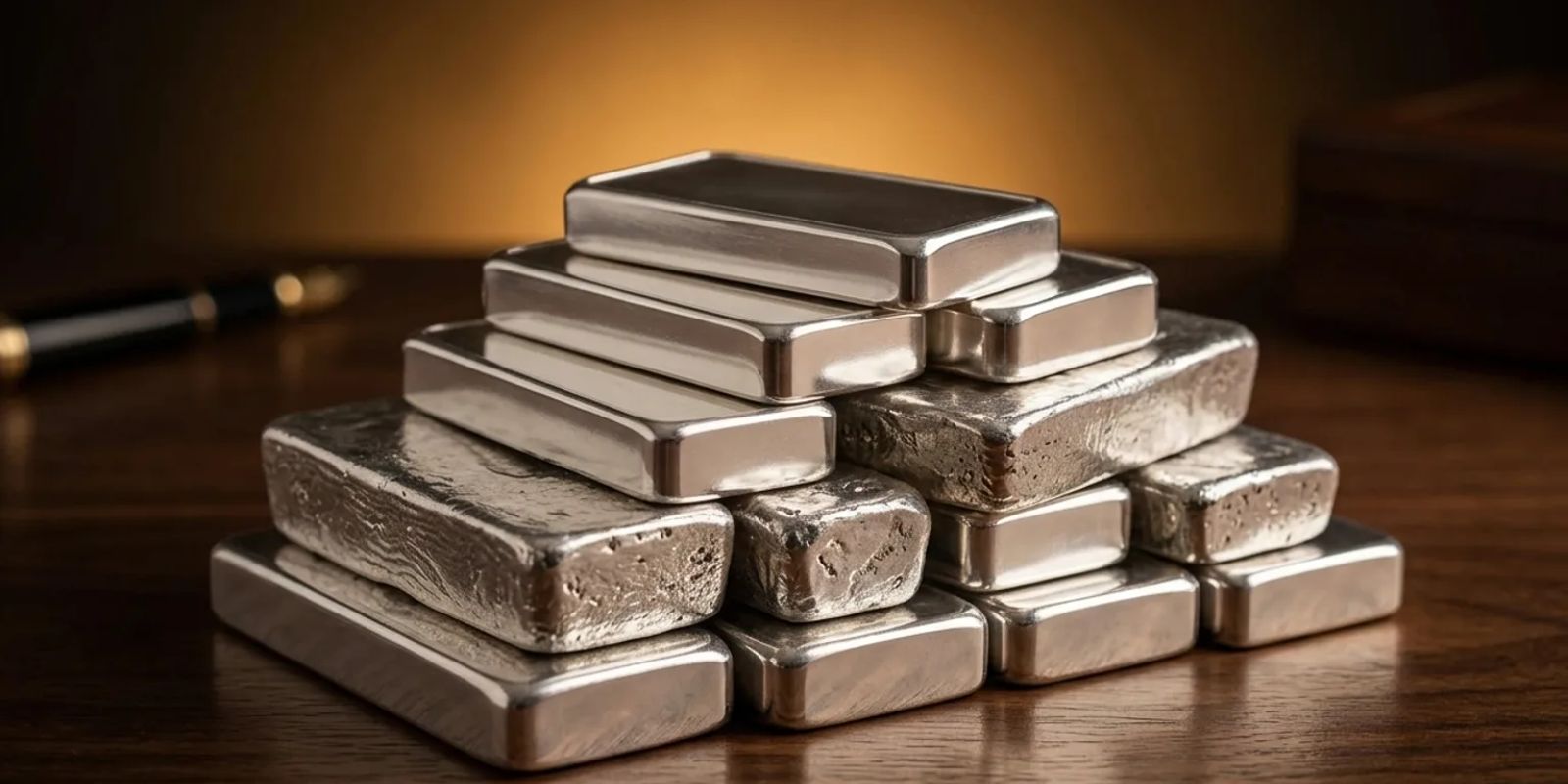
The best silver bar to buy is usually the one with the lowest premium over spot from a refiner buyers actually recognize -- not the cheapest listing you can find, not the biggest bar on the page, and not necessarily the most famous name. Premiums change daily and vary by seller, so instead of chasing a "best of 2026" list that's stale the day it's published, this is the framework for evaluating any silver bar yourself.
Three things decide whether a bar is a good buy: the premium you're paying over the live silver spot price, whether the refiner is one buyers will recognize when you go to sell, and whether the size fits how you actually plan to sell it later. Get those three right and the specific bar matters far less than most buying guides make it sound.
Premium is simple to check yourself: take the listed price, subtract the current silver spot price times the bar's weight, and you have the dollar premium. It's a wider range than most buyers expect -- CBS News reported in January 2026 that physical silver buyers were paying anywhere from roughly 10% to 30%+ over spot depending on the product and dealer. Compare that across sellers before you buy -- our live prices page shows the spot price you need for the math, and our marketplace lets you compare real seller listings side by side instead of trusting one dealer's sale price. Or skip the arithmetic entirely -- the silver melt calculator does the same math for any weight and purity at the live spot price.
Size changes your premium -- and your flexibility
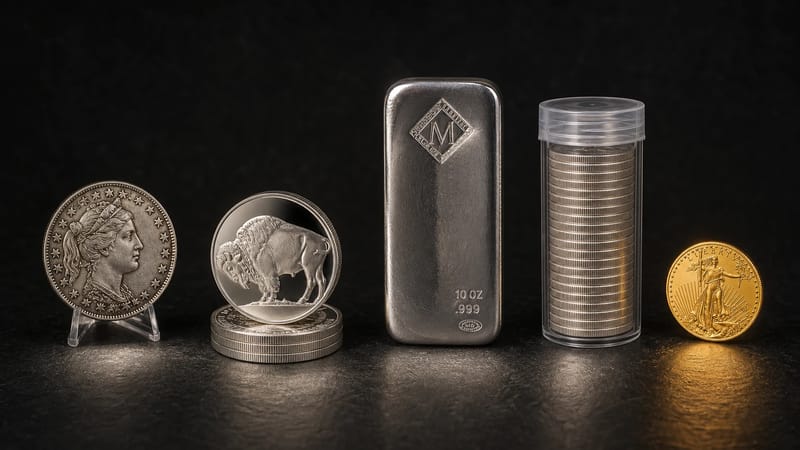
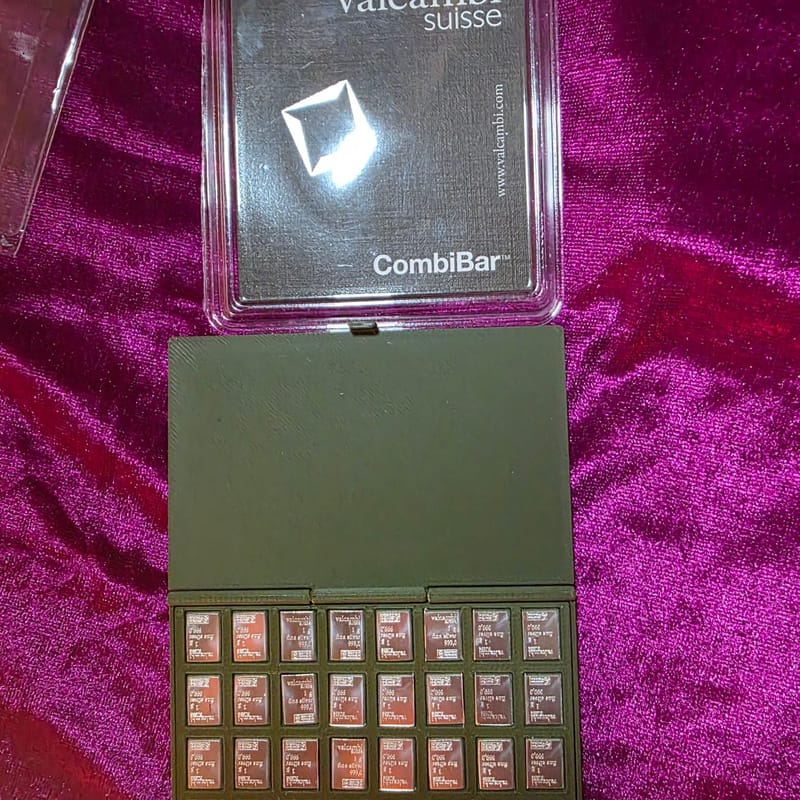
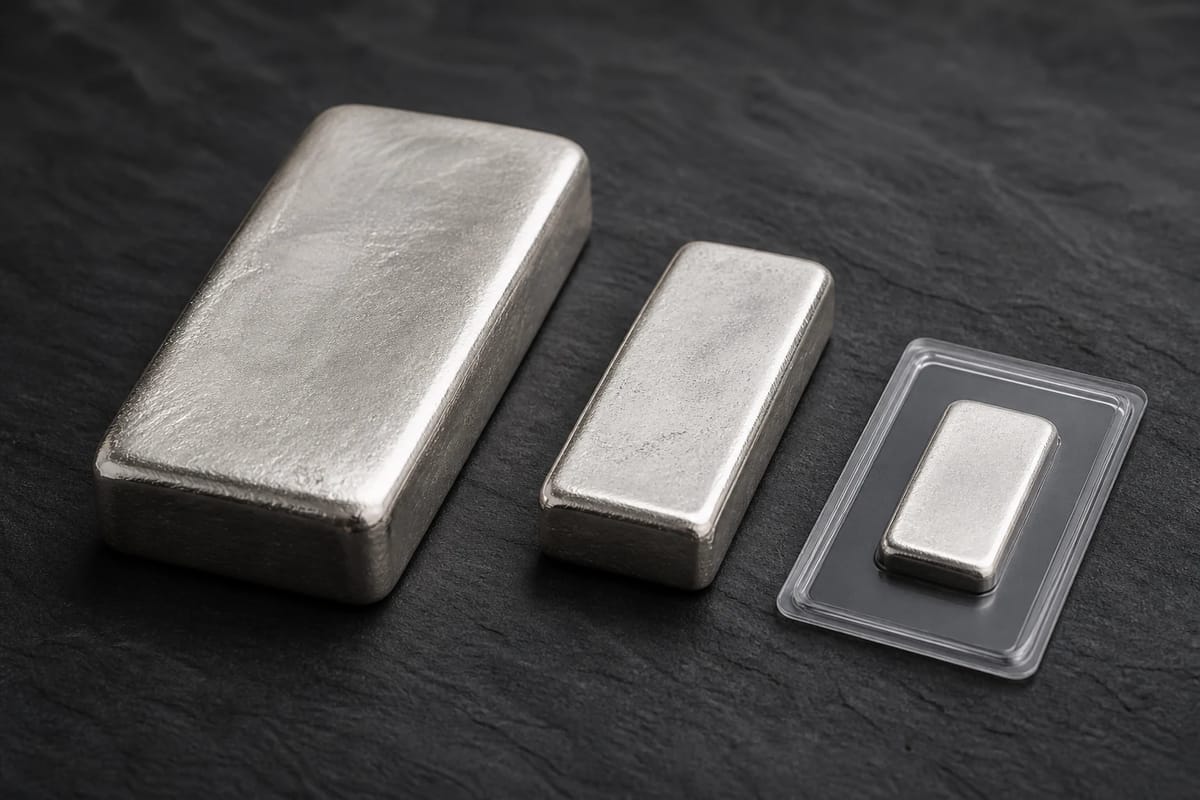
Premium per ounce generally shrinks as bar size grows: a 1 oz bar carries more manufacturing and packaging cost per ounce than a 100 oz bar of the same refiner. But bigger isn't automatically better -- it's a trade-off against how you'll actually sell later.
| Size | Typical premium | Best for |
|---|---|---|
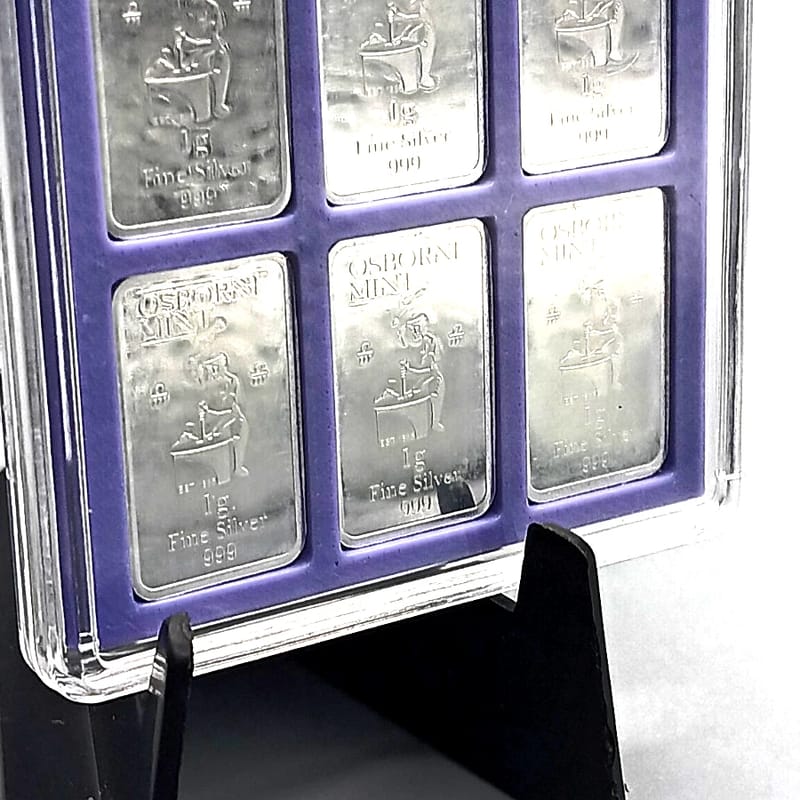
| 1 oz | Highest per-ounce premium | Selling in small pieces, gifting, maximum liquidity |
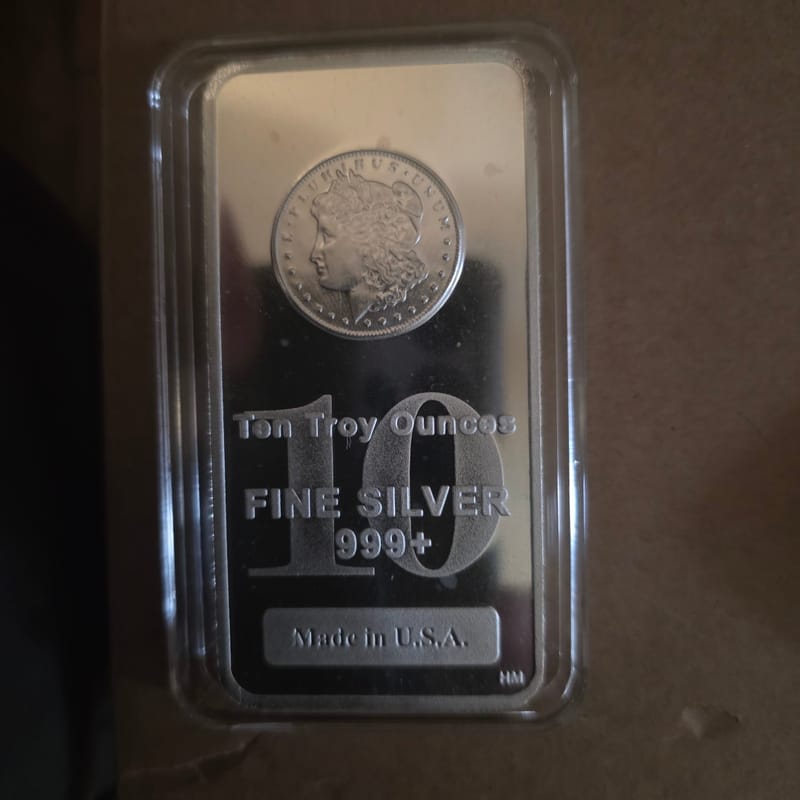
| 10 oz | Moderate | A middle ground -- still easy to sell whole or split |
| 100 oz | Lower | Lowest cost per ounce, but you sell the whole bar at once |
| 1 kg (32.15 oz) | Lower | Common outside the U.S.; similar trade-off to 100 oz |
If you think you'll ever want to sell part of a stack without selling all of it, smaller bars (or rounds and coins) give you that flexibility. If you're buying purely to hold and minimize cost, larger bars usually win on premium.
What "recognized refiner" actually means
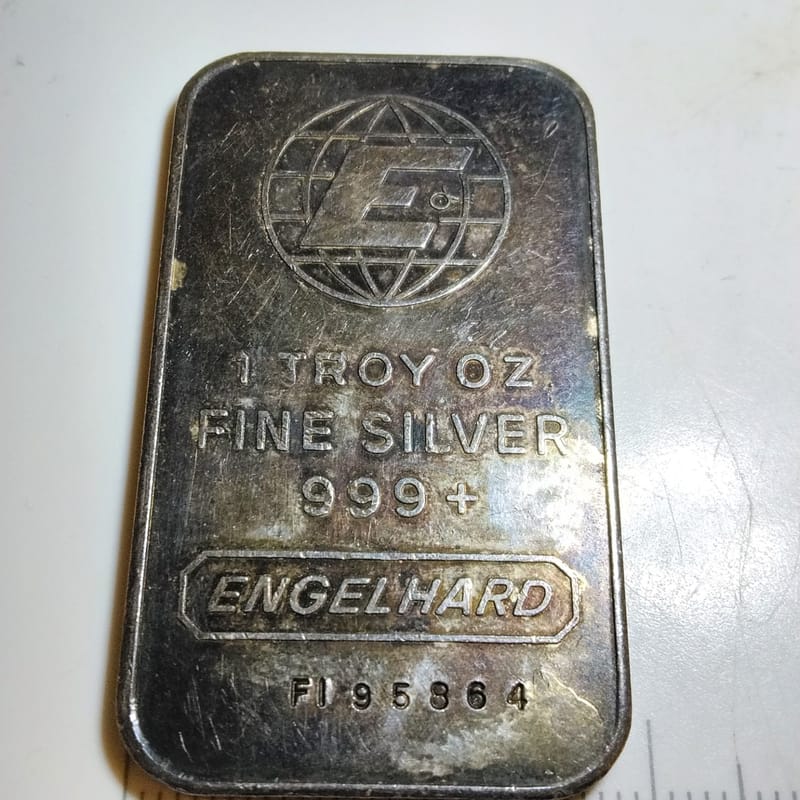
A bar's resale value depends heavily on whether the next buyer trusts its stamp on sight. Refiners accredited on the London Bullion Market Association's Good Delivery List for silver -- names like PAMP SA, the Royal Canadian Mint, Asahi Refining, and Johnson Matthey -- clear fastest with dealers and other buyers because their assay marks and serial numbering are widely recognized and hard to fake convincingly. An unfamiliar or off-brand refiner might sell for less up front but can cost you more at resale, either in a lower offer or in the extra step of getting it independently assayed. (The full current list of 18 LBMA-accredited silver refiners is public at lbma.org.uk/good-delivery/silver-current-list.)
Buying from an unrecognized refiner to save a few dollars in premium often costs more later -- either as a lower resale offer, or as the price of an independent assay to prove what the buyer is already trusting on a PAMP or Royal Canadian Mint bar for free.
Sealed assay card vs. loose bar
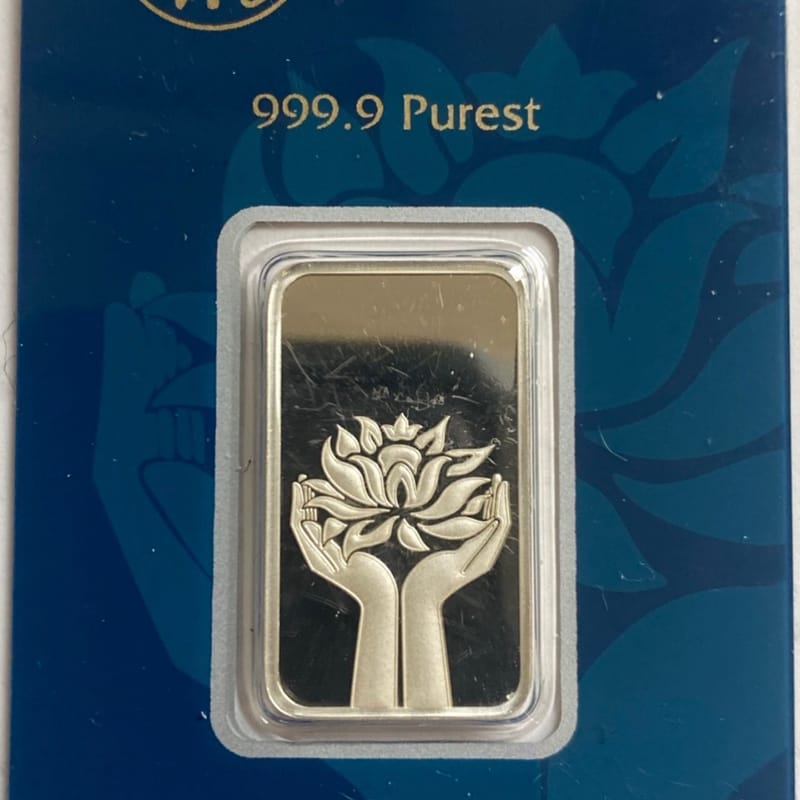
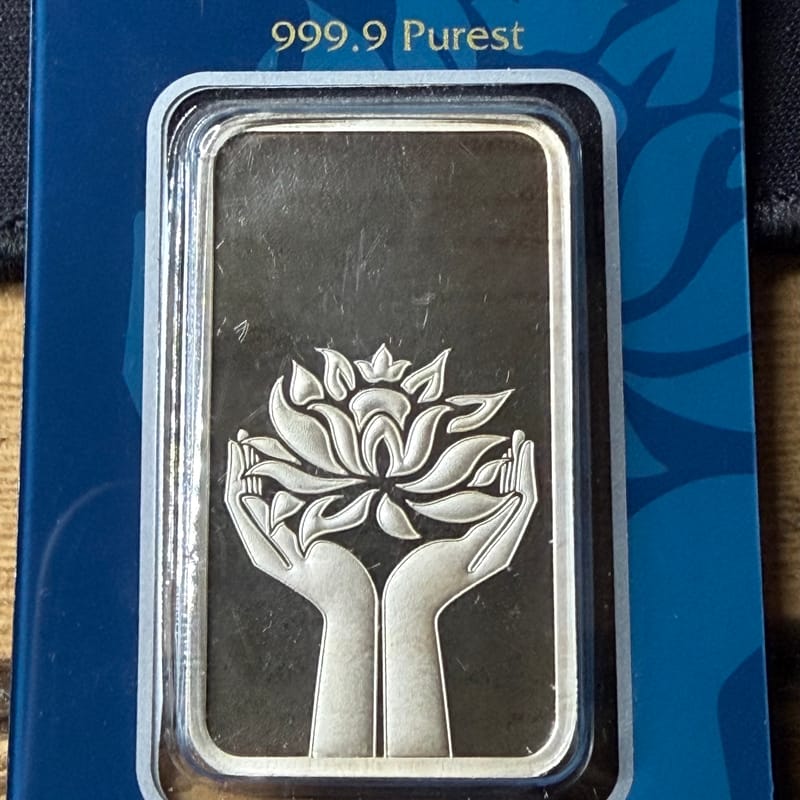
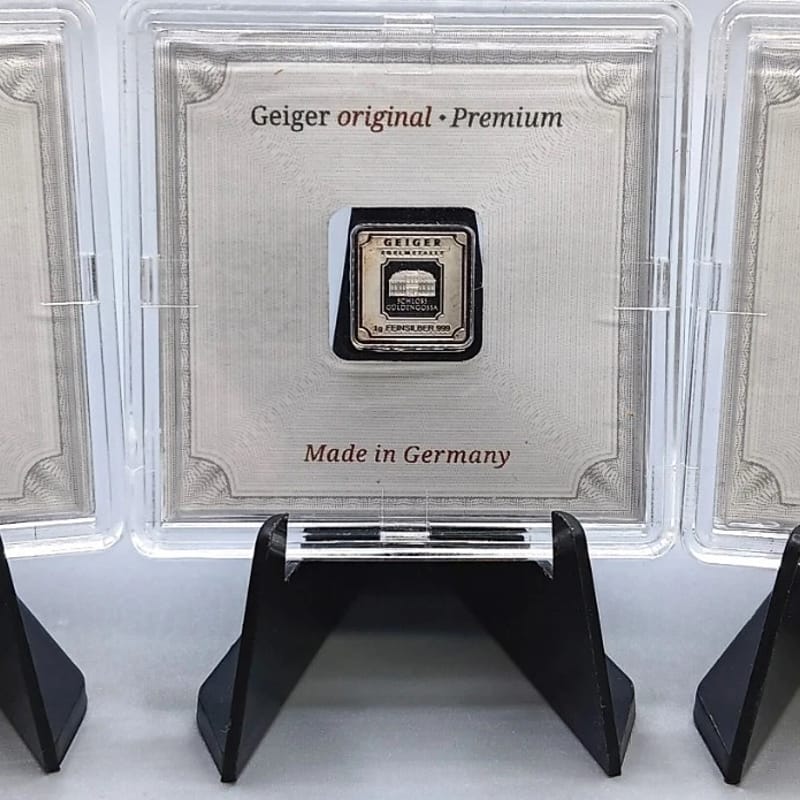
Bars from major refiners are often sold in a tamper-evident sealed card with a matching serial number and, on many, a scannable authentication feature. Keeping that seal intact preserves the easiest possible resale -- a sealed, serial-matched bar needs no further verification from most buyers. Once it's removed from the card, you're back to relying on weight, dimensions, and the stamp alone, which is fine, but it's one more thing a buyer has to trust.
Frequently asked questions
Are silver bars better than silver coins or rounds?
Neither is objectively better -- bars typically carry a lower premium per ounce, while coins and rounds split more easily and some (like the American Silver Eagle) carry legal-tender status and wider name recognition. Many stackers hold a mix for exactly this reason.
Do silver bars carry more counterfeit risk than coins?
Bars from major refiners with sealed assay packaging are about as safe as government-minted coins. The real risk sits with unbranded or off-market bars bought outside a reputable seller -- which is exactly why refiner recognition matters as much as price.
What's a reasonable minimum size to start with?
There's no fixed rule, but 1 oz or 10 oz bars are the common starting point -- small enough to sell in pieces, large enough that the premium isn't disproportionate to the silver you're buying.