How to Store Precious Metals at Home (Without Losing Sleep)

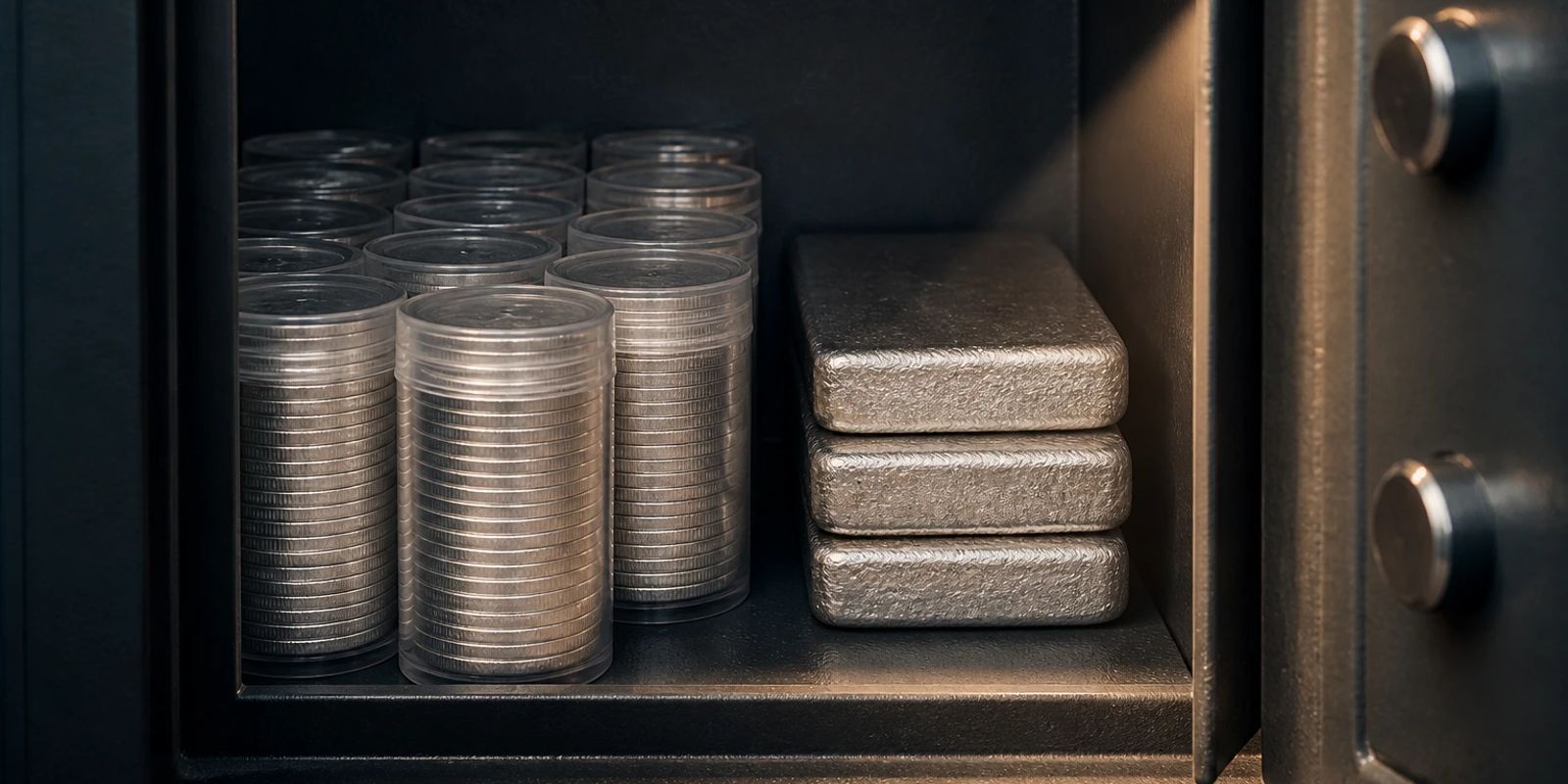
Once your stack outgrows a desk drawer, storage is part of the investment. The good news: a sensible home setup protects most collections without bank fees or custody risk — if you match the hardware to what burglars, fires, and insurance policies actually do.
Safe ratings, decoded
| Rating | What it certifies |
|---|---|
| RSC | Resists 5 minutes of attack with basic hand tools |
| TL-15 | 15 minutes of tool attack on the door/front face |
| TL-30 | 30 minutes, including cutting wheels and power saws |
| TL-30x6 | TL-30 protection on all six sides |
| TRTL-30x6 | Adds cutting-torch resistance |
Those minutes are net working time — tool actually on metal — which is why an RSC-rated "gun safe" is closer to a deterrent than a vault. For meaningful bullion holdings, TL-30 is the commonly recommended floor; expect $1,500–$5,000+ plus installation. Fire ratings are a separate axis entirely (they certify the interior stays under 350°F, the paper char point, for 30 minutes to 2 hours) — a fire-rated thin-wall box provides near-zero burglary protection.
Placement beats hardware
- Bolt it down. UL construction rules assume either 750+ pounds of safe or anchoring — an unanchored safe leaves on a dolly. Lag it into the slab or structural framing.
- Skip the master closet. The most-searched room in the house is the worst location; an unremarkable corner elsewhere beats a hidden spot in the obvious room.
- Consider a decoy. A cheap safe with token contents in the expected place ends many burglaries early.
- Split holdings. Home safe plus a professional non-bank vault spreads the risk.
The insurance gap nobody reads about
Standard homeowners policies sublimit theft of bullion and coins at roughly $200 per loss — some insurers stretch to $2,500 — either way, less than a single gold ounce today. The fixes: a scheduled personal property rider (bring receipts, photos, sometimes an appraisal) or a standalone valuables policy from a specialty insurer, which typically also covers accidental loss. Re-check scheduled values against spot annually; a rider written two years ago no longer covers today's prices. Bank safe deposit boxes are cheap but their contents are not FDIC-insured and access ends at the branch door — specialty vault-contents policies exist if you go that route.
Protect the metal from itself
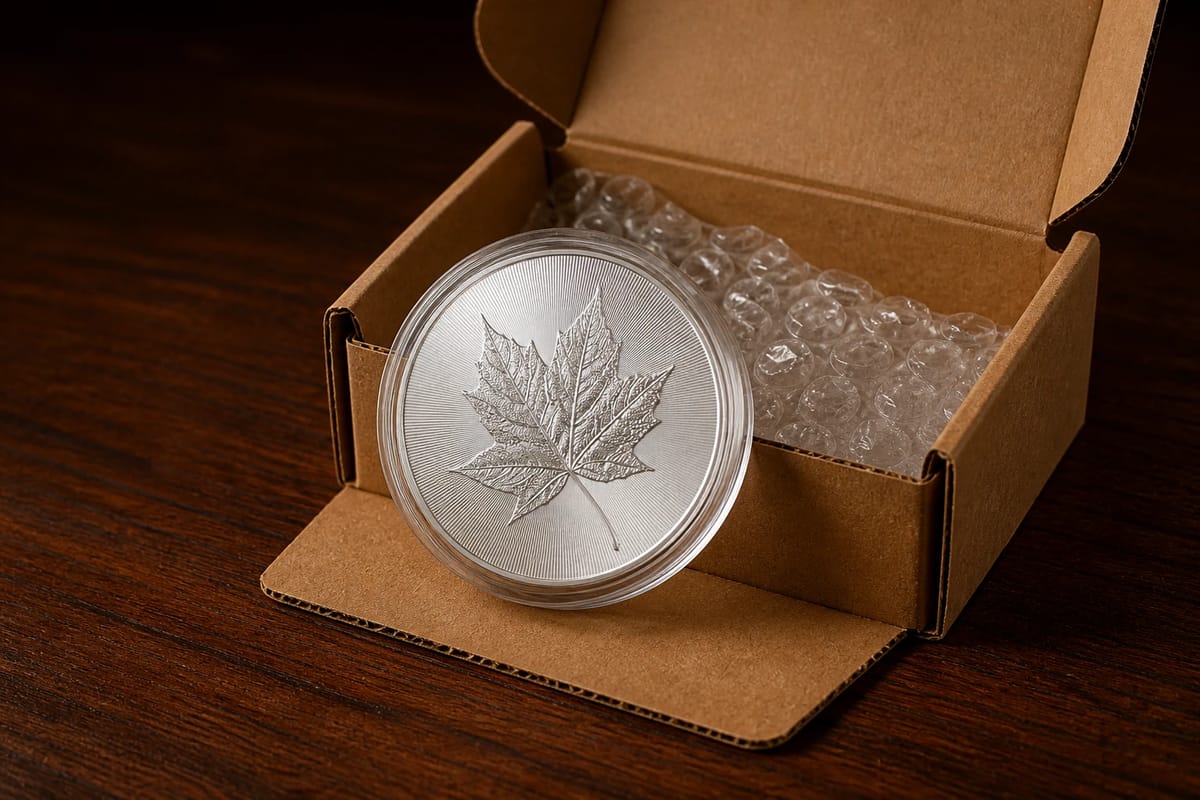
Silver tarnishes. Keep coins in capsules or tubes (never loose metal-on-metal), add silica-gel packets and anti-tarnish strips inside the safe, and handle collectible pieces by the edge — ideally with cotton gloves. Ten dollars of desiccant protects thousands in metal.
The rule that outranks every safe rating: nobody needs to know what you hold. No unboxing posts, no stack photos with identifying details, no casual mentions to contractors or movers. Loose talk defeats more security setups than lock picks ever will.
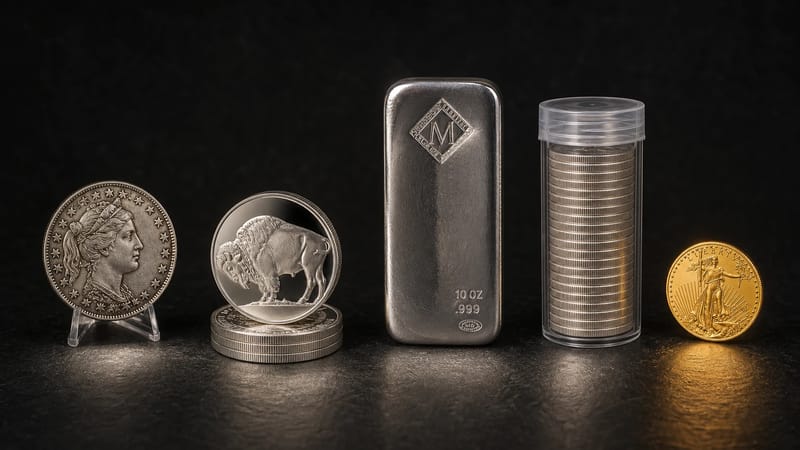
Storage preferences should even shape what you buy — dense value (gold, or silver in mint tubes and monster boxes) stores far easier than loose coins. Worth a thought before your next marketplace order.
Watch: 30-second takes from the PeerMetals channel
More shorts and weekly market recaps on the PeerMetals YouTube channel.
Frequently asked questions
Is a bank safe deposit box safer than a home safe? Different risks: boxes resist burglary but contents are not FDIC-insured and access ends at branch hours. Many stackers split between both.
How much insurance do I actually need? Schedule your metals at current spot value and re-check annually — a rider written two years ago is badly underwater at today's prices.
Do bullion coins need individual capsules? Mint tubes are fine for bullion. Capsules earn their cost on premium coins, proofs, and anything you may grade later.