Capsules, Tubes, and Monster Boxes: How Stackers Actually Store Their Coins

Walk through a serious stacker's storage and you'll notice something odd: it's inconsistent on purpose. One coin sits in an airtight capsule like a museum piece; a hundred identical rounds rattle in tubes; a vintage bar sits completely bare, developing toning its owner actively likes. That inconsistency is the system — protection matched to purpose, coin by coin. This guide covers the gear and the logic. (For the security side — safes, hiding, insurance — see storing metals at home; this is about the coins themselves.)
The capsule decision
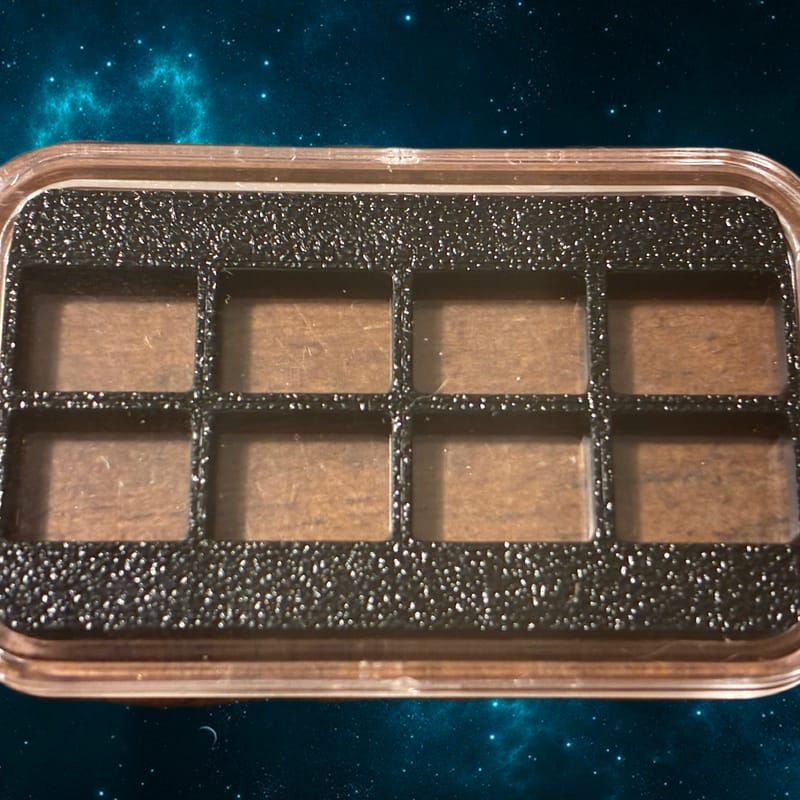
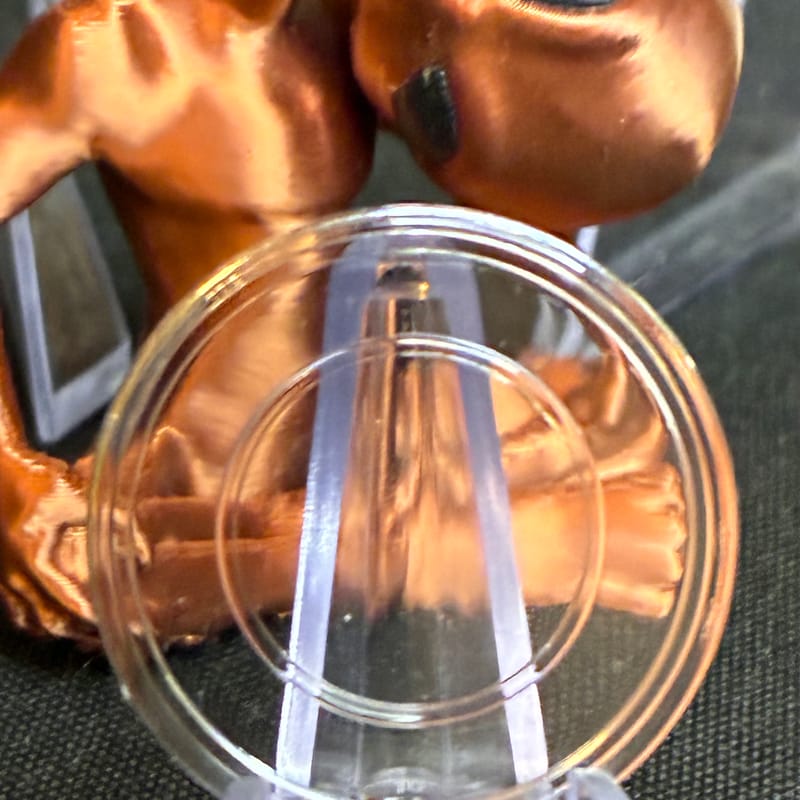
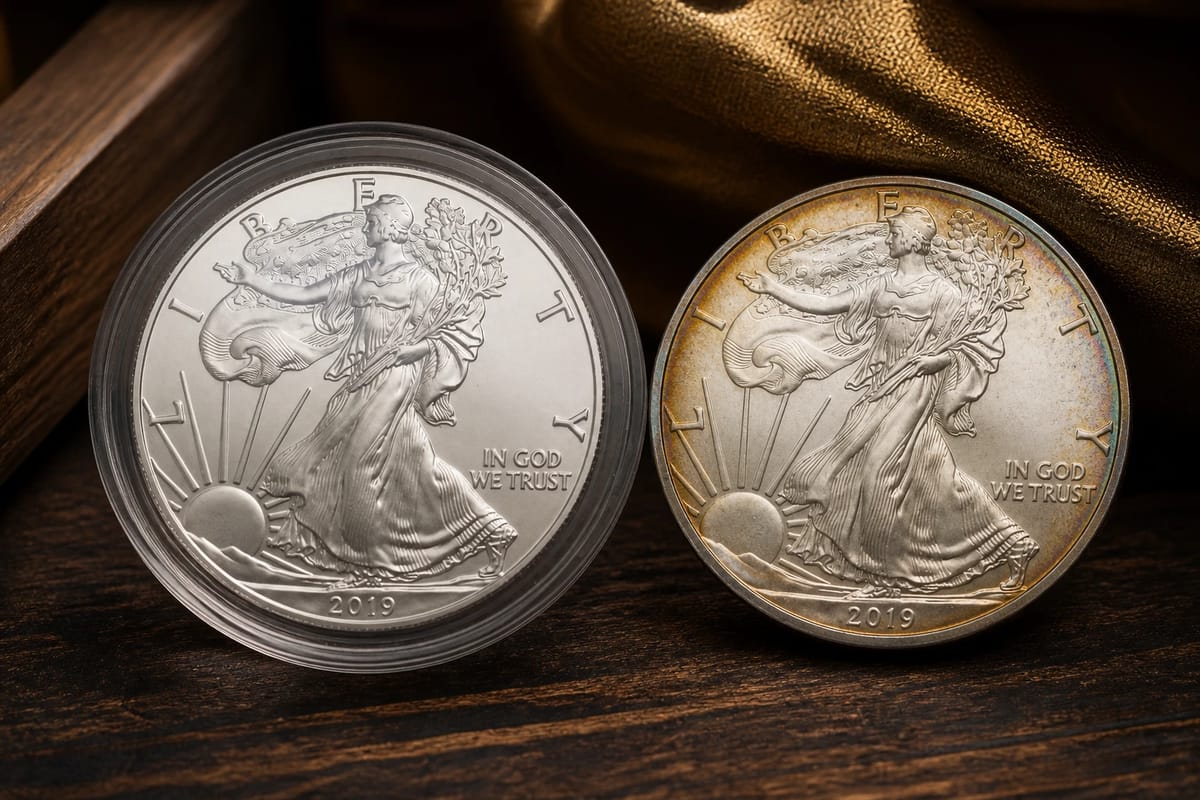
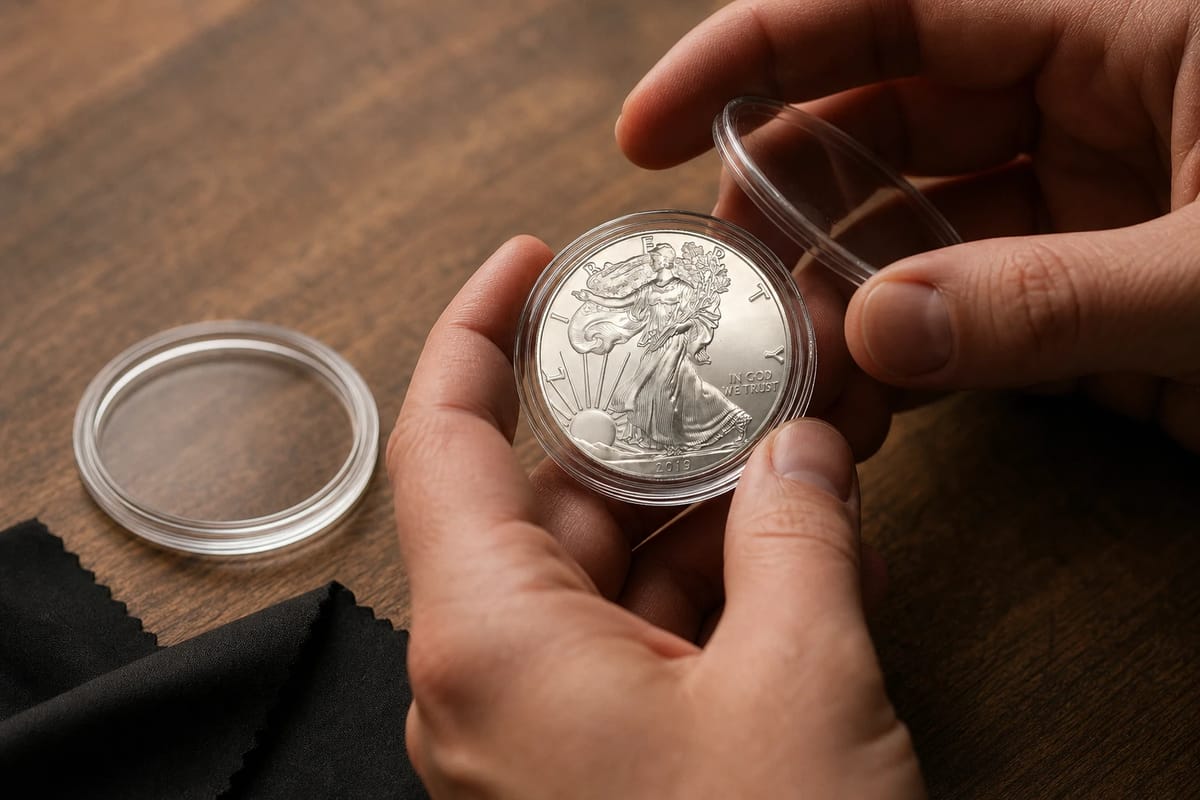
A capsule earns its cost when the surface is part of the value. Proof finishes — mirror fields, frosted devices — are effectively unrepairable once marked, so proofs and anything you plan to pass down get capsules by default. Same for favorite rounds whose design you genuinely care about. Bulk stack pieces? Capsules add cost and space for protection the metal doesn't need — an ounce is an ounce whether it's pristine or scuffed, and buyers of generic weight pay melt-plus either way.
Then there's toning — the rainbow or smoke patina silver develops in open air. In a capsule, it mostly won't happen; loose, it will, eventually. Some stackers chase it (vintage pieces with attractive natural toning can even sell at a premium to collectors); others want mint-white forever. Neither is wrong. Decide per piece: capsule to freeze time, open air to let the silver age.
The storage ladder
| Container | Holds | When it's right |
|---|---|---|
| Capsule | 1 coin | Proofs, keepers, gifts, anything passed down |
| Flip / 2x2 | 1 coin | Budget protection, labeling individual dates |
| Mint tube | 20–25 coins | The bulk-stack workhorse — stackable, sealed, countable |
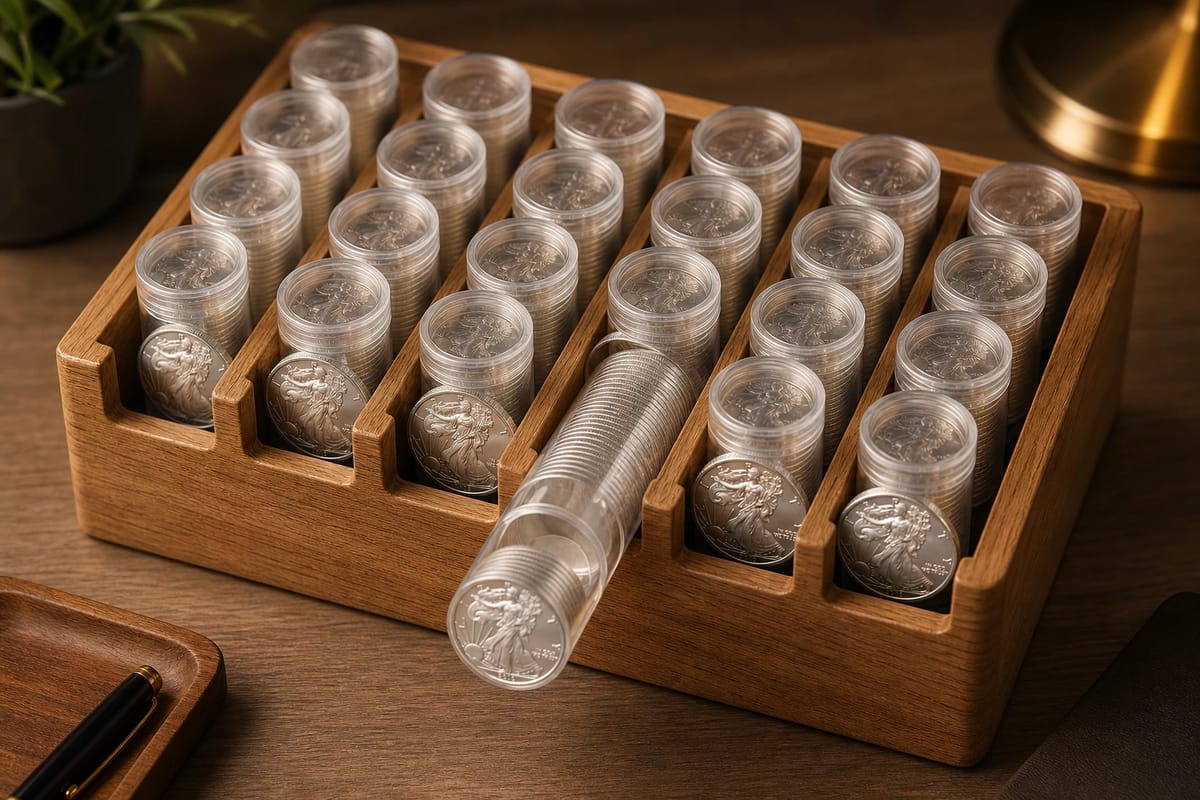
| Monster box | 500 oz (25 tubes) | Serious weight; the mint's own shipping container |
| Loose / tray | Whatever fits | Junk silver, slicks, pieces where wear is priced in |
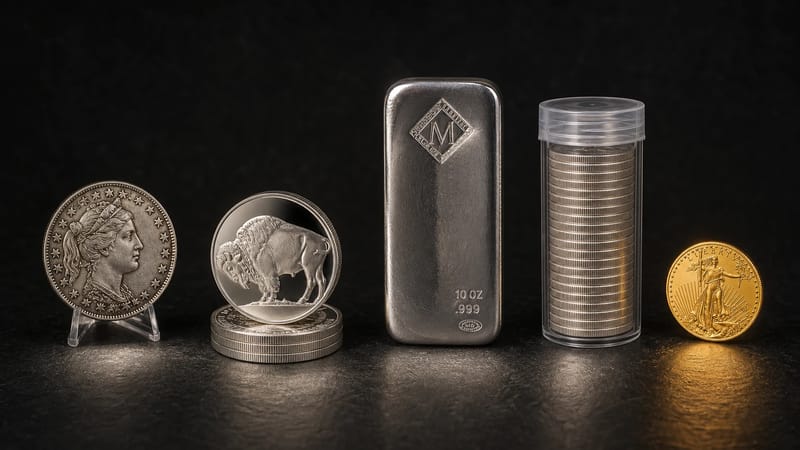
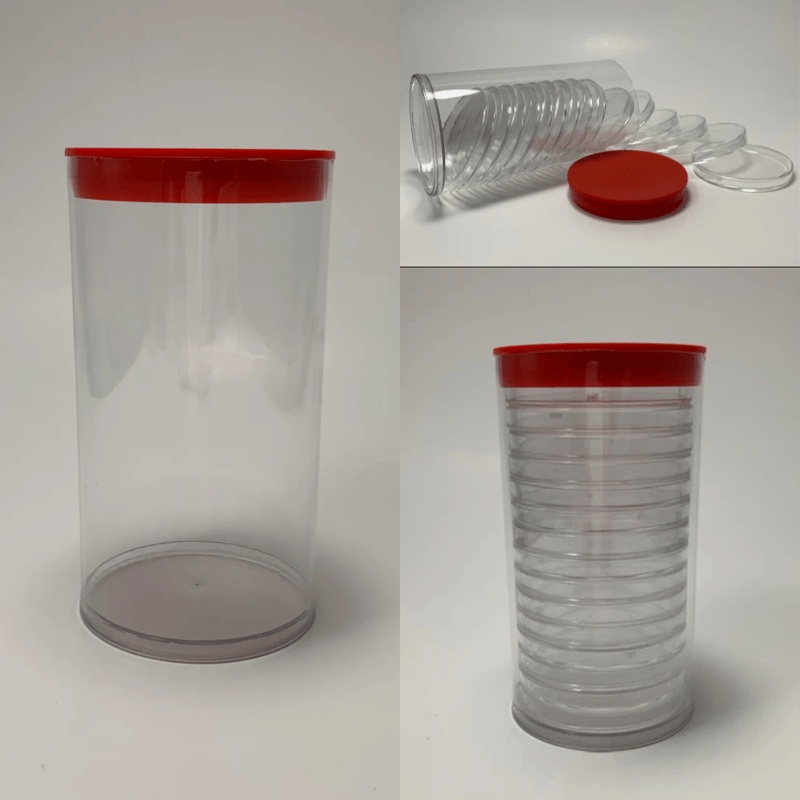
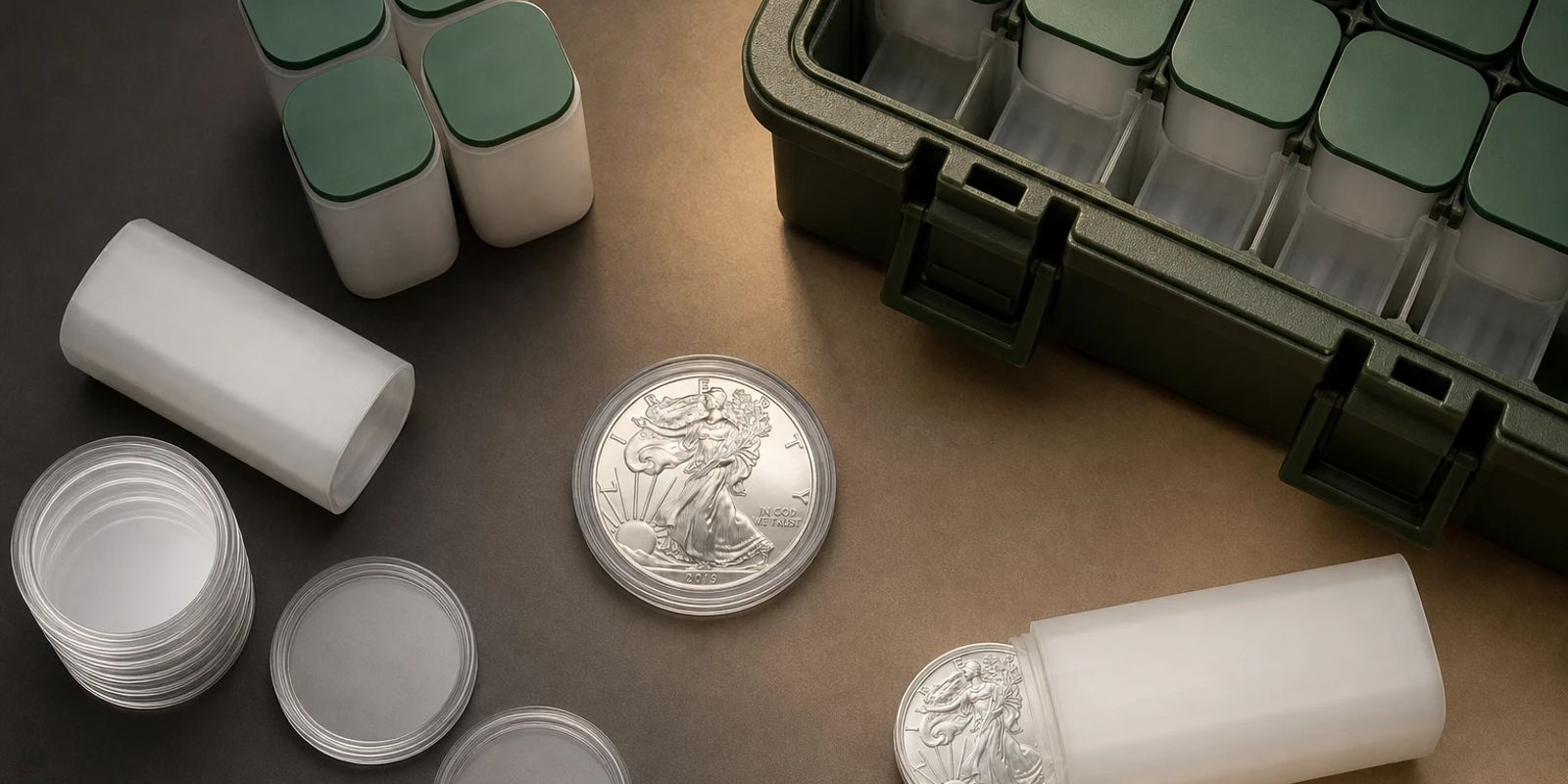
Tubes are where most real stacks live — twenty ounces per cylinder, stackable, instantly countable, and the format every buyer recognizes. The monster box (500 oz in twenty-five tubes) is less a container than a milestone: stackers consistently describe the first one as the moment silver stopped feeling like coins and started feeling like inventory — the question shifts from "should I buy?" to "where does more of it go?" That's the same psychology mapped in milestones.
Milk spots, toning, and the condition panic
The white clouding that appears on some silver coins — milk spots, a minting-process artifact — scares beginners disproportionately. The community's verdict: weight stackers don't care. Spots don't remove metal; the ounce is intact and melt value unchanged. Collectors chasing flawless grades care intensely (that world is covered in grading basics), which is exactly the point — know which game each coin is playing. Bullion is graded by the scale, not the loupe. Same logic for worn junk silver: wear is already in the price (the ~715 oz/bag convention), so "slicks" are a math problem, not a tragedy.
Handling in 20 seconds: hold collectible coins by the edge, never the face — skin oils etch over time. Keep silver away from rubber bands, PVC flips, and freshly-painted spaces (sulfur compounds are what accelerate ugly tarnish). Don't clean coins, ever — cleaning destroys collector value and does nothing for melt value. And a scuffed bulk round needs no rescue; it needs a tube.
Organization as strategy
The biggest stacks look the most boring — tubes, bars, more tubes — because at scale, stackers stop chasing designs and organize by job. The practical version of the three-pile system from allocation: the vault layer (capsuled keepers and core weight, deepest storage), the liquid layer (junk silver and sovereign coins, easiest to reach), and the active layer (recent buys and trade candidates). Storage that mirrors your allocation means you can execute the liquidation order in minutes — and sales events are when stacks traditionally upgrade a rung: loose rounds consolidate into tubes, small bars into 10 oz, generic into sovereign.
Frequently asked questions
Do capsules or tubes affect resale?
Original mint tubes and sealed monster boxes carry mild credibility (and sometimes small premiums) with buyers. Capsules protect the finish that premium coins are partly priced on. For generic weight, packaging is a rounding error.
Are anti-tarnish strips worth it?
Cheap insurance inside closed containers, especially for proofs. For bulk tubes, opinions split — the tube itself does most of the work.
Should junk silver be organized at all?
By face value, in labeled tubes or bags — $1, $5, $10 lots. Its whole job is fast small trades, and pre-counted lots are what make it fast.
Capsule the memories, tube the weight, and let the working silver work. Storage isn't about perfection — it's about knowing, for every coin, which game it's playing.