Gold IRA & 401(k) Rollover Guide: Moving Retirement Funds Into Physical Metal


You can hold physical gold, silver, platinum, or palladium inside a retirement account -- but only through a self-directed IRA with a qualified custodian, only in specific purities, and only if the metal never passes through your own hands first. This is general information, not personalized tax or investment advice -- talk to a qualified self-directed IRA custodian or tax professional before moving retirement funds.
Congress created a narrow exception to the rule that IRAs can't hold "collectibles." Under IRC Section 408(m), certain gold, silver, platinum, and palladium bullion is exempt from that ban -- but only if it meets a minimum fineness and stays in the physical possession of a qualifying trustee, not the account owner. That single requirement is why "home storage gold IRA" arrangements are widely considered non-compliant by tax professionals: the law requires an approved custodian or depository to hold the metal, not a safe in your house.

The purity bar for each metal
| Metal | Minimum fineness |
|---|---|
| Gold | 99.5% (.995) |
| Silver | 99.9% (.999) |
| Platinum | 99.95% (.9995) |
| Palladium | 99.95% (.9995) |
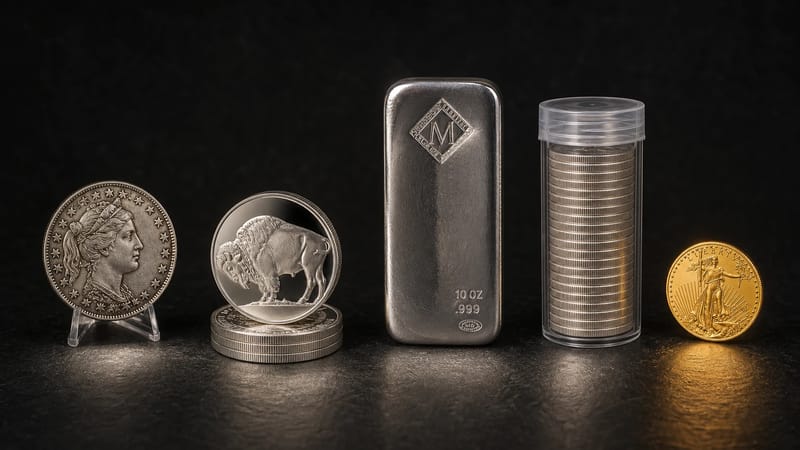
There is one well-known exception: the American Gold Eagle is only 91.67% fine (22-karat), which wouldn't normally qualify -- but because it's minted by the U.S. government, the IRS specifically permits it in an IRA anyway. Rare, collectible, or numismatic coins generally do not qualify no matter how pure the metal is; the IRS is drawing a line between investment-grade bullion and collectibles, not just measuring purity.
Rollover vs. transfer: two ways to move money in
A direct rollover moves funds from a 401(k) or existing IRA straight to your new self-directed IRA custodian -- you never touch the money, and there's no tax withholding or 60-day clock to watch. An indirect rollover pays the funds to you first, and you then have 60 days to deposit them into the new account or the IRS treats it as a taxable distribution (plus a possible early-withdrawal penalty if you're under 59-and-a-half). Most people choose direct rollovers for exactly that reason -- fewer ways for a paperwork delay to turn into a tax bill.
The IRS also limits indirect IRA-to-IRA rollovers to one per 12-month period across all your IRAs combined -- a rule that trips people up who try to "roll over" more than once in a year. Direct trustee-to-trustee transfers aren't subject to that limit, which is another reason custodians generally steer clients toward them.
What a custodian actually does
A self-directed IRA custodian handles the paperwork and IRS reporting, but doesn't choose your investments or store the metal itself -- that's the job of an IRS-approved depository, a secure third-party vault the custodian works with. You typically choose the depository, choose the dealer you buy metal from, and the custodian coordinates payment and storage so the metal is purchased directly into the depository's custody -- it's never shipped to you.
The physical-possession requirement isn't a technicality -- it's the difference between a compliant gold IRA and a distribution that triggers taxes and penalties on the spot. If a company is telling you that you can store IRA gold at home, get that claim reviewed by a tax professional before you act on it.
Frequently asked questions
Can I roll over part of a 401(k) while still employed?
Sometimes -- it depends on your plan's rules ("in-service rollovers"). Check with your plan administrator; not all employer plans allow it before you leave the job.
Do I owe taxes on a gold IRA rollover?
A properly executed direct rollover or trustee-to-trustee transfer isn't a taxable event. Taxes only come into play if funds are mishandled (e.g., missing the 60-day window on an indirect rollover) or when you eventually take distributions in retirement.
Roth or traditional gold IRA?
Both exist and follow the same tax rules as their non-metal counterparts -- traditional contributions may be tax-deductible with taxable withdrawals later, Roth contributions are after-tax with tax-free qualified withdrawals. Which fits depends on your broader tax situation; that's a conversation for a tax professional, not a blog post.
For the reference version of these rules -- eligible metals, what custodians and depositories each actually do, and the funding paths in more detail -- see our Gold IRA basics guide in the Learning Center.