What Is a Gold IRA? Rules, Custodians, and Eligible Metals


A Gold IRA is not a special type of retirement account -- it is a standard Individual Retirement Account, structured as a self-directed IRA, that holds physical precious metals instead of (or alongside) stocks, bonds, and mutual funds. The tax treatment is the same as any other traditional or Roth IRA; what changes is what the account is allowed to hold and how that holding has to be stored.
This article is general information, not investment or tax advice. Rules governing retirement accounts change and depend on individual circumstances -- consult a qualified financial advisor or tax professional before opening or funding a precious metals IRA.
Not every coin or bar qualifies
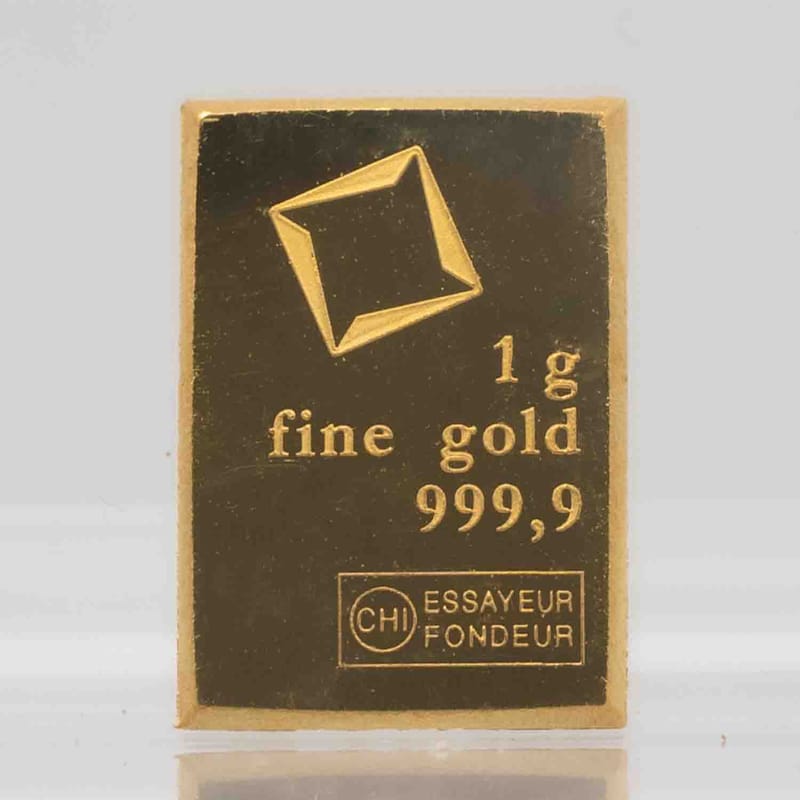
Because a Gold IRA holds real, physical metal inside a tax-advantaged account, the IRS restricts what can go in it under Internal Revenue Code Section 408(m). Only bullion meeting specific minimum purity (fineness) standards is eligible:
| Metal | Minimum purity (fineness) |
|---|---|
| Gold | 99.5% (.995 fine) |
| Silver | 99.9% (.999 fine) |
| Platinum | 99.95% (.9995 fine) |
| Palladium | 99.95% (.9995 fine) |
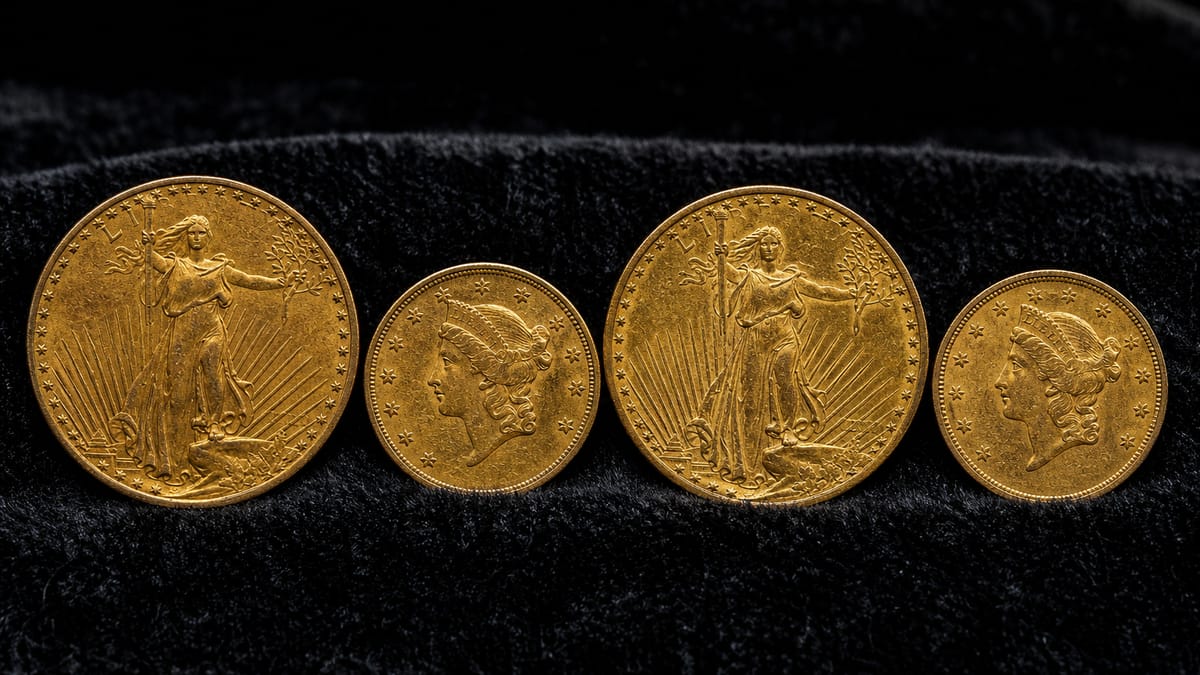
These thresholds exist to keep the account holding investment-grade bullion rather than collectible or numismatic items, whose value depends on rarity and condition rather than metal content. In practice that means most major sovereign bullion coins qualify -- Canadian Maple Leafs, American Buffalos, Austrian Philharmonics -- along with bars from accredited refiners, while rare coins, graded collectibles, and most pre-1933 gold do not.
The American Gold Eagle exception
There is one well-known exception to the gold purity rule: the American Gold Eagle coin, struck at 22-karat (91.67% pure) rather than .995 fine. Because it is issued directly by the U.S. Mint, Congress specifically wrote it into the eligible-metals list, and it remains one of the most commonly held coins in Gold IRAs despite not meeting the general purity threshold that applies to every other gold product.
Why a custodian and an approved depository are required
A Gold IRA cannot be self-stored. IRS rules require the account to be administered by a self-directed IRA custodian -- a bank, trust company, or other IRS-approved institution -- and the physical metal itself must sit in an IRS-approved depository, not a home safe or personal deposit box. This structure exists to keep the assets clearly separated from the account holder's personal property, which is part of what preserves the account's tax-advantaged status. Attempting to take physical possession of IRA-held metal yourself is generally treated as a taxable distribution.
In practice, opening a Gold IRA means working with three parties: a custodian who administers the account and reports to the IRS, a metals dealer who sources IRS-eligible coins or bars, and a depository that stores them securely on the account's behalf.
The "home storage IRA" pitch -- and why the Tax Court rejected it
Some promoters market "checkbook" or "home storage" Gold IRA structures, in which an LLC owned by the IRA buys the metal and the account holder stores it personally. The U.S. Tax Court addressed exactly this arrangement in McNulty v. Commissioner (2021): a taxpayer who took personal possession of American Eagle coins purchased through an IRA-owned LLC was ruled to have taken a taxable distribution of the full value, with penalties. However the structure is dressed up, metal you can physically touch is metal the IRS is likely to treat as distributed. If a pitch's main selling point is keeping IRA gold at home, treat it as a red flag, not a feature.
Contribution limits and funding
A Gold IRA follows the same annual contribution limits as any other IRA. For 2026, the IRS limit is $7,500 for those under age 50 and $8,600 for those 50 or older -- a combined cap across all of a person's traditional and Roth IRAs, not per account.
Because those annual limits are modest relative to metals prices, most Gold IRAs are actually funded by a rollover or transfer from an existing 401(k), traditional IRA, or similar account rather than fresh contributions. A direct custodian-to-custodian transfer avoids triggering taxes or early-withdrawal penalties. The dangerous variant is the indirect rollover: if the money is distributed to you personally first, you have 60 days to redeposit it, you can generally only do one such rollover across all your IRAs per 12 months, and missing either rule turns the whole amount into a taxable distribution.
A rough worked example: someone moving $50,000 from an old 401(k) via direct transfer pays no tax on the move; the custodian receives the funds, the account buys IRS-eligible metal at current prices (see our live gold price), and the depository stores it. The same $50,000 taken as a check payable to the individual, held past 60 days, would instead be taxed as income that year -- plus a 10% early-withdrawal penalty if under 59½.
Traditional vs. Roth, and required distributions
The traditional/Roth choice works exactly as it does for any IRA: traditional contributions may be deductible now with withdrawals taxed later, Roth contributions are after-tax with qualified withdrawals tax-free. Traditional Gold IRAs are also subject to required minimum distributions (RMDs) in retirement like any traditional IRA -- which raises a practical wrinkle, since the account holds bars and coins rather than cash. RMDs can be satisfied by selling metal inside the account, or by taking an in-kind distribution: the depository ships you actual coins or bars, and their fair market value on the distribution date is what gets taxed. Either way, the metal's value has to come out on schedule.
What it actually costs
A Gold IRA carries fees a brokerage IRA does not: a one-time account setup fee, an annual custodian administration fee, annual depository storage (flat or percentage-based, and typically higher for segregated storage than commingled), and dealer premiums over spot when buying the metal itself. None of these are individually large, but together they create a real annual drag that only makes sense against a sufficiently large balance -- one reason most custodians see rollover-funded accounts rather than accounts built $7,500 at a time.
Common mistakes worth avoiding
- Buying high-premium "exclusive" coins into the IRA. Proof and specially-packaged coins sold at large markups are a classic pitch; the IRA rules reward metal content, not packaging.
- Missing the 60-day window on an indirect rollover, or doing more than one in 12 months.
- Assuming any bullion qualifies. Krugerrands (91.67% fine, no statutory exception) and pre-1933 gold generally do not.
- Ignoring the fee stack relative to account size.
- Falling for home-storage structures -- see McNulty above.
Why investors consider it anyway
The core appeal is diversification: physical metal inside a Gold IRA moves independently of stock and bond markets, and some investors use it as a hedge against inflation or currency devaluation. It comes with trade-offs worth weighing against that appeal -- the fee stack above, and less liquidity than selling shares of a fund. How gains on metal outside a retirement account are taxed is its own topic -- see capital gains tax on precious metals -- and the mechanics of moving retirement money are covered step-by-step in our Gold IRA & 401(k) rollover guide. Whether the structure fits at all depends on an individual's broader retirement strategy, which is exactly the kind of decision a financial advisor is positioned to help with.
Sources: IRC Section 408(m); IRA Financial, "IRS-Approved Precious Metals for Retirement Accounts" (irafinancial.com, retrieved 2026-08-25); American Alternative Assets, "The Complete Guide to Best Metals for IRA" (retrieved 2026-08-25); IRS, "401(k) limit increases to $24,500 for 2026, IRA limit increases to $7,500" (Nov 13, 2025) via Fidelity, "IRA contribution limits for 2026" (retrieved 2026-08-26); McNulty v. Commissioner, 157 T.C. No. 10 (2021).