The Gold-to-Silver Ratio, Explained: How Stackers Actually Use It


How much silver does it take to buy one ounce of gold? That single question produces the most-watched number in precious metals: the gold-to-silver ratio. Divide the gold spot price by the silver spot price and you have it. If gold trades at $4,300 and silver at $64, the ratio is roughly 67-to-1 — one ounce of gold is worth about the same as 67 ounces of silver.
The ratio matters because it strips the dollar out of the conversation. Prices tell you what metals cost in a currency that changes value; the ratio tells you how the two metals are valued against each other. Stackers use it three ways: to decide which metal to buy next, to rebalance a mixed stack, and — for the more aggressive — to swap one metal for the other at extremes. You can watch both spot prices live on our live prices page.
What's a 'normal' ratio?
There isn't one — but there are reference points. For long stretches of monetary history, when both metals circulated as money, the ratio sat near 12-to-16-to-1, partly reflecting how much of each metal comes out of the ground. In the modern free-market era it has ranged far wider: below 20 at silver's 1980 spike, above 100 during the 2020 panic, and most often somewhere between 50 and 90.
That history is why many stackers read a high ratio (80–100+) as "silver is cheap relative to gold" and a low ratio (under 50) as "silver has run hot." It's not a law of physics — the ratio can stay stretched for years — but it's a useful compass for deciding where new money goes.
The 10-to-1 stacking rule
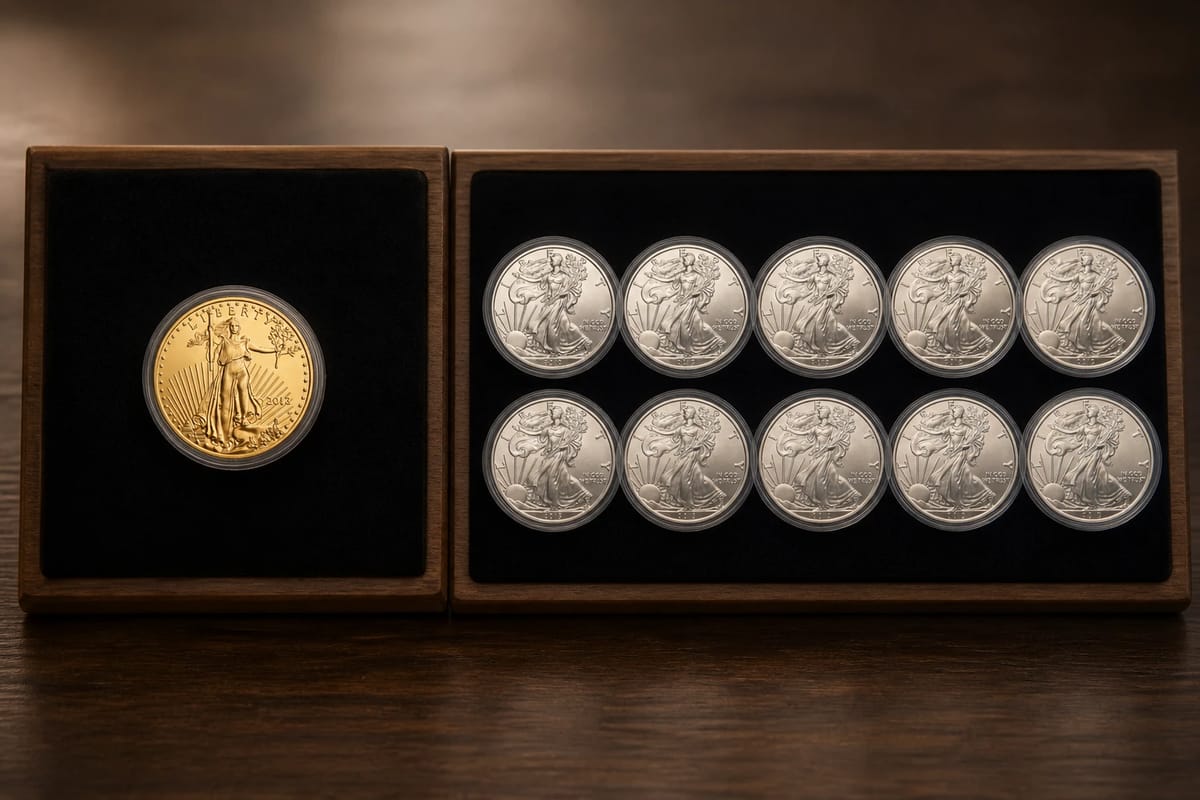
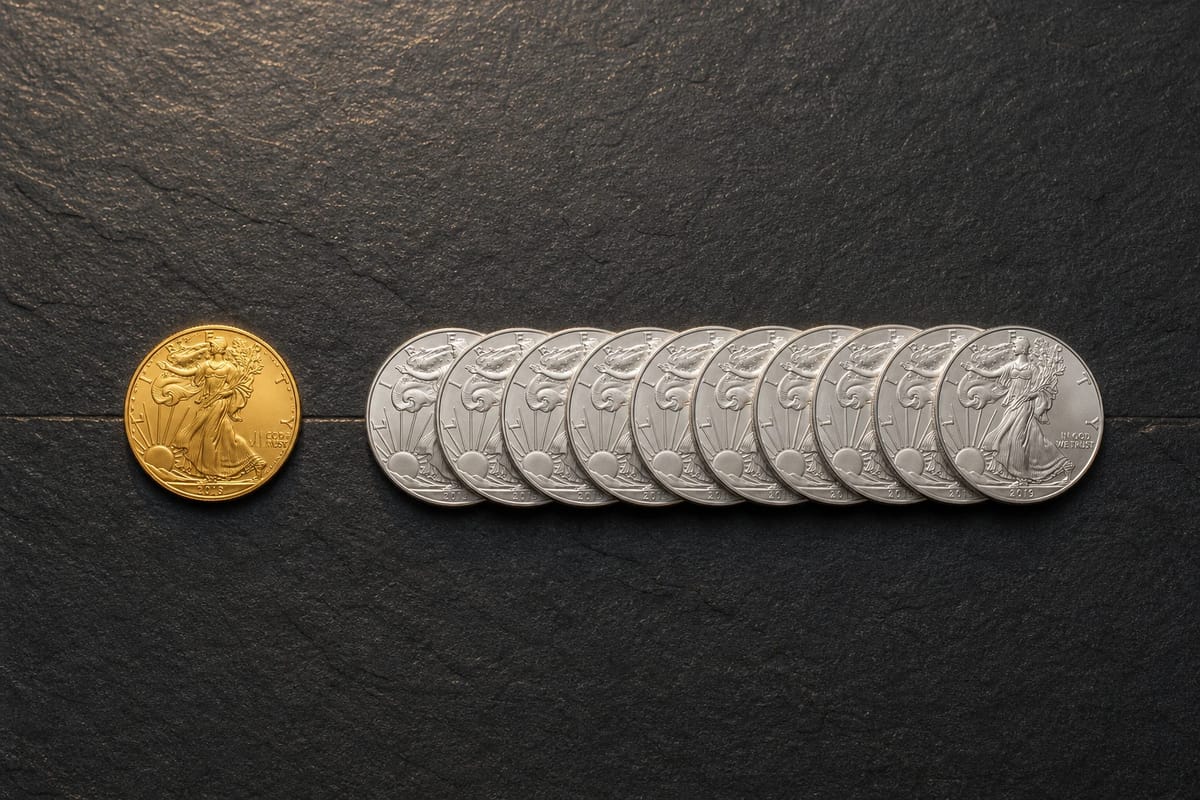
Separate from the market ratio, many stackers follow a personal allocation rule: for every ounce of gold they own, hold about ten ounces of silver. The logic is division of labor. Gold packs more value into less space — it stores and moves wealth efficiently. Silver gives you more ounces per dollar, more upside when the ratio compresses, and small units you can actually use. One metal preserves, the other gives leverage.
Crucially, 10-to-1 is a starting point, not a commandment. Some stackers run 70/30 by dollar value, some hold silver only until a milestone (commonly 200–300 ounces) and then start adding gold. The point of any ratio rule is the same: it removes emotion from the "which metal this month?" decision. If you're still choosing your first metal, read gold vs. silver: which should you stack first?
Using the ratio to time purchases (not the market)
Stackers who use the ratio well aren't predicting anything. The play is simpler: when the ratio stretches historically high, new money goes to silver; when it compresses, new money leans toward gold. You're always buying — the ratio just points the firehose. Holders of both metals get a bonus: the ratio shifts in your favor over time without you doing anything, as long as you already own both sides when it moves.
Don't chase the shiny metal. When gold makes headlines at round numbers, the ratio is the reality check. If silver hasn't kept pace with a gold rally, the stretched ratio — not the headline — is telling you where the relative value sits.
Rebalancing without spreadsheets
Rebalancing sounds complicated; in practice it's one habit. Say you target 70% silver, 30% gold by value, and a silver rally pushes you to 80/20. Rebalancing just means your next few purchases go to gold. You don't sell anything, you don't time anything — you nudge future buys toward whatever fell behind. Some stackers formalize it as a quarterly check; others eyeball it monthly. Either way it protects gains and keeps the stack from drifting into a single bet.
| Ratio reading | What it suggests | Common stacker response |
|---|---|---|
| Above ~85 | Silver historically cheap vs. gold | Direct new purchases to silver |
| ~60–85 | Middle of the modern range | Follow your normal allocation |
| Below ~55 | Silver has run hot vs. gold | Lean new buys toward gold; rebalance |
| Extreme lows (~50 or less) | Rare compression | Some swap silver into gold to lock the move |
The swap strategy (advanced, optional)
A minority of stackers take the ratio one step further: they never sell metal for dollars, only swap between metals at extremes. The classic version: accumulate silver while the ratio is high, then when it compresses toward 50-to-1, trade a tranche of silver ounces for gold ounces — locking in the relative move while never leaving metal. It requires patience (extremes can take years to arrive) and a liquid market to execute; a peer-to-peer marketplace where you can sell silver and buy gold in the same place makes the round-trip cheaper than dealer spreads.
Frequently asked questions
Does the ratio predict prices?
No. It measures relative value, not direction — both metals can rise or fall together while the ratio barely moves. Treat it as an allocation compass, not a crystal ball.
Why is the ratio so much higher than the mining ratio?
Roughly 7–8 ounces of silver are mined per ounce of gold, yet the price ratio has spent decades far above that. Silver trades partly as an industrial metal — solar, electronics, EVs — so its price dances to demand cycles gold doesn't have. That disconnect is exactly why some stackers consider silver structurally undervalued.
How do I actually track it?
Divide gold spot by silver spot, or just watch both on our live prices tracker. Checking it monthly is plenty — the ratio moves in months and years, not minutes.
Whether you follow 10-to-1, 70/30, or just glance at the ratio before each buy, the principle is the same: own both metals, let each do its job, and let the ratio — not emotion — decide where the next dollar goes.