Paper Silver vs. Physical: Spoofing Fines, Emptying Vaults, and Why Stackers Hold Metal


On September 29, 2020, the Commodity Futures Trading Commission ordered JPMorgan Chase to pay $920.2 million — the largest monetary penalty in CFTC history — for what the order describes as manipulative trading spanning at least eight years. Traders on the bank's precious metals desk, including its heads, placed hundreds of thousands of spoof orders in gold, silver, platinum, and palladium futures: orders designed to move the price and be cancelled before execution. The bank admitted wrongdoing in the parallel resolution.
That's not a forum rumor or a YouTube thumbnail — it's a federal regulator's findings, and it's the cornerstone of the community's oldest argument: the screen price and the metal are not the same thing. This guide lays out the paper-versus-physical case with the documented facts, the honest caveats, and what it means for how stackers behave.
How the paper market sets the price
The silver price on every ticker is set overwhelmingly by futures and OTC trading — COMEX in New York for the benchmark, London for bulk settlement — where contracts change hands in volumes that dwarf the physical metal backing them. Most positions never take delivery; they're cash-settled bets. That architecture is efficient, liquid, and — as the spoofing cases proved — manipulable at the margin, because moving the paper price doesn't require touching an ounce.
The physical market runs underneath: mints, dealers, refiners, and stackers trading actual bars and coins at the paper price plus a premium. Most of the time the two layers track each other closely. The interesting moments are when they don't — March 2020, when spot said $12 while sold-out dealers quoted $18+; premium spikes during every panic since. The premium is the physical market's honest vote, and it can't be spoofed (we cover using it as a signal in the premium playbook).
The vault evidence
While paper volumes churn, the physical stock behind them has been thinning. COMEX registered silver inventories are down roughly 70% from their 2020 peak. London has shipped huge tonnage east — 600+ tonnes through the UK to China and India in a single month at one point — and Shanghai vaults have cycled through rapid drains while Chinese buyers paid $10–20 over Western spot for actual bars. The pattern, repeated across six deficit years: paper sets the price in New York; metal migrates to whoever pays for delivery.
The infrastructure is shifting to match. Singapore has launched a gold pricing venture backed by major banks — a direct challenge to London's century of benchmark control — and Hong Kong ran its first gold settlement in 2026. Asia buys most of the world's physical gold; it is methodically acquiring the plumbing to price it. Meanwhile, ICBC and other Chinese banks abruptly closed retail paper-trading accounts in 2026 — a reminder that paper positions live inside someone else's system. Physical stackers were never inside that room.
The Fort Knox question, honestly framed. America's 147 million ounces of official gold were last comprehensively audited in the 1970s, and calls to open the vaults resurface regularly — most recently from the White House itself. Is the gold gone? Almost certainly not. But the fact that the question is unanswerable with current public data is itself the point stackers make: metal you hold requires no one's attestation.

What this does — and doesn't — mean
| The paper-vs-physical case says | It does NOT say |
|---|---|
| Screen prices can be manipulated at the margin (proven, fined) | Every red day is manipulation |
| Premiums reveal physical demand the ticker hides | The paper price is fake or irrelevant day-to-day |
| Vault drawdowns show metal migrating east | A COMEX default is scheduled for next Tuesday |
| Held metal has no counterparty | ETFs and futures have no legitimate uses |
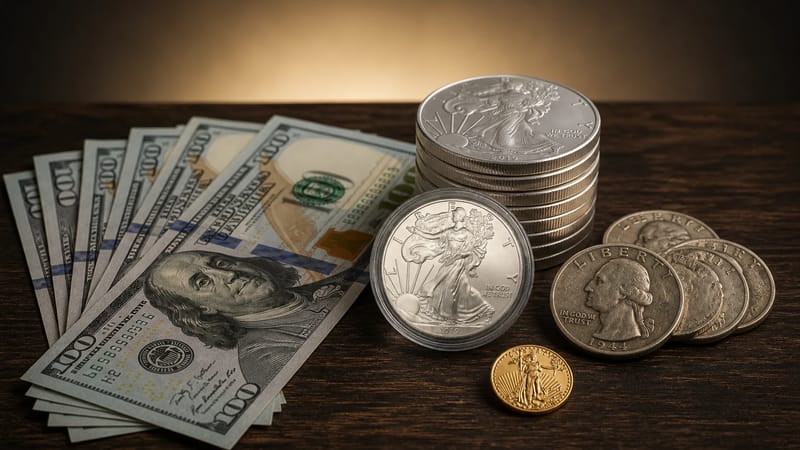
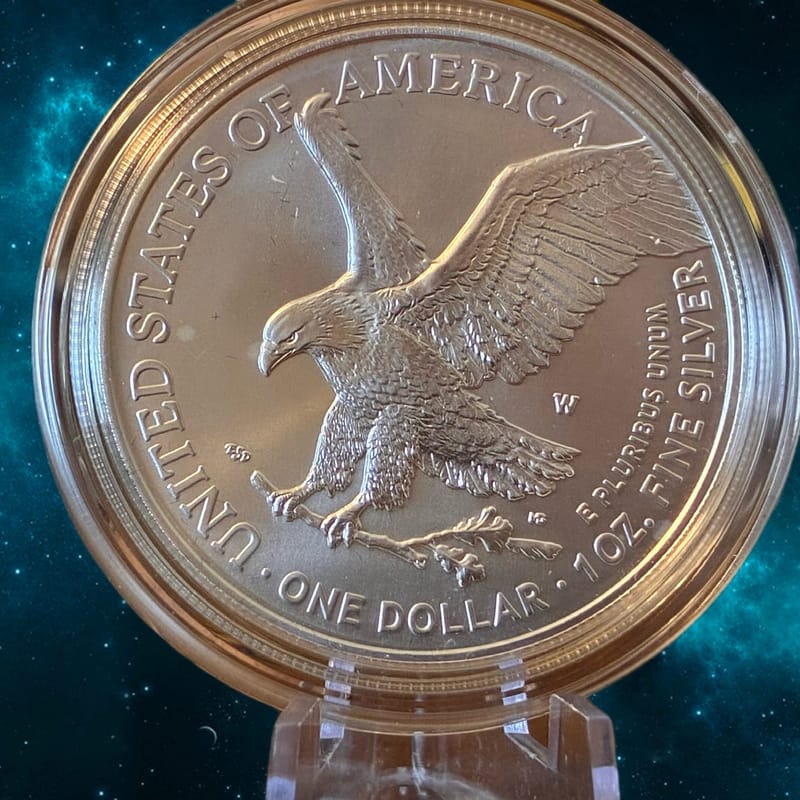
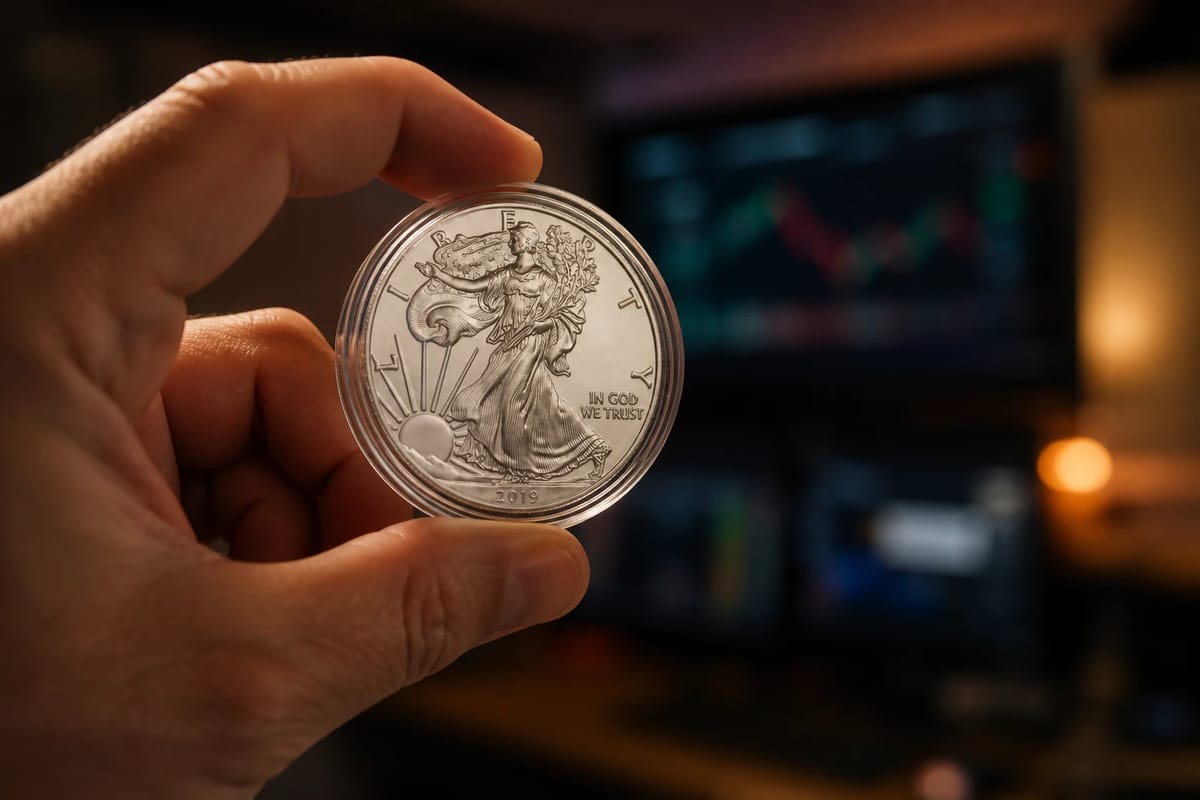
The community line — "if you don't hold it, you don't own it" — is a statement about counterparty risk, not a conspiracy theory. An ETF share is a claim processed by intermediaries; a futures contract is a promise inside a clearinghouse; a bank's paper metal account closes when the bank says so. A tube of Eagles in your safe is none of those things. The honest cost of that purity: storage responsibility, insurance, and premiums. Stackers pay it knowingly — that's the whole trade.
Frequently asked questions
Was the JPMorgan fine really about suppressing silver?
The CFTC order documents spoofing in both directions — the desk profited from moving prices up and down. The dramatic "decades of suppression" narrative goes beyond what was proven; the "prices were repeatedly manipulated by a major bank for eight years" part is simply the record.
Should I avoid silver ETFs entirely?
They're fine instruments for price exposure and trading convenience. They are not metal ownership in the stacker sense — no divisibility, no possession, counterparty layers throughout. Many people sensibly hold both; they're different products for different jobs.
If paper sets the price, why does physical win long-term?
Because deficits, vault drawdowns, and premiums are physical phenomena that eventually discipline the paper layer — the 2020 disconnect and every premium spike since are small previews. Until then, stackers happily buy metal at paper-derived prices and consider it a subsidy. The gold version of the story runs through central banks, who have voted with 36,000 tonnes.
The screen shows a price; the vault shows a fact. Stackers respect the first and trust only the second — and after a $920 million receipt, it's hard to call that paranoia.