Copyright © PeerMetals 2026
Browse junk silver listed direct by collectors and independent dealers. Every card shows its price per ounce, so you can compare the price per troy ounce against the live silver spot price shown below, make an offer, or bid where a seller runs an auction.
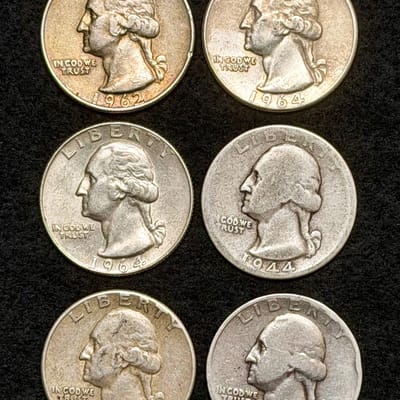
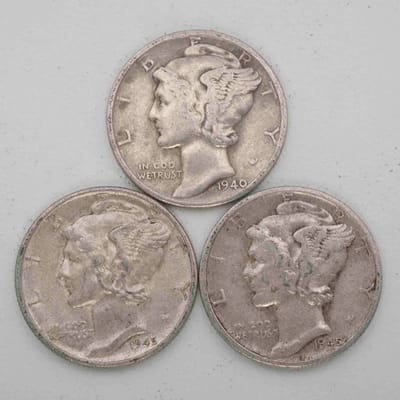
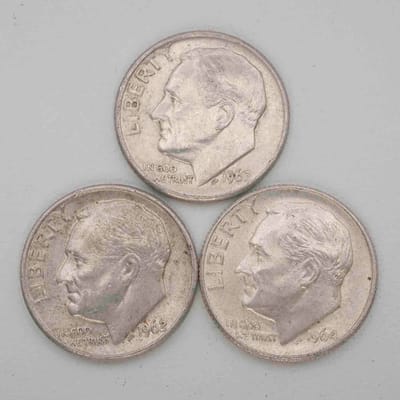
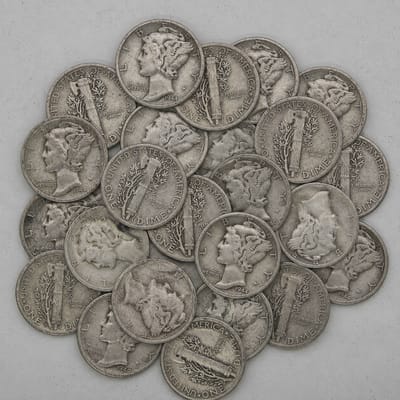
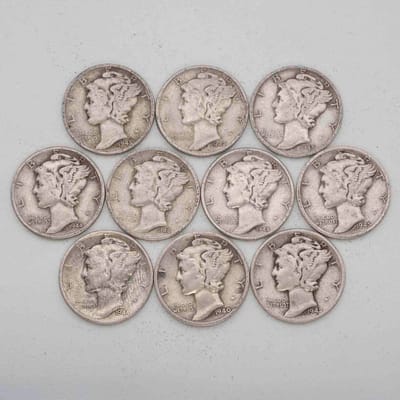
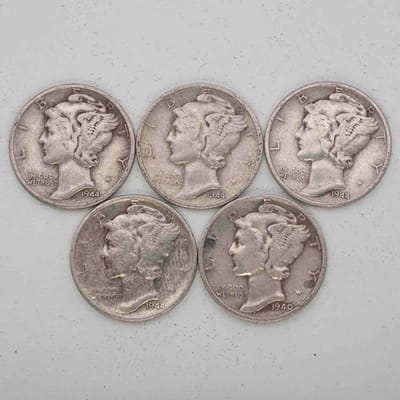
Ending soonest in Silver numismatic
Pre-1965 US dimes, quarters and halves are 90% silver. "Junk" only means no numismatic premium: it is bought by weight and is the cheapest route into physical silver.
A single grade point can double what a coin is worth. Listings certified by PCGS or NGC state the grade on the holder; ungraded coins rely on the seller's description.
Key dates and branch mintmarks are where the value sits. The same series can be common in one year and genuinely scarce in the next.
Ask for photographs of the coin itself. Toning, cleaning and hairlines all affect value and are hard to judge from a single catalogue-style image.
Pre-1965 dimes, quarters and halves were struck to fixed weights, so every dollar of face value holds the same 0.7234 oz of silver whatever the mix. Dealers quote heavily worn bags at 0.715 oz per dollar to allow for wear.
| Denomination | Pure silver | Melt value at $60.38/oz |
|---|---|---|
| Dime, 1964 and earlier (90%) | 0.0723 oz | $4.37 |
| Quarter, 1964 and earlier (90%) | 0.1808 oz | $10.92 |
| Half dollar, 1964 and earlier (90%) | 0.3617 oz | $21.84 |
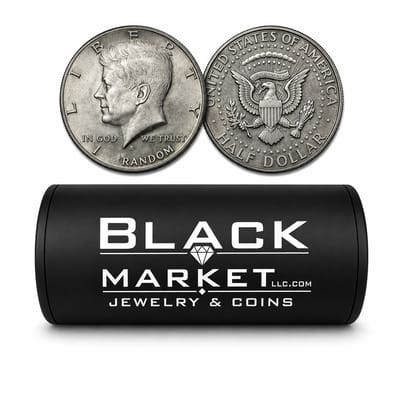
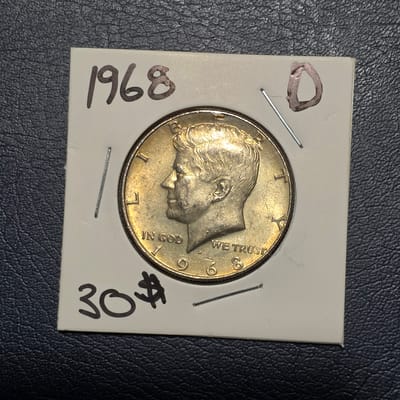
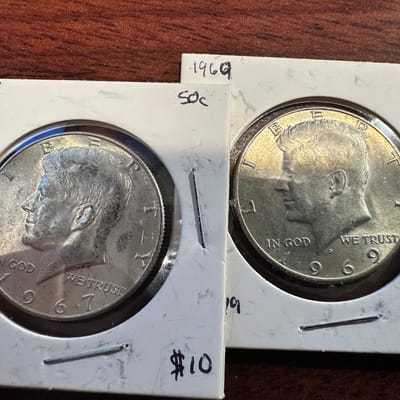
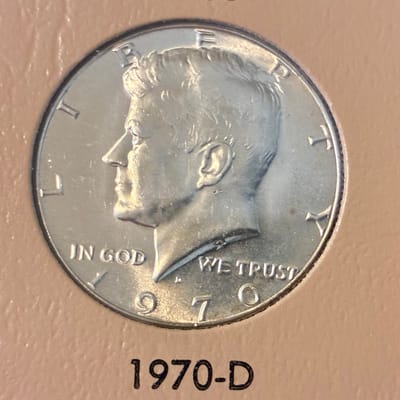
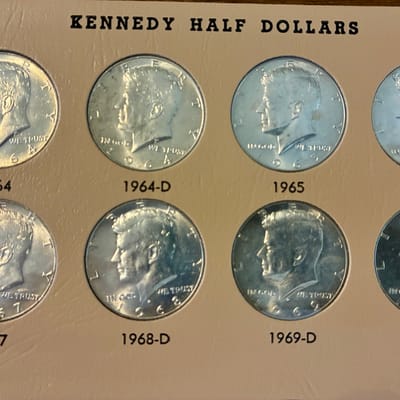
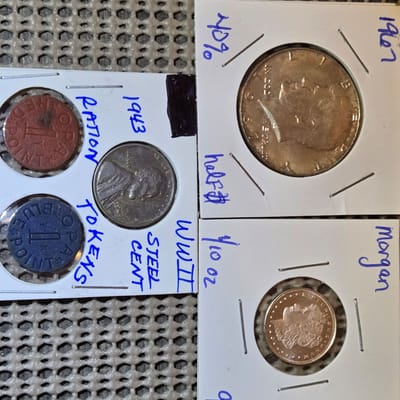
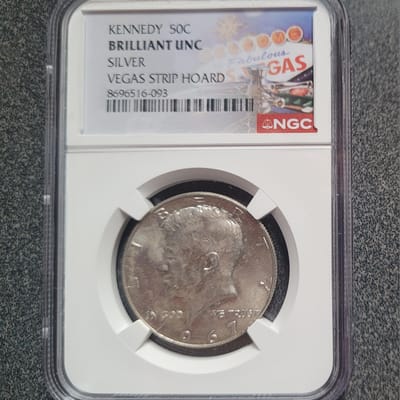
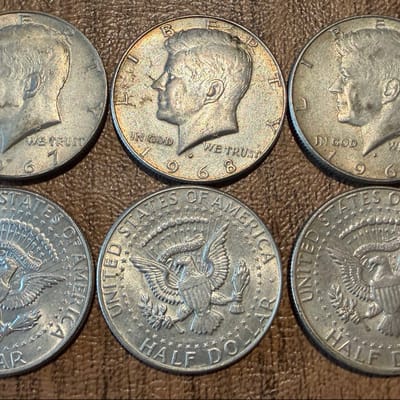
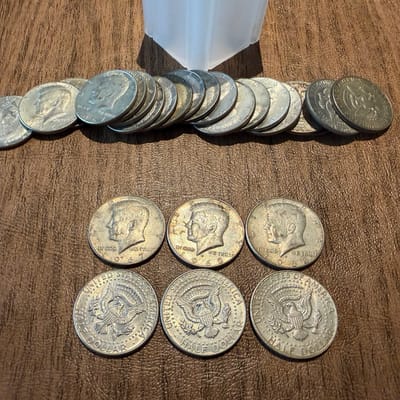
| Kennedy half dollar, 1965–1970 (40%) | 0.1479 oz | $8.93 |
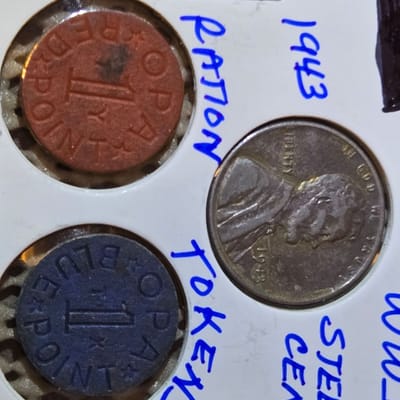
| War nickel, 1942–1945 (35%) | 0.0563 oz | $3.40 |
| Morgan or Peace dollar (90%) | 0.7734 oz | $46.70 |
| $1 face value, any mix of 90% coins | 0.7234 oz | $43.68 |
| $10 face value of 90% coins | 7.234 oz | $436.79 |
All of these trade by silver weight. The design only matters when a date or condition lifts a coin out of the junk bin and into the collector market.
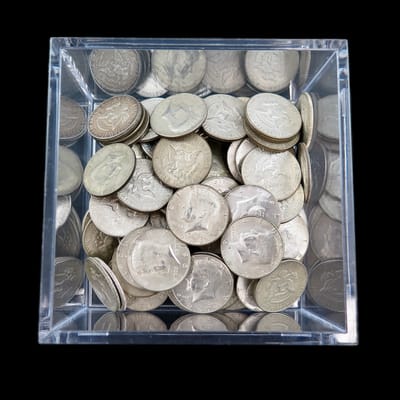
Junk silver is the trade name for United States dimes, quarters and half dollars dated 1964 or earlier, which were struck in 90 percent silver, plus a few related issues such as 40 percent Kennedy halves from 1965 to 1970 and 35 percent wartime nickels. "Junk" describes the numismatic value, not the condition: these are common dates in circulated grades that are worth their silver and nothing more. Because the Mint held weights constant across the whole era, dealers price it by face value rather than by coin.
Every dollar of face value in 90 percent coins contains about 0.7234 troy ounces of silver, so a $10 face-value roll of quarters and a $10 face-value bag of dimes hold the same silver. Sellers quote either a price per dollar of face value or a multiple of face value. Divide the ask by 0.7234 to get the price per ounce and compare it with the live spot price at the top of the page. Heavily worn bags are often priced at 0.715 oz per dollar to reflect the metal lost to circulation.
Nobody mints it, so there is no production cost to recover, and it is instantly recognizable, so buyers do not pay for verification. That keeps the premium over spot tighter than generic rounds and far tighter than sovereign coins. The trade-off is divisibility in the other direction: a dime is a tiny unit of silver, which is exactly why some buyers hold junk silver as spendable metal for a crisis.
Confirm whether a lot is 90 percent, 40 percent or mixed, since the silver content per dollar is very different. Ask whether the coins are culls, meaning damaged, holed or slick, which some buyers discount. Check that the face value in the title matches the photographs, and weigh a delivered lot if you can: $1 of 90 percent coins weighs about 25 grams. Any coin with a key date or a clean strike should be pulled out and sold separately through the coin value guides rather than melted into the bag price.
Pricing, payment, shipping and disputes
US dimes, quarters and half dollars dated 1964 or earlier are 90 percent silver and make up almost all junk silver. Kennedy halves from 1965 to 1970 are 40 percent and are sold separately. Wartime nickels from 1942 to 1945 are 35 percent. Dimes and quarters from 1965 onward contain no silver at all.
About 0.7234 troy ounces for 90 percent coins in any mix of dimes, quarters and halves. Dealers sometimes use 0.715 oz per dollar for heavily worn bags. A $10 face-value lot therefore holds a little over 7 ounces of silver.
Usually the premium over spot is lower, and the coins are recognizable and divisible into small units. Rounds are cleaner to stack and easier to count by the ounce. Most stackers hold some of each. Compare the price per ounce on this page rather than the price per coin.
Buyers think in face value, so list junk silver in round lots such as $1, $5, $10 or $50 face. State whether it is 90 percent or 40 percent, whether culls are included, and the approximate mix of denominations. Coins with any collector value should be sold individually instead.
Sellers set their own prices. Many price directly off the live silver spot price with a fixed premium or discount, so their listings move with the market; others set a flat price. The live spot price used across the site is shown at the top of this page.
The coin has been authenticated and assigned a condition grade by a third-party service such as PCGS or NGC, then sealed in a tamper-evident holder. Graded coins cost more but remove most of the risk around authenticity and condition.
Yes, on any listing where the seller has enabled offers. Send your offer from the listing page and the seller can accept, decline or counter. Some sellers also run auctions, where you bid instead.
Every order is covered by PeerMetals buyer protection, and funds are only released to the seller after delivery. Each seller shows Metal Points and a rating built from their completed order history, so you can see their track record before you buy.
How to buy and what moves the price
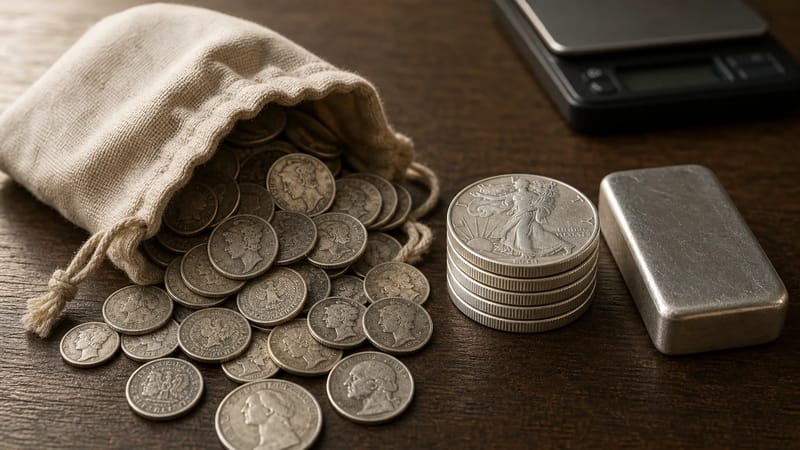
Dealer buybacks, pawn shops, coin shops, eBay and a peer-to-peer marketplace, compared with dated quotes and a worked example selling $500 face of junk silver and 20 Silver Eagles.
23 min read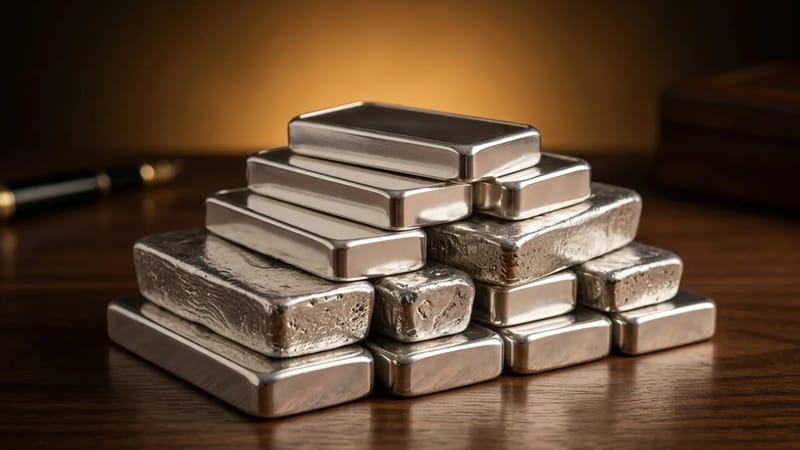
A "best silver bars" list is stale the day it's published -- premiums move daily. Here's the actual framework: how to check any bar's premium yourself, why size trades off against resale flexibility, what "recognized refiner" really means, and why a sealed assay card matters.
7 min read
A stack of gold has no beneficiary form and no recorded deed -- it passes by possession, not paperwork. The real estate-planning basics for physical metal: the step-up in basis, why an inventory matters more than a safe, and will vs. trust trade-offs.
7 min read
The first $1,000 decides more than any purchase after it — it sets the premium habits, the product mix, and the standard for every buy that follows. Here are three field-tested splits (weight-first, balanced, and metals-mixed), the four product types they draw from, and the five terms to know first.
8 min readList it alongside these results and reach buyers already searching for it. Free to list, and you set your own price — flat or tracking the live spot price.
Trusted by thousands of verified buyers and sellers
“Awesome deal on a Beast. Thanks. 5 stars!”

Chris
“Great product ”

Anthony Paul Wagner
“Awesome, will buy again!”

Kevin Davies
“Beautiful Perth Mint Lunar coins. They look amazing and greatly appreciate the amazing price from the seller. Thank you!”
RUMY
“Great seller. Fast delivery”
Michael Lord
“A+ just as described ”
Andrew Kianrd
“All coins arrived quickly and were packed securely. Condition is as described. Great looking Morgans all over 100 years old. Recommend this seller.”

Gene A Ingram
“Another fantastic experience! I think i've made probably a dozen orders with this seller , he has been the easiest to work with , does the best bundle deals.. i can go on and on , don't be afraid to reach out to him and make an offer , worse he can say is no .. as always highly recommend!”

Jeffrey Crowther
“Exactly as shown. Efficient seller. Thx! ”

Silver Sipher
“Dang these look amazing ”
doomsliver
“Great price, excellent condition and arrived quickly. ”
charlz.sena
“Nice Libertad thank you”
BIG B'S OUNCES