



Menu
Welcome to PeerMetals
Shop
HomeMarketplaceSpot DealsAuctionsLive ShoppingSocial Feed
My Activity
Cart
My Account
Become a Seller
Support
Help CenterContact

Copyright © PeerMetals 2026

90% Junk Silver (Pre-1965 U.S. Coins) Value Chart

"Junk silver" is the trade term for worn, common-date pre-1965 U.S. dimes, quarters, and half dollars -- coins with no meaningful numismatic premium, bought and sold purely for their 90% silver content by face value rather than by date or mint mark. A $1 face-value bag (for example, 10 dimes, or 4 quarters, in any worn condition) contains about 0.7234 troy oz of actual silver.

Current melt value
$49.47
$68.38/oz silver spot × 0.7234 troy oz · live
Metal content
0.7234 troy oz
Minted
1892–1964 (90% silver era)
Purity
90% silver, 10% copper -- priced by $1 face value, not by individual coin
Shop listingsSilver spot price
Buyer protection
Funds released after delivery
Rated sellers
Metal Points earned on delivered orders
Make an offer
Negotiate directly with sellers
Insured shipping
Tracked, with combined shipping

Historical silver spot price

90% Junk Silver (Pre-1965 U.S. Coins) melt value tracks silver spot price directly — this chart is the same live silver price used to calculate the melt value above, so you can see the trend behind today's number.

Design

What is actually struck on each face, and who designed it.

Obverse

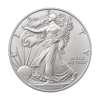
Varies by coin and date — most commonly Mercury dimes (1916–1945), Washington quarters (1932–1964), and Walking Liberty, Franklin, or 1964 Kennedy half dollars, sold together as mixed-date "junk silver" bags rather than as individual coins.

Reverse

Varies by coin and date — reverse designs span the Barber, Mercury, Standing Liberty, Walking Liberty, Franklin, and 1964 Kennedy series, all struck in 90% silver before the Coinage Act of 1965 removed silver from circulating U.S. coinage.

Learn more about the 90% Junk Silver (Pre-1965 U.S. Coins)

01

Why junk silver trades by face value, not by coin

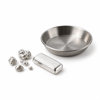
Before 1965, U.S. dimes, quarters, and half dollars were struck in 90% silver at fixed weights set by law. That means every dollar of face value — whatever the mix of denominations or dates — contains almost exactly the same amount of silver: about 0.7234 troy ounces. Dealers exploit that consistency by pricing bags in $1 face-value units instead of sorting and grading every coin individually, which is what keeps junk silver the lowest-premium way to buy physical silver.
02

The Coinage Act of 1965: the day junk silver was born

Rising silver prices in the early 1960s made the metal in a dime worth more than ten cents, and the public began hoarding pre-1965 coins on sight. Congress responded with the Coinage Act of 1965, which replaced silver in dimes and quarters with a copper-nickel clad sandwich starting in 1965, and dropped half dollars to 40% silver before eliminating silver from them entirely in 1971. Every coin struck before that cutoff is what the bullion market now calls junk silver.

03

What "junk" actually means here

The name has nothing to do with condition and everything to do with numismatic value: these are common dates in circulated grades, worth essentially nothing above their silver content to a collector. A rare date or a coin in pristine uncirculated condition is worth pulling out and selling separately at a premium — see the Roosevelt Dime, Washington Quarter, and other coin-value guides for what those exceptions look like.

Shop 90% Junk Silver (Pre-1965 U.S. Coins) listings

View all

Nothing listed right now.

List yours

Common questions

About the 90% Junk Silver (Pre-1965 U.S. Coins)

How much is a 90% Junk Silver (Pre-1965 U.S. Coins) worth right now?

At the current silver spot price of $68.38/oz, the melt value of a 90% Junk Silver (Pre-1965 U.S. Coins) (0.7234 troy oz, 90% silver, 10% copper -- priced by $1 face value, not by individual coin) is approximately $49.47. This updates continuously with the spot price above — sellers on the marketplace typically price above melt value, since the premium covers minting, distribution, and dealer margin.

Why does every listing cost more than melt value?

Melt value is the raw metal content only — what you'd get scrapping the coin. The premium above it pays for minting, distribution, and dealer margin, and on this marketplace specifically, it's set by each individual seller rather than one company's price list, so it's worth comparing a few listings rather than buying the first one you see.

What moves the price of silver?

Like any commodity, silver trades on global supply and demand — mine output and recycling on the supply side, industrial use, jewelry, and investment buying on the demand side. Short-term moves are usually driven by macro factors: interest rates, currency strength, and how much uncertainty investors are pricing into markets generally.

Is the 90% Junk Silver (Pre-1965 U.S. Coins) a good way to buy silver?

Government-minted bullion coins like this one are legal tender, widely recognized, and easy to resell — that recognition is usually worth the modest premium over generic rounds or bars of the same weight. For buyers who want to add to a physical position gradually, one-ounce coins are also just a convenient, liquid unit size.

Why does the price on this page differ slightly from a listing's actual price?

This page shows melt value — spot price times pure metal content, recalculated on every page load. Individual seller listings add their own premium on top, and that premium (not the melt value) is what actually varies between sellers, so it's normal for listing prices below to sit above the number at the top of this page.

Other Silver bullion products

Melt value at the same live silver spot price of $68.38/oz.