



Copyright © PeerMetals 2026
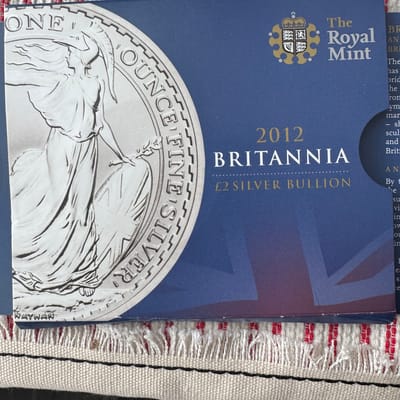
The Royal Mint's flagship silver bullion coin, launched in 1997 as the silver companion to the gold Britannia (first struck in 1987). Named for the same classical personification of Britain that appeared on British pennies for centuries, it carries some of the UK's strongest security features of any bullion coin.


Britannia (Silver) melt value tracks silver spot price directly — this chart is the same live silver price used to calculate the melt value above, so you can see the trend behind today's number.
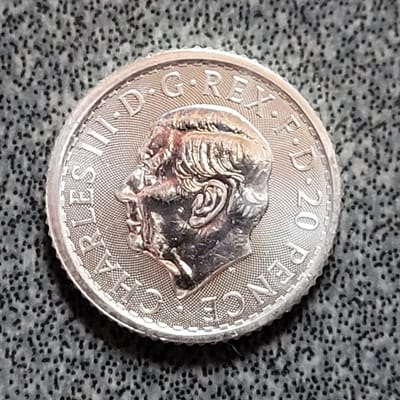
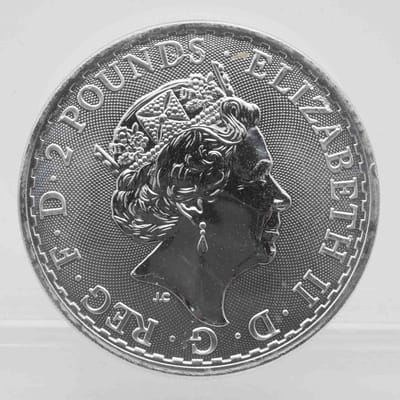
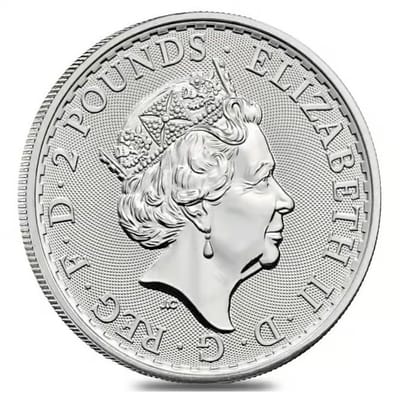
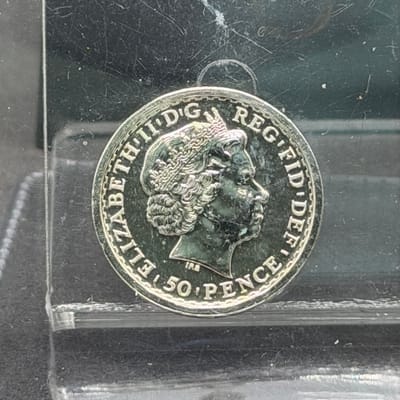
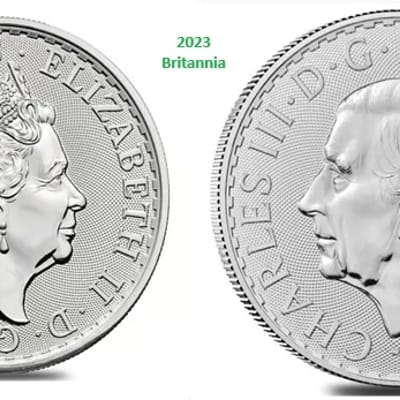
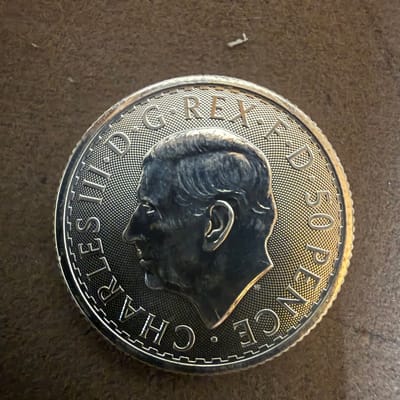
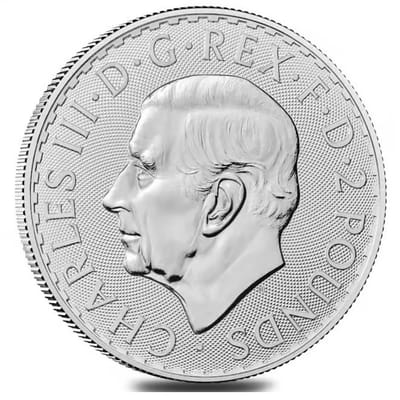
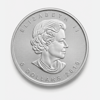
A portrait of the reigning monarch — Queen Elizabeth II on coins through 2022, King Charles III from 2023 onward.
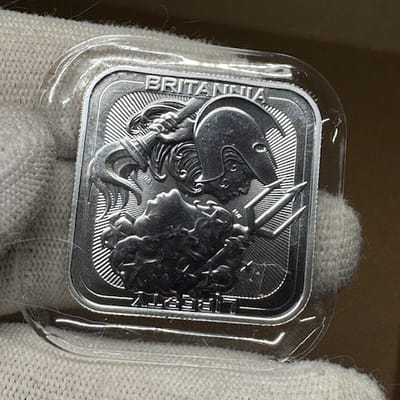
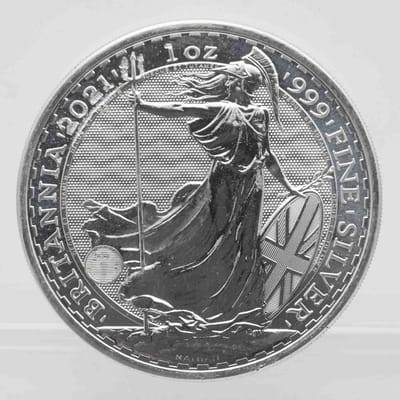
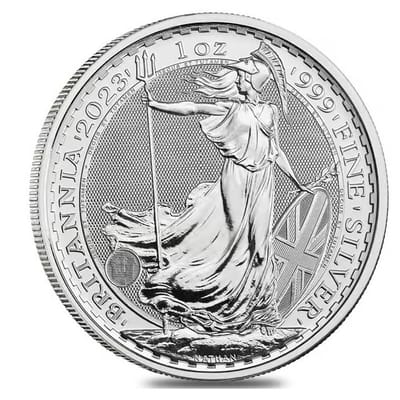
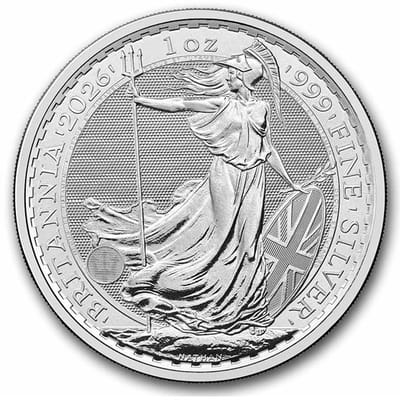
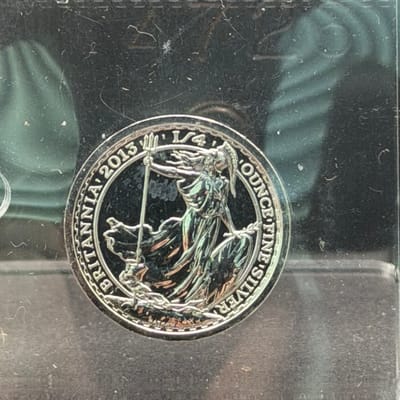
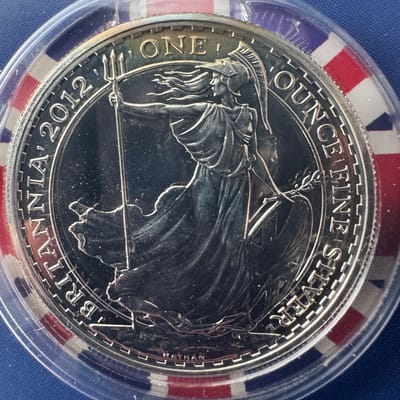
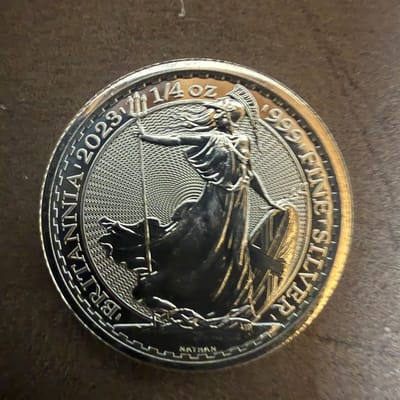
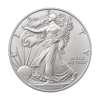
Britannia, the female personification of Britain, standing with a trident and shield — a figure that has appeared on British coinage in various forms since Roman times, redesigned periodically by different artists for this coin.
Britannia first appeared on Roman coinage referencing the province of Britain, and reappeared on English and British coins on and off for centuries, most famously on the old copper penny. The Royal Mint revived her as the face of a dedicated gold bullion coin in 1987, then added the silver version a decade later in 1997 — deliberately borrowing a figure with far more history than the coin itself.
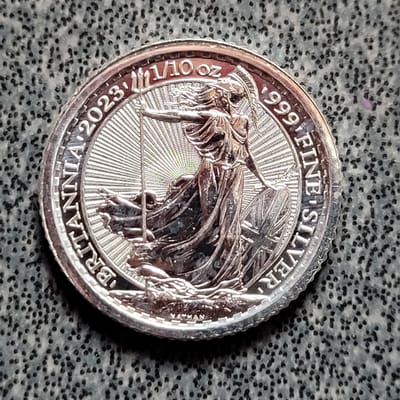
Silver Britannias struck from 1997 through 2012 used .958 fine silver, a traditional British sterling-adjacent standard known as "Britannia silver." From 2013 onward the Royal Mint switched to .999 fine to match the purity investors expect from modern bullion coins — so a Britannia's exact silver content depends on which side of that 2013 changeover it was struck.
Since 2015, Britannias have carried covert micro-text and a switching-colour animation effect in the coin's surface (visible when tilted), among the more elaborate anti-counterfeiting measures of any government bullion coin. The design also changes its Britannia artwork periodically, unlike coins that keep one fixed reverse for decades — recent Royal Mint issues have used several different sculptors' interpretations.
About the Britannia (Silver)
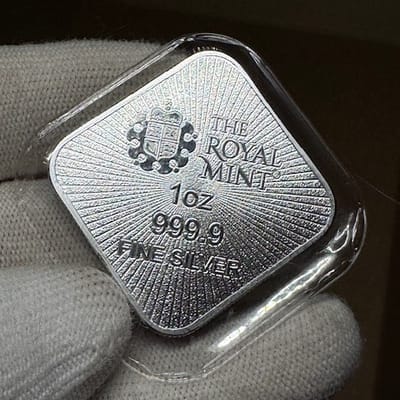
At the current silver spot price of $68.97/oz, the melt value of a Britannia (Silver) (1 troy oz, .999 fine silver (raised to .999 in 2013; earlier issues from 1997-2012 were .958 Britannia silver)) is approximately $68.97. This updates continuously with the spot price above — sellers on the marketplace typically price above melt value, since the premium covers minting, distribution, and dealer margin.
Melt value is the raw metal content only — what you'd get scrapping the coin. The premium above it pays for minting, distribution, and dealer margin, and on this marketplace specifically, it's set by each individual seller rather than one company's price list, so it's worth comparing a few listings rather than buying the first one you see.
Like any commodity, silver trades on global supply and demand — mine output and recycling on the supply side, industrial use, jewelry, and investment buying on the demand side. Short-term moves are usually driven by macro factors: interest rates, currency strength, and how much uncertainty investors are pricing into markets generally.
Government-minted bullion coins like this one are legal tender, widely recognized, and easy to resell — that recognition is usually worth the modest premium over generic rounds or bars of the same weight. For buyers who want to add to a physical position gradually, one-ounce coins are also just a convenient, liquid unit size.
This page shows melt value — spot price times pure metal content, recalculated on every page load. Individual seller listings add their own premium on top, and that premium (not the melt value) is what actually varies between sellers, so it's normal for listing prices below to sit above the number at the top of this page.