



Copyright © PeerMetals 2026
The Royal Canadian Mint's flagship 1 oz silver bullion coin, first struck in 1988. At .9999 fine, it is purer than the American Silver Eagle's .999, and it's the second best-selling silver bullion coin in the world after the Eagle.


Canadian Silver Maple Leaf melt value tracks silver spot price directly — this chart is the same live silver price used to calculate the melt value above, so you can see the trend behind today's number.
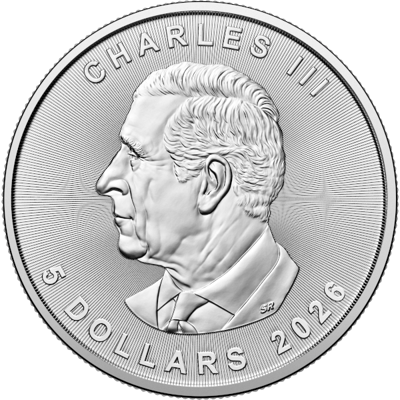
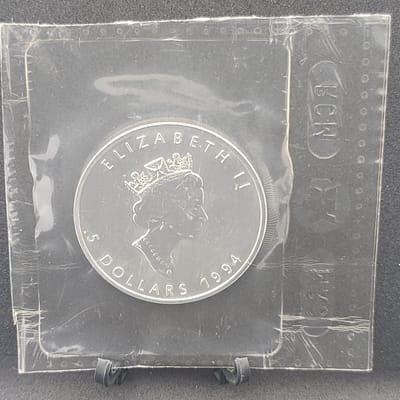
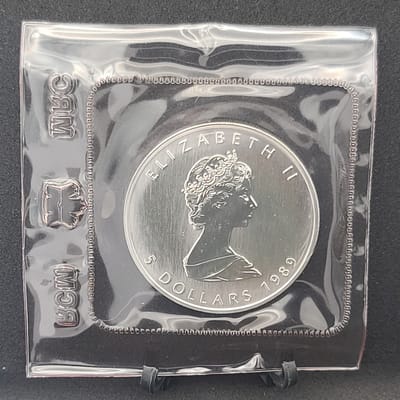
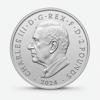
A portrait of the reigning monarch — Queen Elizabeth II from 1988 through 2023, and King Charles III on coins struck from 2024 onward — with the coin's date and denomination.
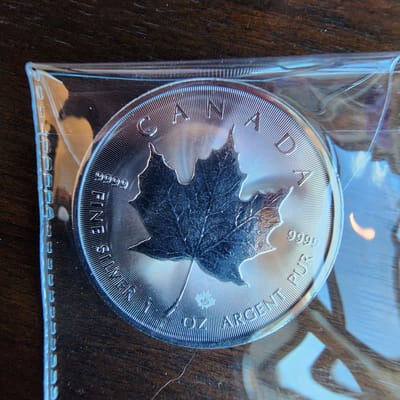
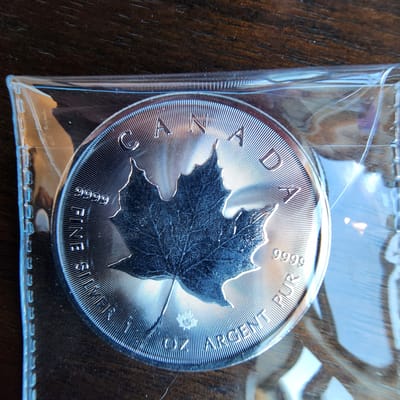
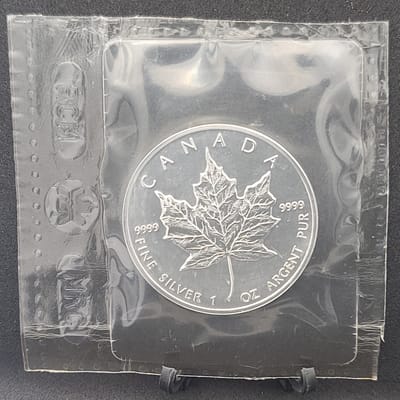
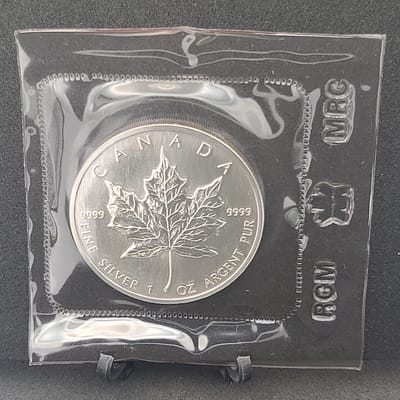
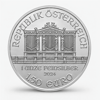
A single detailed sugar maple leaf, designed by Royal Canadian Mint engraver Walter Ott, filling most of the coin face with "CANADA" and the fine-silver content marked around the rim.
The Royal Canadian Mint introduced the Silver Maple Leaf in 1988, two years after the American Silver Eagle debuted, and set its purity at .9999 fine — a full "nine" higher than the Eagle's .999. That extra purity became the coin's signature selling point and has stayed a fixed spec of the series since launch.
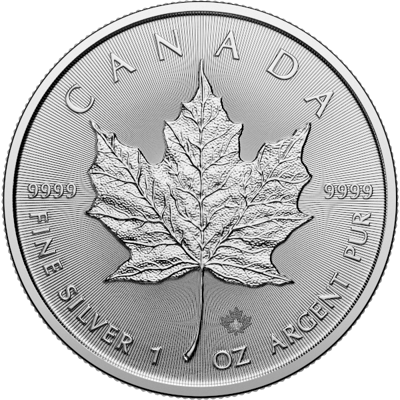
Since 2014, Maple Leafs have carried a micro-engraved security radial-line pattern and a tiny laser-engraved maple leaf privy mark visible only under magnification, added specifically to deter the counterfeiting that affects popular bullion coins. Few other government bullion coins build in anti-counterfeiting features this deliberately.
The reverse maple leaf design has stayed essentially unchanged since 1988, while the obverse portrait changes with the reigning monarch — Queen Elizabeth II coins ran from 1988 to 2023, and King Charles III's portrait began appearing on 2024-dated coins, giving the series a natural generational marker for collectors.
About the Canadian Silver Maple Leaf
At the current silver spot price of $68.97/oz, the melt value of a Canadian Silver Maple Leaf (1 troy oz, .9999 fine silver (one of the highest-purity bullion coins minted anywhere)) is approximately $68.97. This updates continuously with the spot price above — sellers on the marketplace typically price above melt value, since the premium covers minting, distribution, and dealer margin.
Melt value is the raw metal content only — what you'd get scrapping the coin. The premium above it pays for minting, distribution, and dealer margin, and on this marketplace specifically, it's set by each individual seller rather than one company's price list, so it's worth comparing a few listings rather than buying the first one you see.
Like any commodity, silver trades on global supply and demand — mine output and recycling on the supply side, industrial use, jewelry, and investment buying on the demand side. Short-term moves are usually driven by macro factors: interest rates, currency strength, and how much uncertainty investors are pricing into markets generally.
Government-minted bullion coins like this one are legal tender, widely recognized, and easy to resell — that recognition is usually worth the modest premium over generic rounds or bars of the same weight. For buyers who want to add to a physical position gradually, one-ounce coins are also just a convenient, liquid unit size.
This page shows melt value — spot price times pure metal content, recalculated on every page load. Individual seller listings add their own premium on top, and that premium (not the melt value) is what actually varies between sellers, so it's normal for listing prices below to sit above the number at the top of this page.