How to Test Silver at Home: Magnet, Ping, Ice, and Weight

Counterfeit silver exists, and it gets better every year. The good news: the physics of silver is very hard to fake. Silver is non-magnetic, unusually dense, rings like a bell, and conducts heat better than any other metal. Those four properties give you four free tests you can run at your kitchen table — no acid, no drilling, no lab.
This guide walks through each test, what a pass and a fail look like, and — just as important — when testing is worth your time versus when the smarter protection is simply where you buy. If you're new to buying silver online, pair this with our guide to buying peer-to-peer safely.
Test 1: The magnet test (30 seconds)
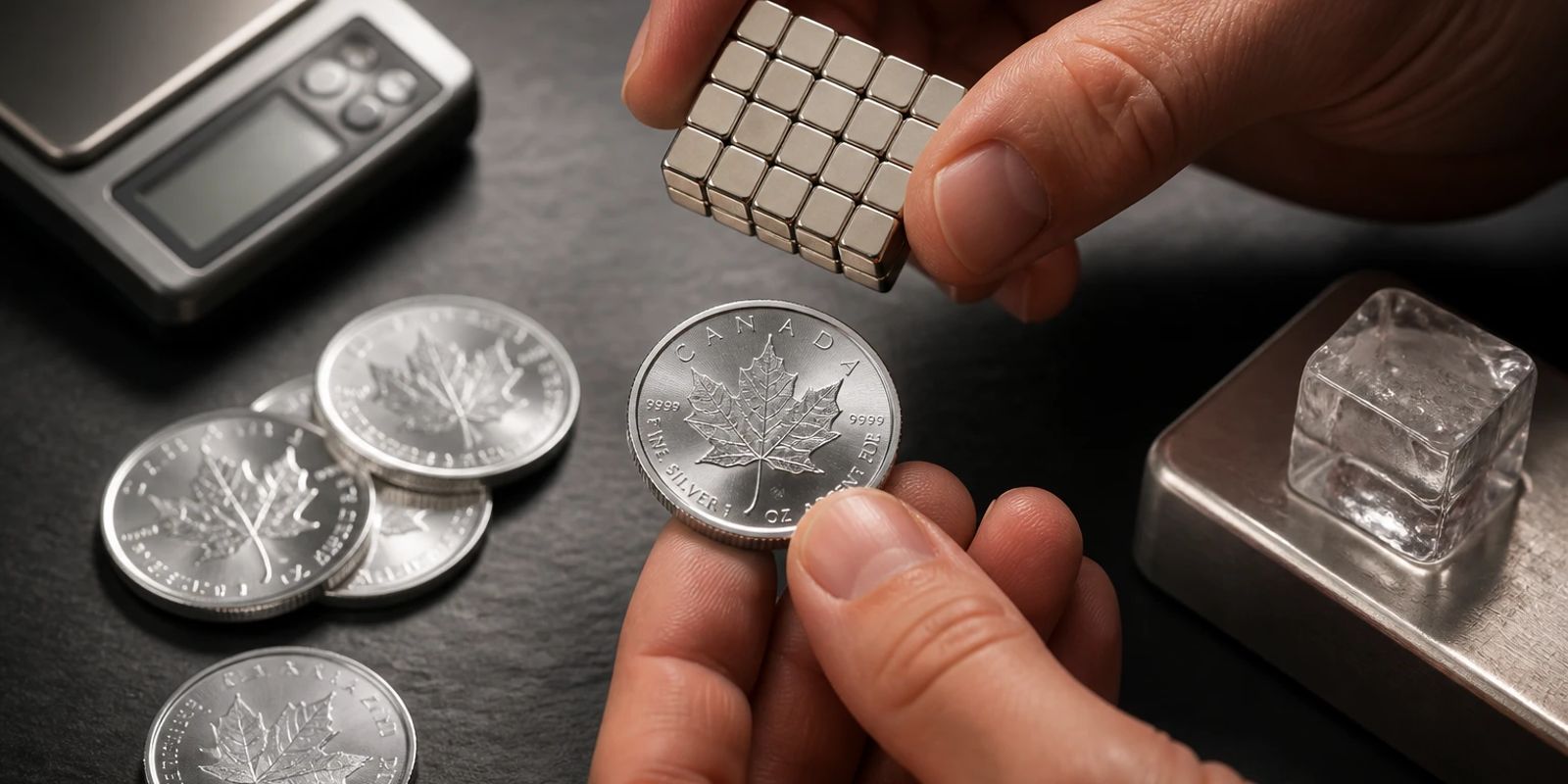
Silver is diamagnetic — it is not attracted to magnets at all. Grab a strong neodymium magnet (fridge magnets are too weak to tell you much) and hold it against the coin or bar. If it snaps on and sticks hard, what you're holding has a ferromagnetic core: walk away.
The interesting part is what real silver does. Tilt a silver bar and slide the magnet down its face: instead of sticking or free-falling, the magnet glides in slow motion. That drag comes from eddy currents that silver's excellent conductivity induces — a behavior most base-metal fakes can't reproduce. Sticks hard: fail. Slides slowly with gentle resistance: consistent with silver.
Test 2: The ping test
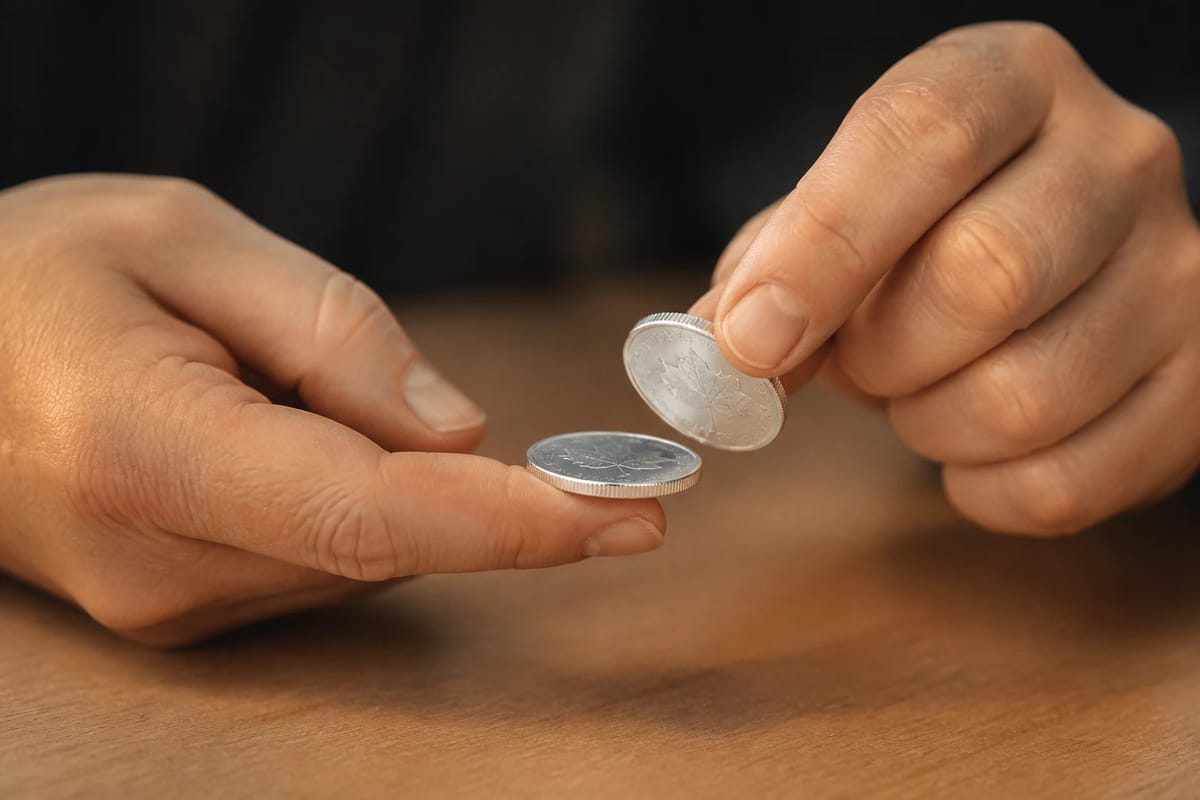
Real silver rings. Balance a coin on a fingertip and tap its edge with another coin, or flip it gently into the air off your thumb. Genuine silver produces a long, high-pitched ring that hangs in the air for a second or more. Base-metal fakes sound short and dull — a click or thud instead of a chime.
There are free phone apps that analyze the ring frequency against known coin signatures, but your ear catches most fakes unaided. Practice on a coin you trust so you know what your Eagles or Maples should sound like. One caveat: don't ping proof or collectible coins — handling and tapping can mark them, and for graded coins the case matters. (More on that in our grading guide.)
Test 3: The ice test
Silver has the highest thermal conductivity of any metal — noticeably higher than copper, and far higher than the zinc or lead cores used in fakes. Place an ice cube directly on a silver bar or a stack of coins: it begins melting immediately, visibly faster than ice sitting on steel, glass, or a counterfeit. On a 10 oz bar the effect is dramatic enough to feel through your fingers as the metal pulls heat.
Test 4: Weight and dimensions
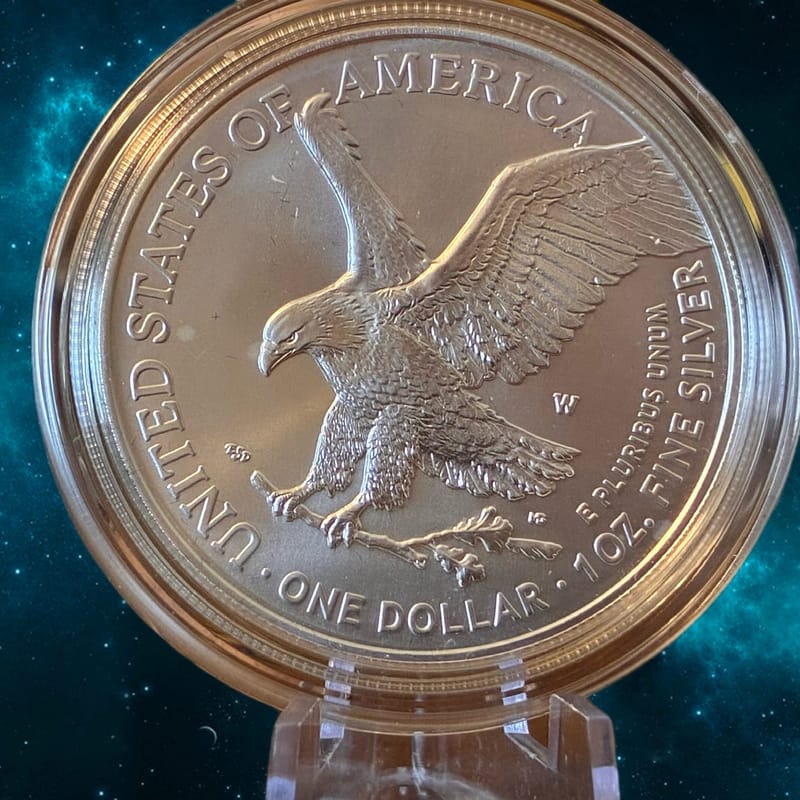
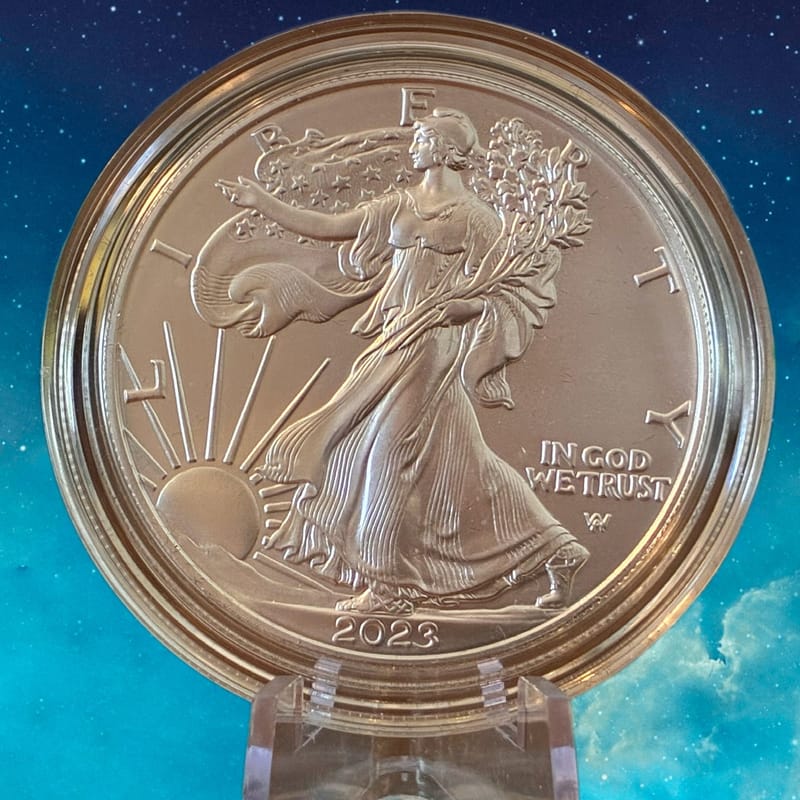
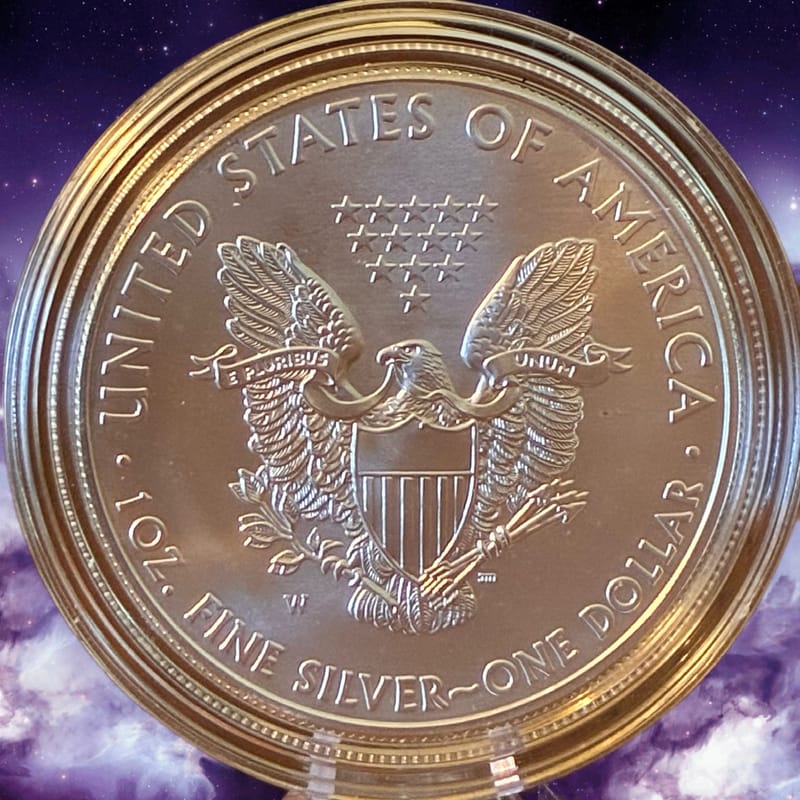
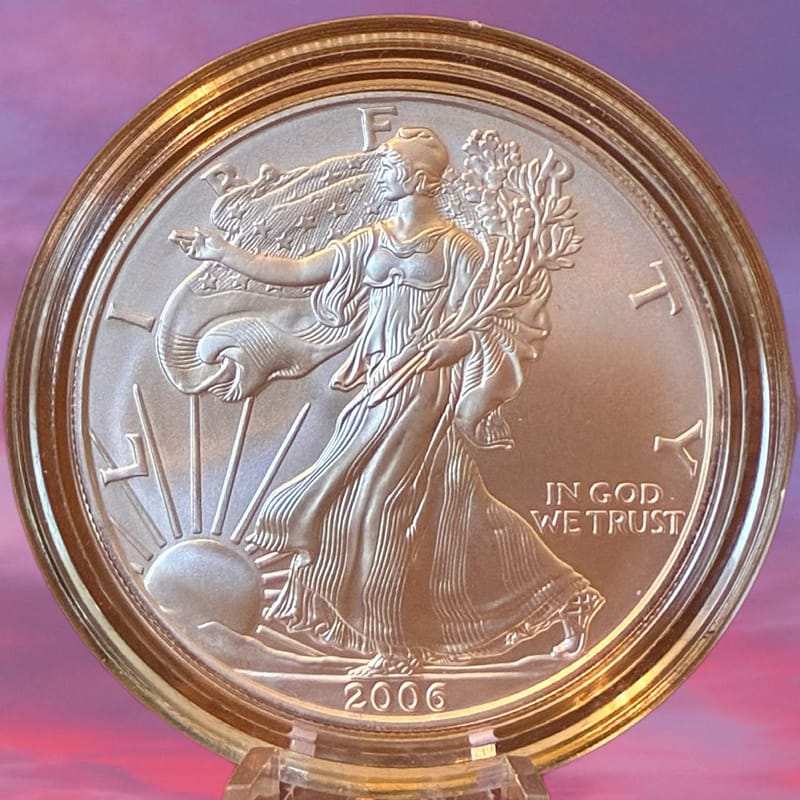
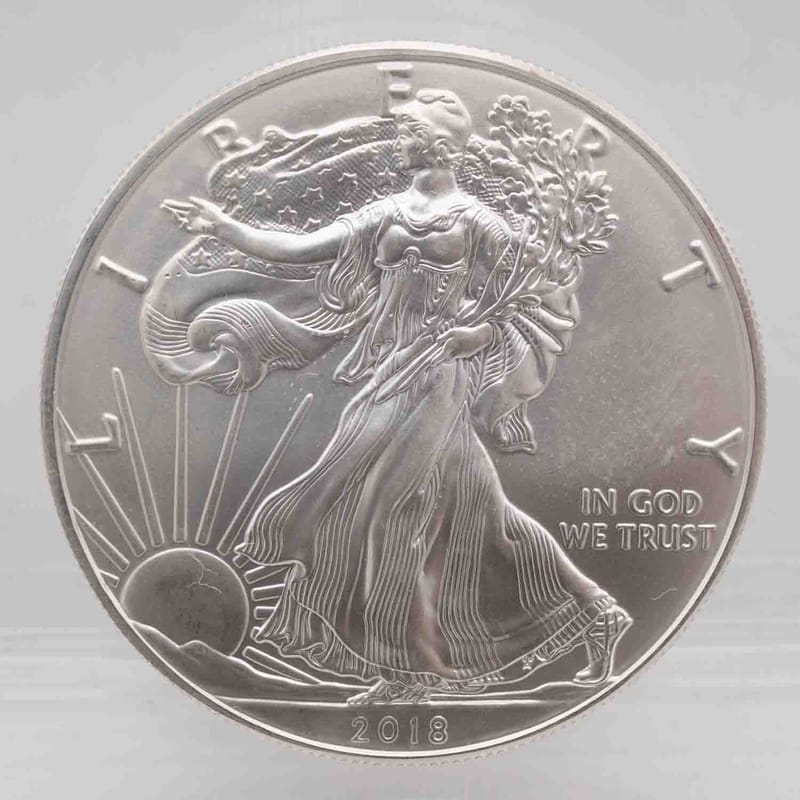
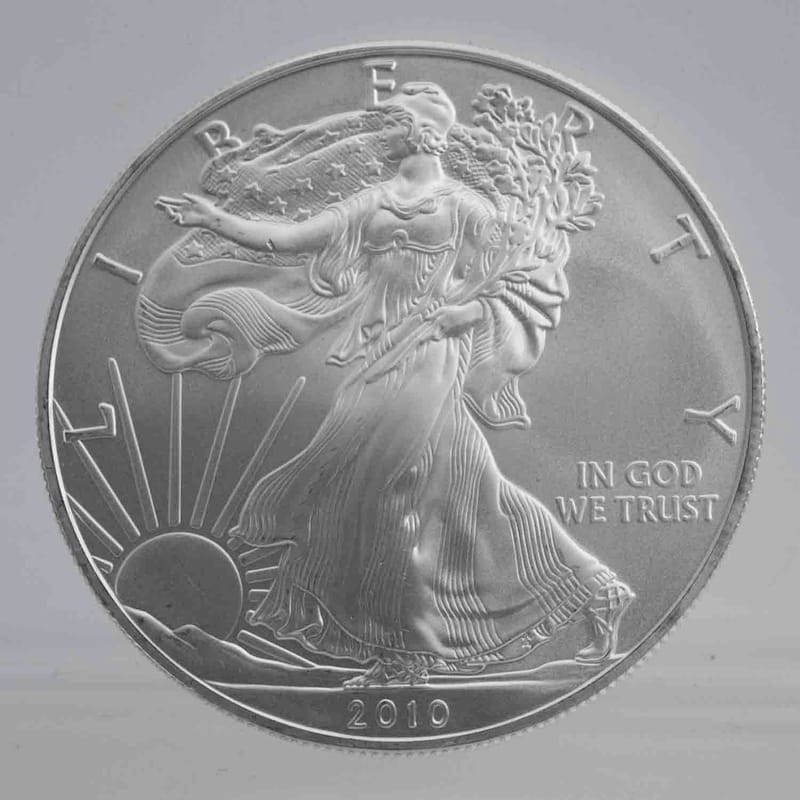
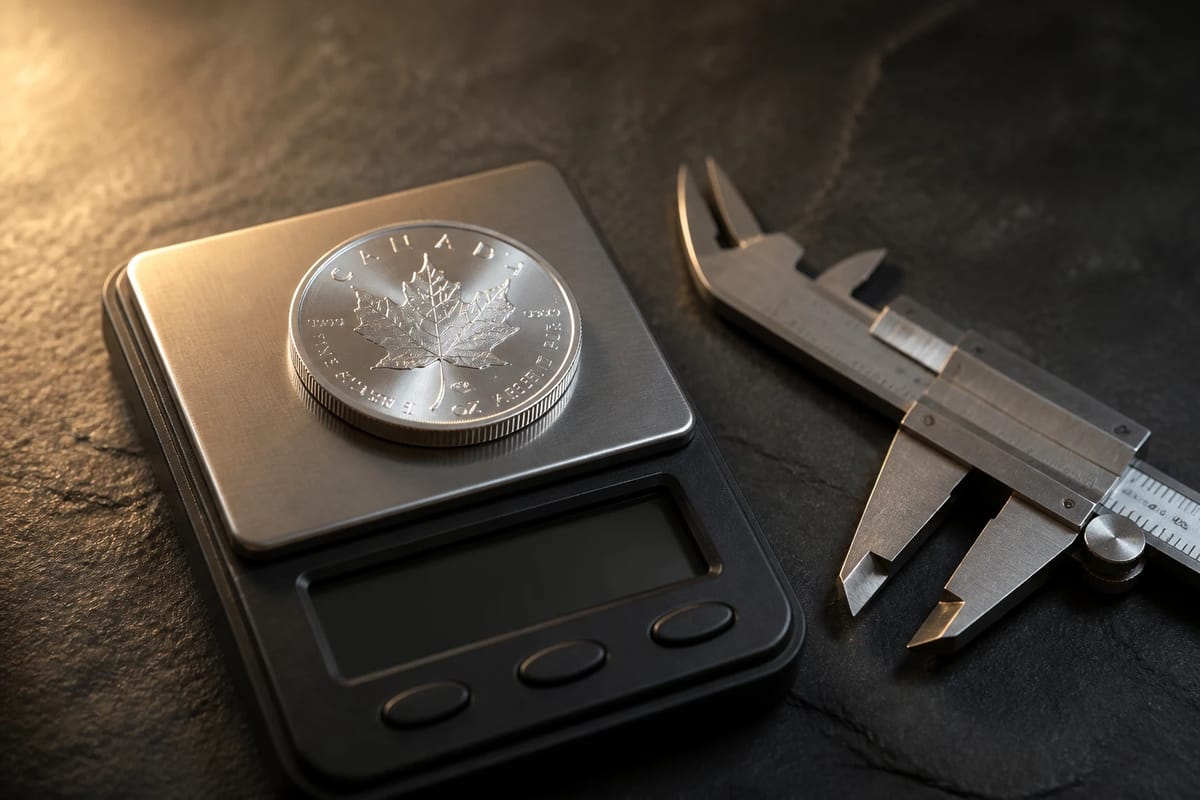
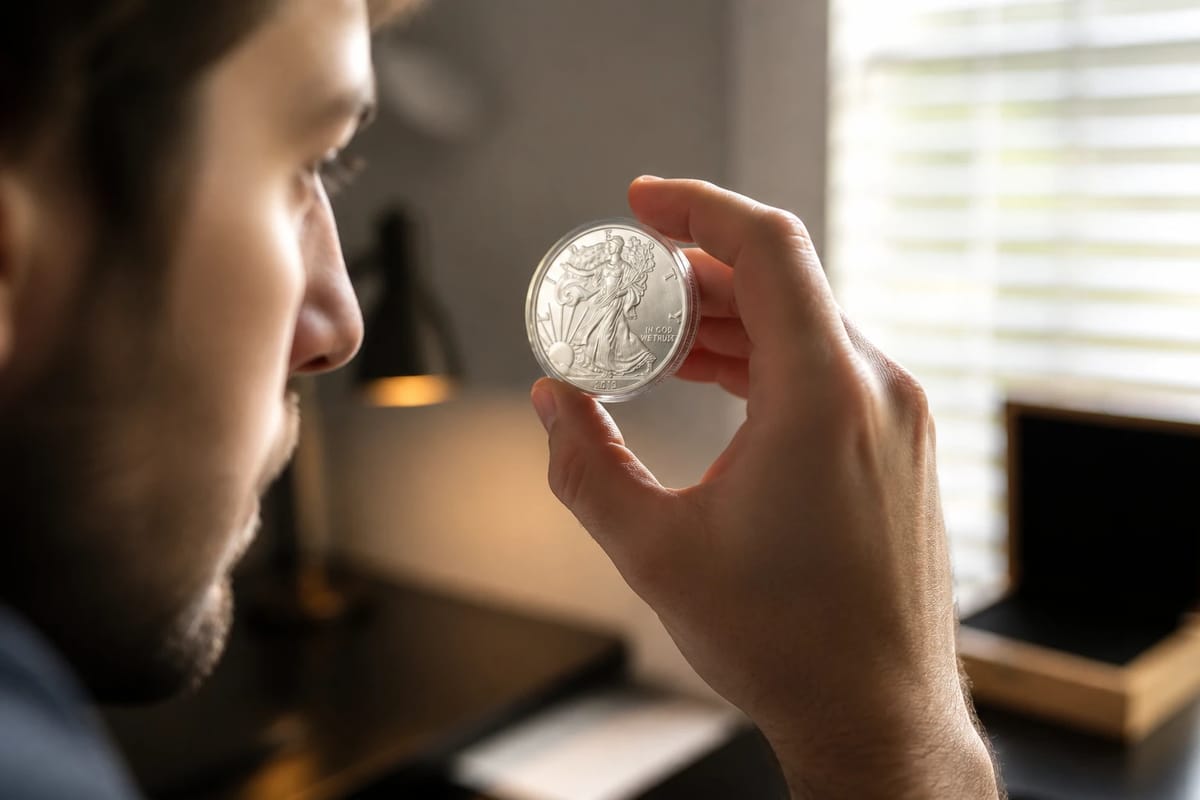
Every genuine bullion coin has published specifications. A 1 oz American Silver Eagle weighs 31.10 g at 40.6 mm diameter; a Canadian Maple weighs 31.11 g at 38 mm. A $20 digital scale and a caliper catch the fakes that pass the eyeball test, because counterfeiters face an impossible trade-off: silver's density (10.49 g/cm³) means a correct-weight fake in a cheaper metal must be visibly too thick or too wide, and a correct-size fake must be underweight. Weight right but size wrong — or vice versa — is a fail.
| Test | What real silver does | What fakes do | Cost |
|---|---|---|---|
| Magnet | No attraction; magnet glides slowly down a tilted bar | Sticks hard, or slides with no drag | ~$10 magnet |
| Ping | Long, high-pitched ring | Short, dull click | Free |
| Ice | Ice melts visibly fast on contact | Ice melts at normal speed | Free |
| Weight & size | Matches published specs exactly | Too thick, too wide, or underweight | ~$25 scale + caliper |
Milk spots are not fakes. That white clouding on some silver coins is a surface issue from the minting process — it doesn't remove metal or change the weight. Collectors pay up to avoid them; weight stackers ignore them entirely. A milk-spotted Eagle is still one full ounce of silver.
When should you actually test?
Testing everything is overkill; testing nothing is naive. The community's rule of thumb: sovereign coins from reputable, protected sources are low-risk. Escalate your scrutiny when the seller is unknown, the deal looks too good, the order is large, or the item is a generic bar with no security features. Modern sovereign mints also do some of the work for you — every Canadian Maple since 2014 carries Bullion DNA, a laser-engraved micro-mark the Royal Canadian Mint can verify, which is a big reason dealers trust Maples on sight.
- Always sanity-check the price first. Real cost per ounce = listing price ÷ ounces. If someone is selling "silver" far below spot, the discount is the tell — nobody sells real ounces at a loss.
- Buy where protection exists. On PeerMetals every purchase is covered by buyer protection — if the item doesn't match the listing, you're covered. That changes the risk math of buying from someone you've never met.
- Test big purchases on arrival. Run magnet, ping, and weight the day a large order lands, while any protection window is open.
Frequently asked questions
Can a fake pass all four tests?
The hardest fakes to catch are silver-plated tungsten alloys in larger bars — tungsten's density is close to silver's cousin problem in gold. They're rare in the 1–10 oz silver world because the economics barely work, but for large bars from unknown sources, buy from protected platforms or verified dealers rather than relying on home tests alone.
Do acid test kits make sense?
They work but they're destructive — the acid marks the surface. For bullion you plan to resell, non-destructive tests plus a trusted source beat scratching your stack.
What about "junk" 90% silver?
Pre-1965 US dimes, quarters, and halves are actually among the safest purchases — counterfeiting circulated small-denomination coins is rarely worth a faker's effort. Learn what they're worth in our junk silver guide.
Four free tests, one minute of your time, and a protected place to buy — that's the whole anti-counterfeit playbook for a physical silver stacker.