Before Every Silver Buy: The Questions, Rules, and Mistakes That Decide Your Stack


Two stackers start the same month with the same budget. A year later, one has a coherent, liquid, efficiently-bought stack; the other has a drawer of random shiny objects that will be annoying to sell. The metal didn't differ. The thinking did — specifically, one of them asked a three-second question before every purchase: does this fit what I'm building?
Most people don't stack silver; they impulse-buy it. This guide is the antidote — the pre-purchase discipline the community has distilled into checklists, one-liners, and rules that exist because someone paid for the lesson. (New to stacking entirely? The first-timer checklist covers setup; this is the guide for every buy after that.)
The one question, and the three behind it
The master question is about role: what job will this purchase do? Building weight, adding liquidity, improving flexibility, or filling a gap — every ounce should have a purpose, because random purchases create random stacks. Behind it sit the three screening questions worth running on any listing:
- Is the premium fair — or am I paying for excitement? Compute total cost per ounce, every time. (Ceilings and rules in the premium playbook.)
- Does this add ounces — or just looks? Designs are lovely; weight is wealth. Know which one you're buying today.
- Do I already have enough of this type? A stack that's all one thing has a weakness — all bars can't sell small, all junk builds slowly. Diversify by job, not by whim.
The 24-hour rule
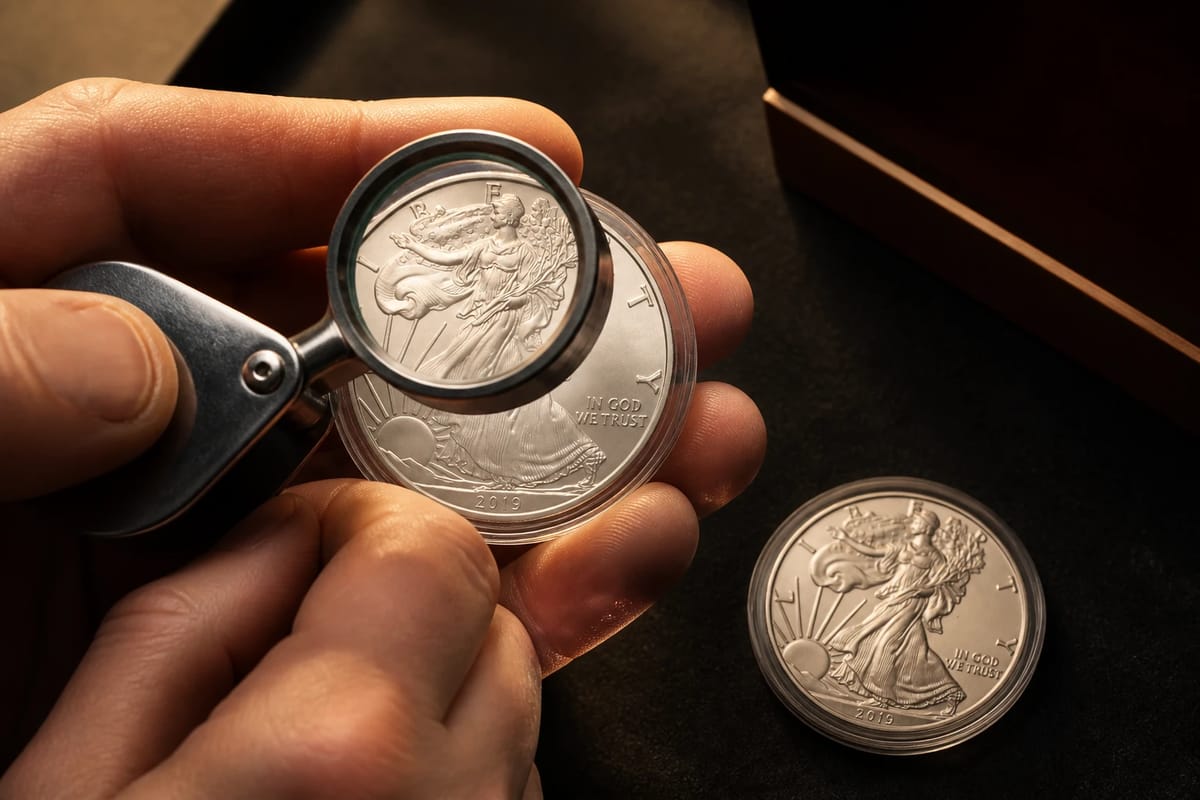
Impulse buys follow a script: price drops or a listing sparkles, excitement spikes, and you buy more than planned. The community's fix is mechanical — for any large purchase, wait one full day. The deal rarely vanishes, and 24 hours answers three questions automatically: is this right for my stack, is this premium actually competitive, and am I buying because it makes sense or because I'm lit up? Pair it with its cousin from dip buying — buy more when you're scared, less when you're excited — and you've neutralized the two emotions that build bad stacks.
The four unwritten laws
Nobody publishes these; every experienced stacker arrives at them, usually after violating one. Never buy silver you can't easily sell. Never pay a premium you can't justify out loud. Never store what you can't protect. Never tell people what you own. The first two govern buying, the third means storage is figured out before the pile gets real (see home storage), and the fourth is the privacy doctrine the whole community runs on. Add the financing law from the beginner rules — never buy silver on credit; interest eats the entire premise — and you have the complete legal code.
The beginner mistakes, catalogued
| Mistake | Why it happens | The rule that prevents it |
|---|---|---|
| High-premium first buys (20–30% over) | Excitement + unfamiliarity | Total cost per ounce, always |
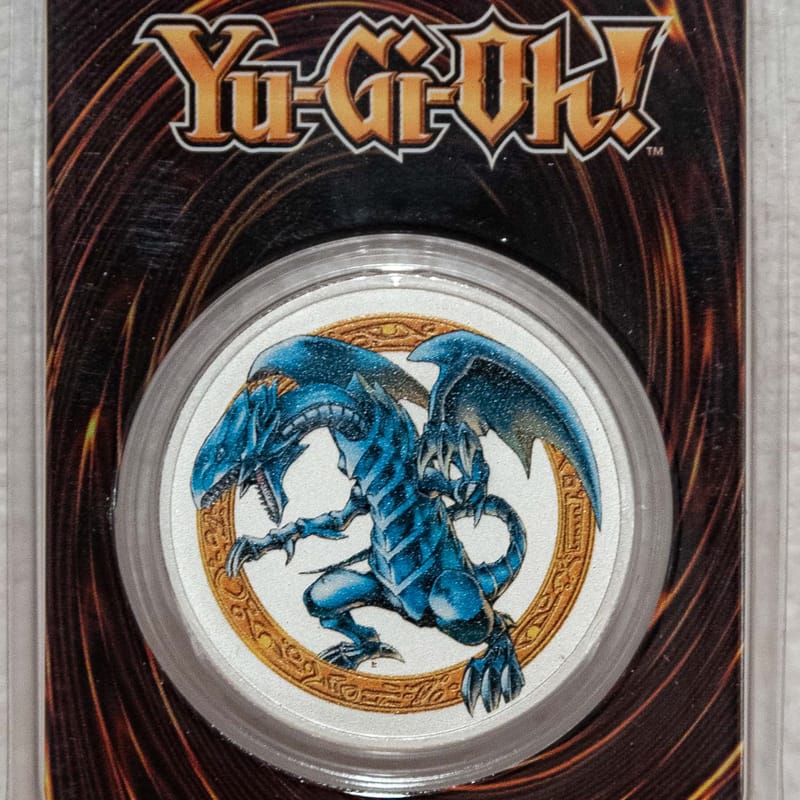
| Variety packs and random designs | Everything looks cool at first | The role question |
| One big buy, then nothing | Treating it as an event, not a habit | Consistency beats size — see systems |
| Waiting for the perfect price | Overthinking dressed as prudence | The perfect entry doesn't exist |
| No storage plan | The stack grew faster than the safe | Store before you stack |
| Checking charts daily, trading moods | Confusing stacking with trading | Count ounces — the stacker mindset |
The lie that beats all the mistakes combined: "I'll start next dip." The dip comes; they wait for a deeper one. Months pass at zero ounces. The real reason people don't start stacking isn't money — one ounce, or a few junk-silver dimes, starts a stack — it's overthinking. Every rule in this guide is for people who started.
Focus vs. variety: the year-two decision
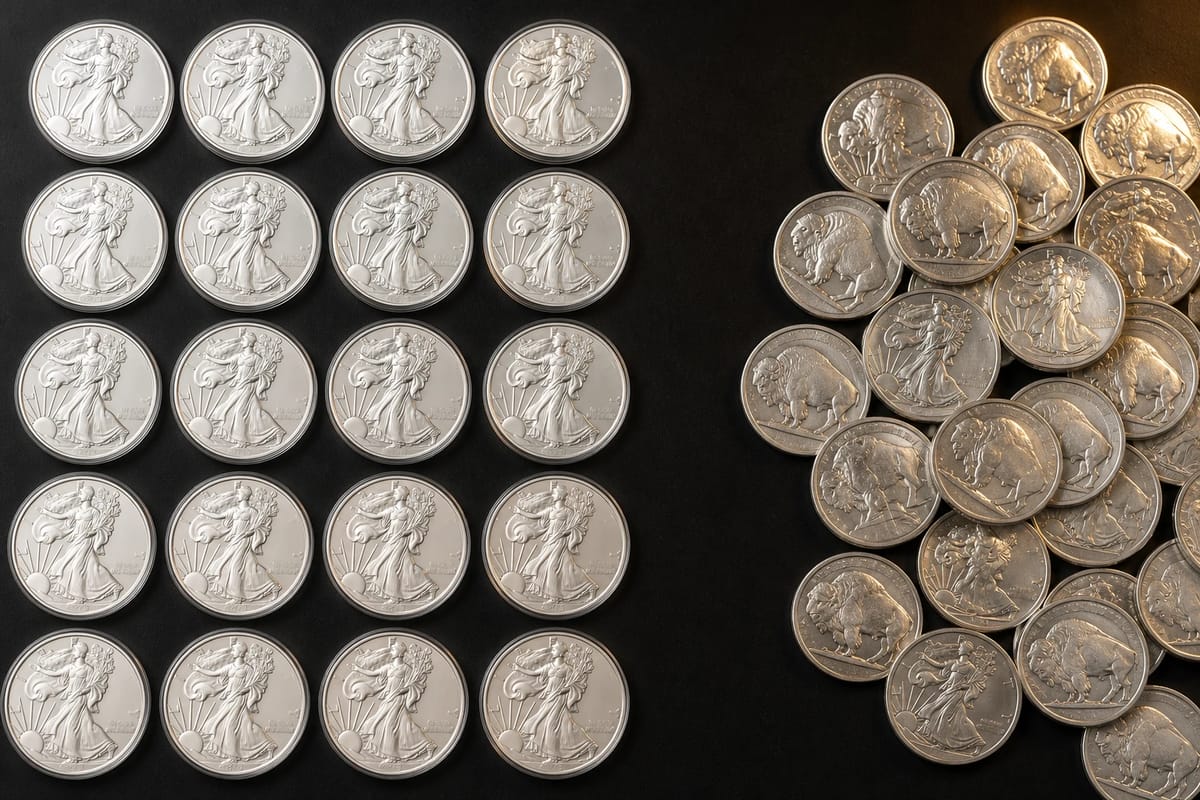
Early random buying is fine — an Eagle here, a Maple there is how you learn what you like. But at some point random creates a problem: no theme, awkward to value, hard to sell cohesively. Experienced stackers eventually pick a focus (weight in one lane, or one mint, or one series) while keeping the deliberate diversity of jobs — efficient bars, liquid sovereigns, divisible constitutional — covered in stack allocation. Random gets you started; focus gets you somewhere.
Frequently asked questions
Doesn't all this planning kill the fun?
Keep a small "because I like it" budget — 5–10% for pieces that spark joy. The discipline protects the other 90%; the joy line keeps you stacking. Both matter.
What's the single rule to adopt if I adopt only one?
Total cost per ounce before every buy. It catches overpriced listings, odd sizes, and premium spikes in one division problem.
How do I audit the random stack I already have?
Sort it by job — weight, liquidity, flexibility — and see which pile is thin. Your next purchases fill the gaps; nothing needs to be sold to fix a random past.
Every buy either makes your stack stronger or just bigger. Three seconds of asking which one is the entire difference.