Silver Stacking Milestones: What Actually Changes at 10, 25, 50, and 100 Ounces

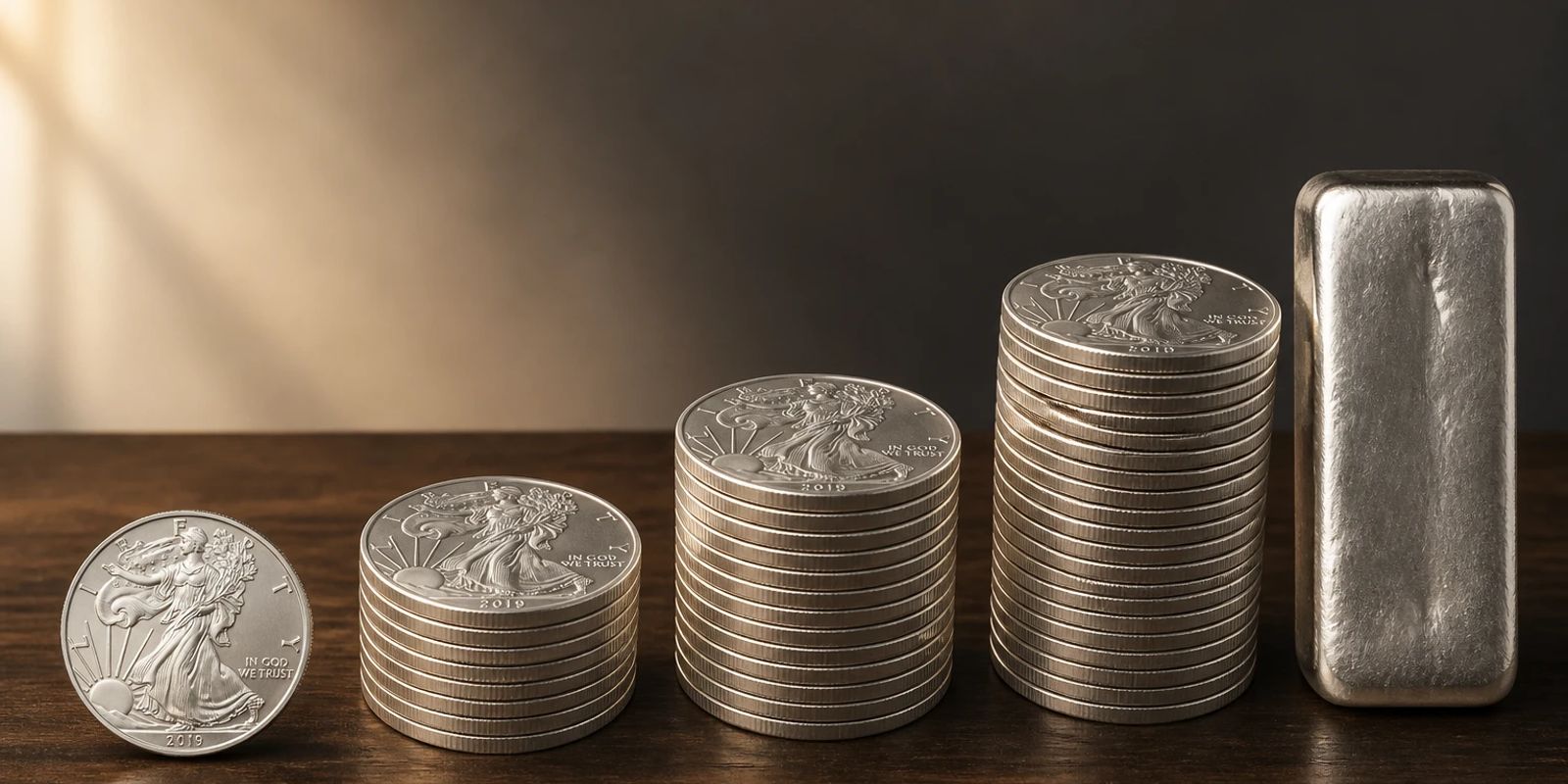
Ask a room full of silver stackers about their first ounce and you'll get shrugs. Ask them about crossing 100 ounces and you'll get stories. That's because stacking isn't one long, smooth climb — it moves in stages, and each stage changes your behavior more than your balance. The numbers themselves are arbitrary in dollar terms, but the community keeps converging on the same markers: 10, 25, 50, and 100 ounces.
This guide maps the whole journey — what each milestone feels like, what experienced stackers buy at each stage, and the mistakes that stall most people before the habit ever compounds. It's built from dozens of conversations with stackers in the PeerMetals marketplace and the short lessons we publish daily on YouTube.
One ounce: the test
Every stacker with 1,000 ounces started with one. The first ounce isn't an investment — it's an education. You learn what real silver weighs, what a premium over spot actually costs you, and the difference between the spot price you see on a chart and the all-in price you pay. (If those terms are new, start with our guide to spot price vs. premium.)
You don't need 100 ounces to start, and you don't need to wait for the perfect price. One ounce this month, another next month — that's 12 ounces in a year, and more importantly it's a habit. Consistency beats size at every stage of stacking, but nowhere more than the beginning.
10 ounces: when it clicks
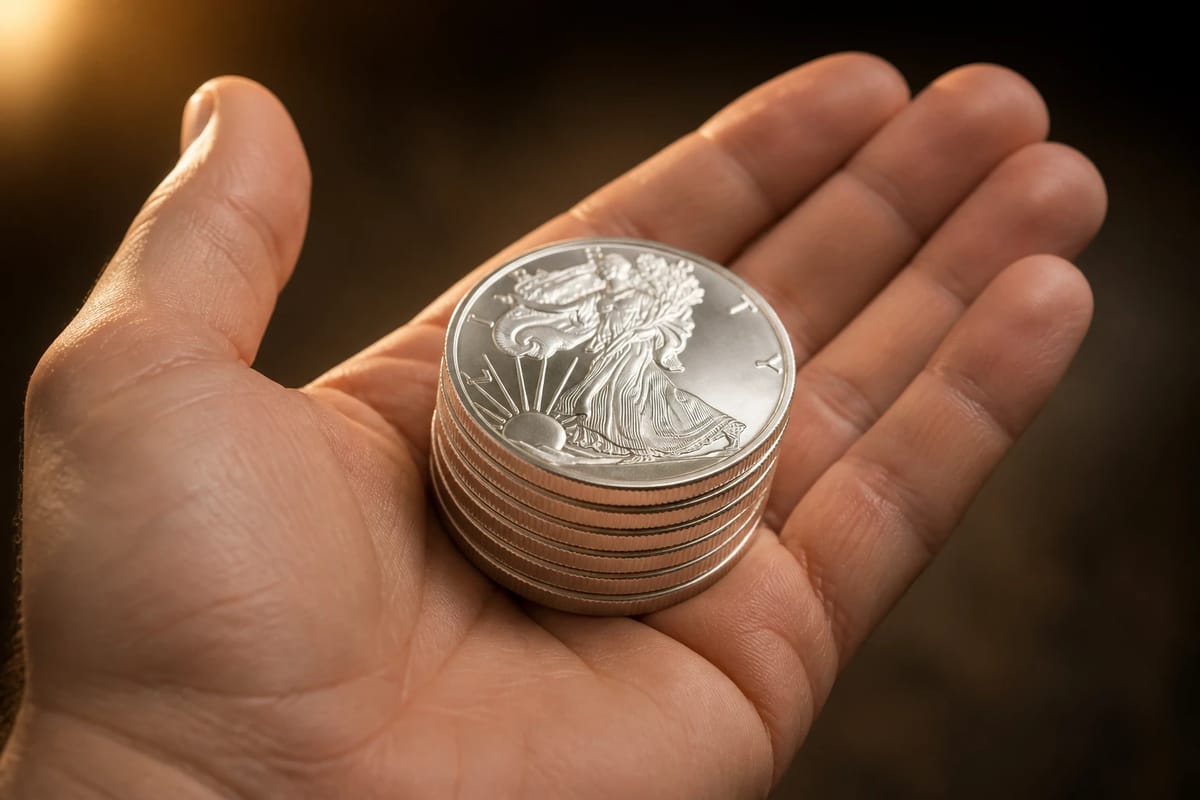
One ounce feels like a coin. Ten ounces feels like money. You can hold the weight in one hand, and something shifts: you're not experimenting anymore, you're stacking. Ten ounces is also proof you survived your first dip without panic-selling — which, more than any purchase, is what separates stackers from tourists.
This is the point where most people stop checking the spot price every day and start counting ounces instead. Veterans will tell you that's the single most useful mindset change in the entire hobby: price is temporary, weight is permanent.
25 ounces: it stops being a hobby
Here's the uncomfortable truth: most people who try silver stacking quit before 25 ounces. Not because they can't afford it — because it doesn't feel like anything yet. Twenty-five ounces doesn't look impressive and doesn't seem worth the effort. But the stackers who push through all report the same thing: somewhere between 25 and 50 ounces the feeling changes, and it never goes back.
Don't quit before it gets interesting. The first stretch of stacking is the slowest and least rewarding by design — you're building a habit, not a highlight reel. The compounding, both financial and psychological, shows up later.
50 ounces: the weight-first rule
Until you hit 50 ounces, your only job is building weight. That's the "first 50 rule" experienced stackers repeat constantly: no rare coins, no high premiums, no collectibles. Low-premium rounds and bars near spot, bought consistently. Every extra dollar of premium is an ounce you didn't buy — instead of two fancy coins, four plain ounces.
- Start simple. Only low-premium silver — generic rounds or bars close to spot. Save sovereign coins and collectibles for later.
- Stay consistent. Pick an amount and buy every week or month. No skipping, no waiting for the perfect dip.
- Scale slowly. When price drops, add a little more — not everything at once.
The first 50 ounces are the hardest, not because silver is expensive but because the habit isn't built yet. Every purchase feels like a decision: buy now or wait? Is this premium too high? After 50 ounces the questions get quieter and the buying gets automatic.
50 to 100: the shift to bars
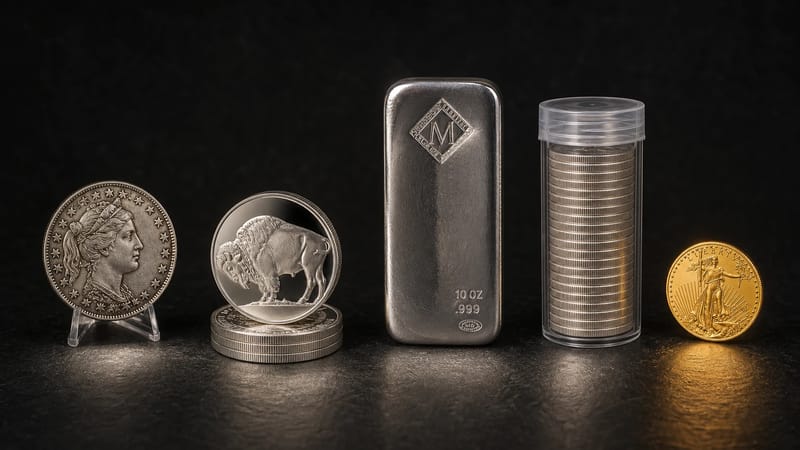
The jump from 50 to 100 ounces changes what stackers buy. At 50 ounces most people are stacking 1 oz rounds and coins; near 100, ten-ounce bars start making more sense — lower premium per ounce, more weight per purchase. You stop thinking coin-by-coin and start thinking about efficiency. We break down the full trade-off in coins vs. bars vs. rounds.
100 ounces: strategy replaces counting
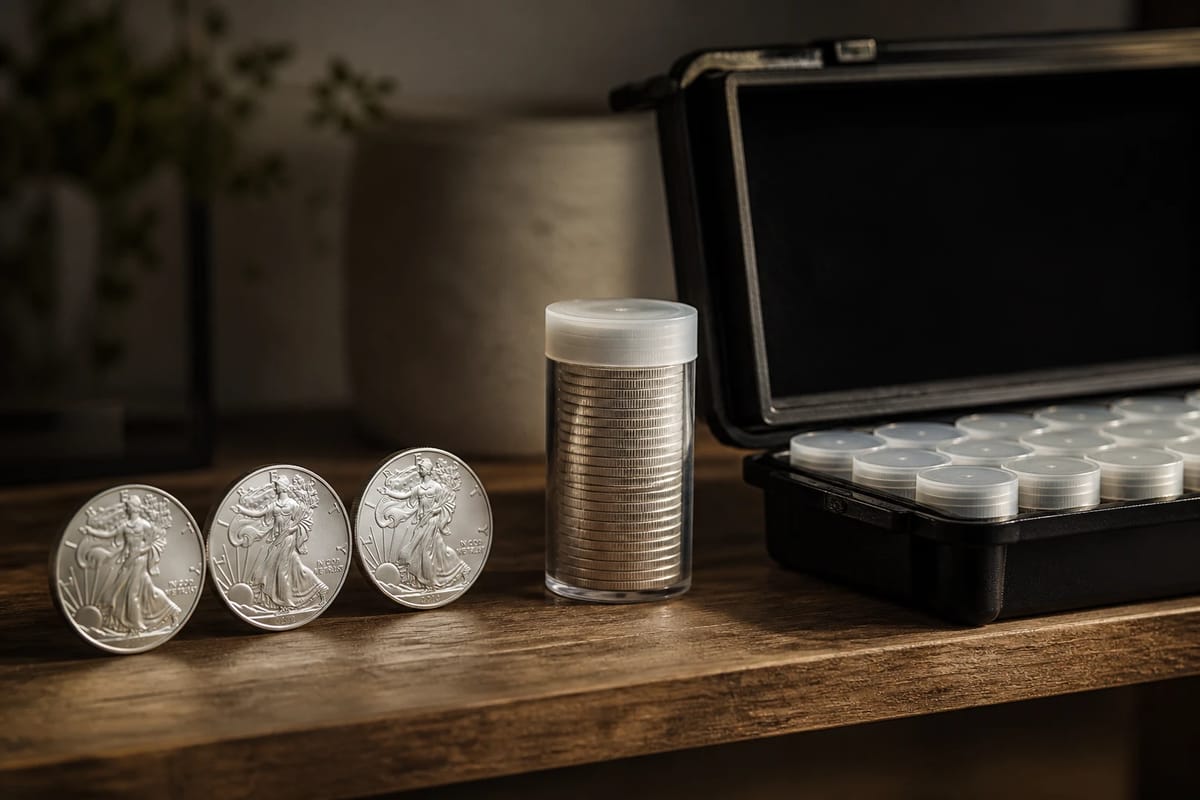
A hundred ounces is where collecting turns into serious stacking. Physically, your stack now takes up real space — a few tubes have become a box. Financially, it's a meaningful position by any household's standards. And psychologically, something strange happens: you hit the number you dreamed about, hold it, and almost immediately want more.
That's not greed — it's a changed relationship with money. Paper feels abstract; silver feels finite. Stackers at this stage stop celebrating individual ounces and start thinking about allocation: how much in recognizable sovereign coins, how much in bulk weight, whether it's time to add gold. Many follow some version of a ratio rule — see our guide to the gold-to-silver ratio.
| Milestone | What changes | What stackers typically buy |
|---|---|---|
| 1–10 oz | Learning premiums, building the habit | 1 oz generic rounds, constitutional silver |
| 25 oz | Stops feeling like a hobby | Low-premium rounds, consistent monthly buys |
| 50 oz | Habit locks in, buying goes automatic | Rounds plus first 10 oz bars |
| 100 oz | Strategy replaces counting | 10 oz bars, selective sovereign coins |
| 150+ oz | Stop counting, start allocating | Bars for weight, coins for liquidity, first gold |
Beyond 100: the top 1% plan
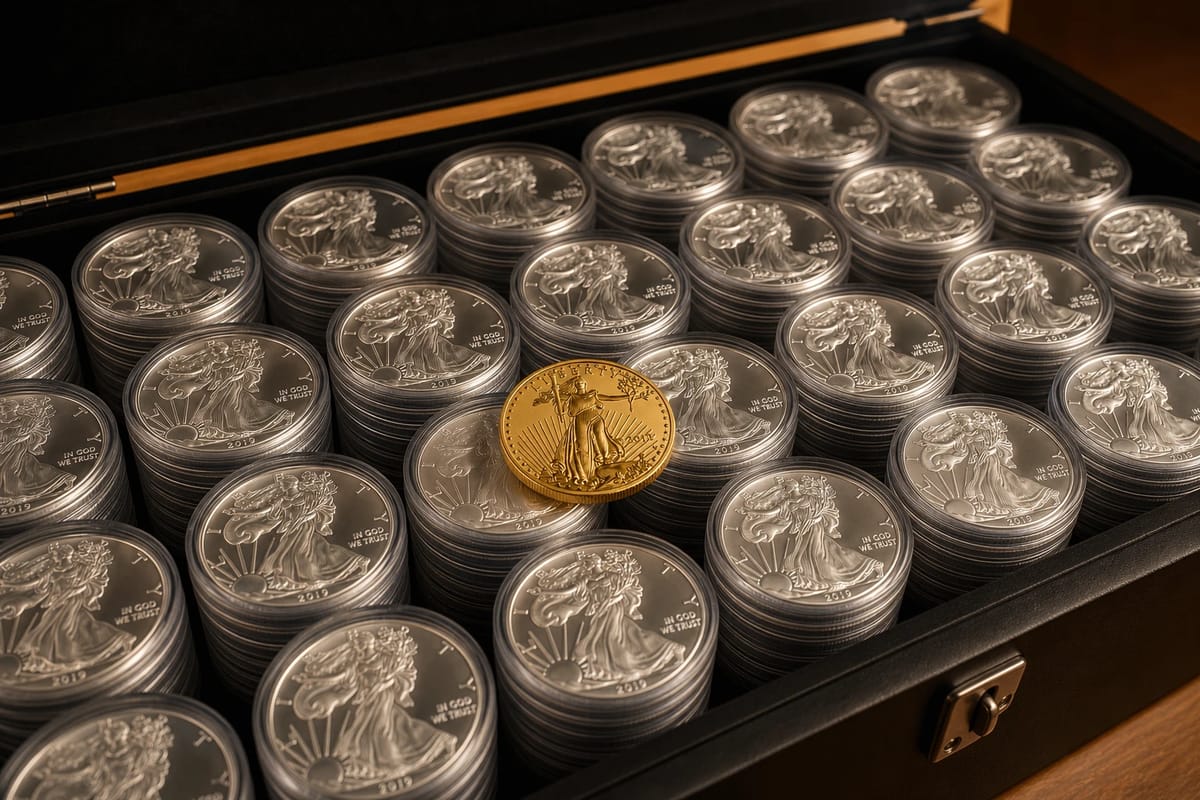
The top 5% of silver stackers hold roughly 100–200 ounces. The top 1% — around 500 ounces — usually get there with a boring, mechanical plan. One popular version: year one, 10 oz a month (120 total). Year two, 15 a month (300 total). Year three, 17 a month, and you cross 500. No hero trades, no timing — just a rate that ratchets up as the habit strengthens.
Interestingly, stackers past 150 ounces often report they stop counting altogether. The stack becomes a system rather than a scoreboard — and that's usually when the first gold purchase happens. When you're ready for that step, start with our fractional gold guide.
The three mistakes that keep stackers under 20 ounces
- Resetting the stack. Selling a few pieces for cash or swapping randomly, so the position never compounds. Set a rule: the stack only grows.
- Mixing too many types early. Coins, bars, collectibles, no focus — hard to scale and easy to overpay. Pick one lane until 50 oz.
- Quitting during the boring part. The first buys feel slow and invisible. Most people quit right before the habit compounds.
Frequently asked questions
How much silver should I own before adding gold?
There's no rule, but the most common pattern in the community is building a base of 100–300 ounces of silver first, then adding gold for density and stability. Fractional gold makes that transition affordable long before you can buy full ounces.
Is 100 ounces of silver a lot?
Statistically, yes — most Americans own no physical silver at all, and 100–200 ounces puts you in the top few percent of stackers. In dollar terms it's comparable to a modest emergency fund, which is exactly how many holders think of it.
What's the cheapest way to build weight early?
Generic rounds and bars near spot, and 90% constitutional silver when it trades close to melt. Check what junk silver is worth before you buy, and always compute your real premium per ounce.
Wherever you are on the curve — first ounce or first monster box — the next milestone is built the same way: one consistent, low-premium buy at a time.