The Stacker Mindset: Count Ounces, Not Dollars


A new stacker buys 50 ounces and checks the spot price the next morning. Silver's at $72 — "my stack is worth $3,600." It ticks to $75 — "I'm up $150." Drops to $68 — "I lost $200." They do this every day, riding a mood swing they voluntarily installed on their phone. A veteran stopped running that calculation years ago. Ask what their stack is worth and you'll get a shrug; ask how many ounces and you'll get an exact number. Fifty ounces today is fifty ounces tomorrow. That number never betrays you.
That's the stacker mindset in one contrast: price is temporary, weight is permanent. This guide is about the mental operating system behind the stacks — because the community is increasingly convinced the psychology, not the product choice, is what actually separates outcomes.

The shift: from dollars to ounces
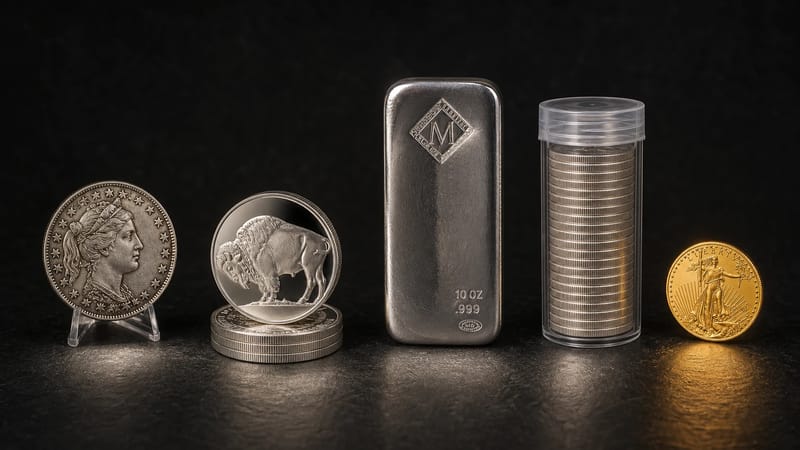
There's a specific moment stackers describe almost identically: the day a price drop stopped triggering fear and started triggering arithmetic. Silver falls $3 and the first thought isn't "I'm down" — it's "how many more ounces does my budget buy now?" The metal stopped being an expense and became accumulation. Weight became the score. Tubes, bars, total ounces — a number that only moves one direction.
The corollary is spot-price detox. If you're checking the price every day, the community will tell you bluntly: you're doing it wrong. Spot is noise; weight is position. Worse, obsessing over spot means watching the wrong number entirely — your real cost is spot plus premium, and premiums are where money is actually won or lost (see the premium playbook). Veterans check spot when they buy and roughly never otherwise.
The mantras, decoded
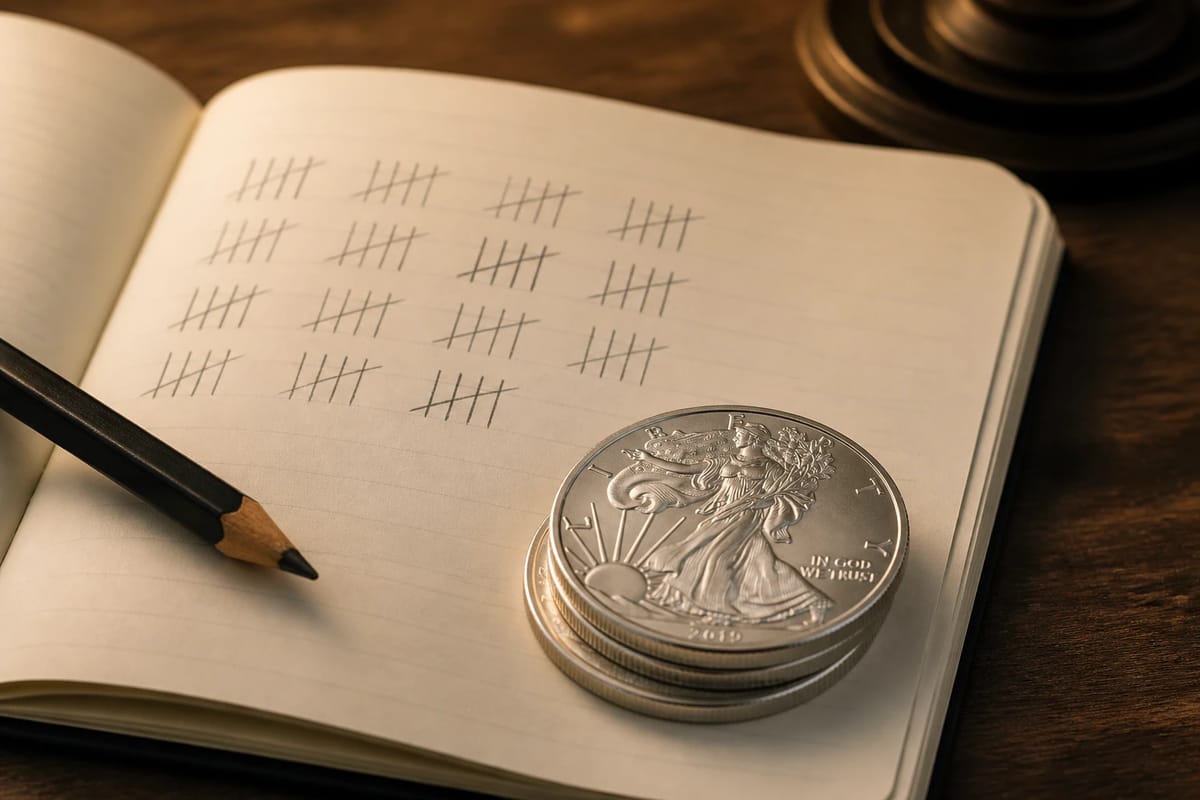
- "Just one more ounce." The strongest stacking mindset isn't a grand plan — it's a small repeated one. One more ounce this week, one more on the dip. Removing the pressure of big numbers is exactly what makes big numbers happen.
- "The ounces you didn't buy are the ones you remember." Ask veterans about regrets: almost never a purchase, almost always a hesitation. The dip came, the cash was there, they waited. Missed ounces haunt longer than bad entries.
- "You don't have to be perfectly right." Stacks aren't built on one perfect buy; they're built on dozens of decent ones. Some early, some late — across years it barely matters.
- "Lost it all in a boating accident." The community's inside joke, deployed whenever anyone asks how much silver someone holds. It's a privacy doctrine wearing a punchline: veterans don't discuss stack sizes. With anyone.
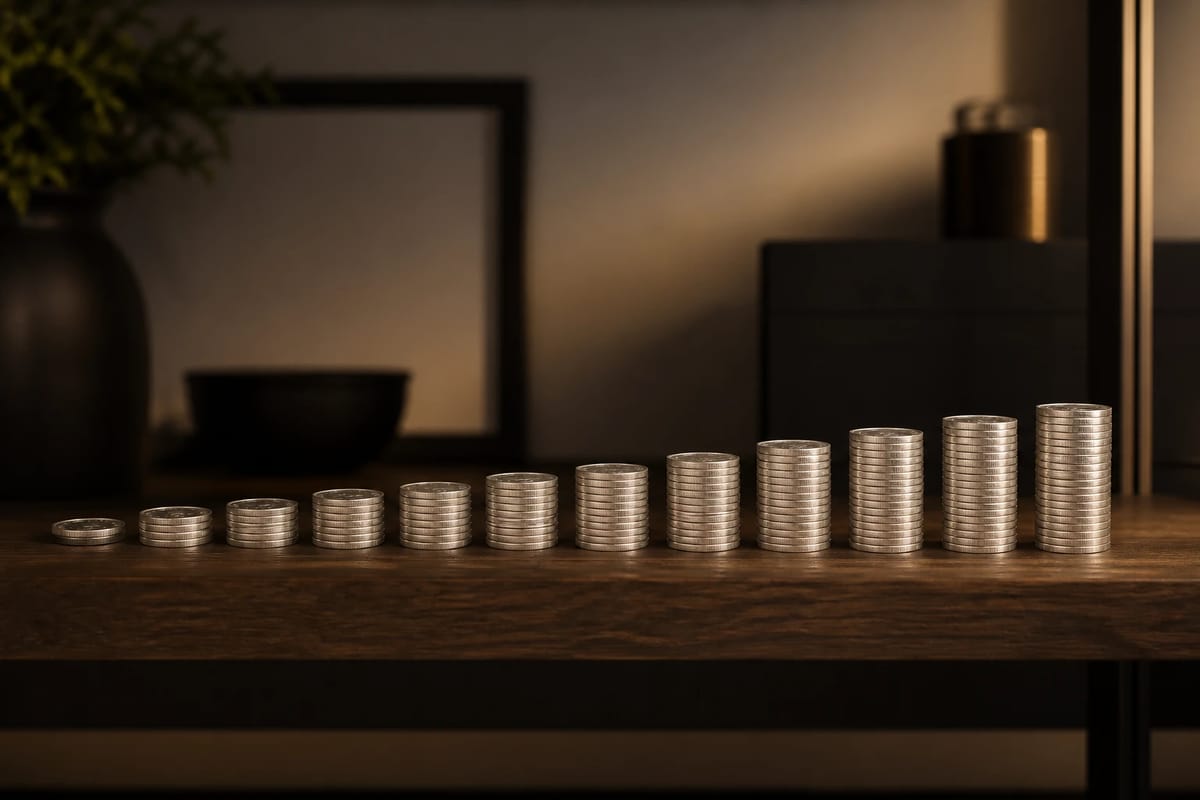
What a year of consistency actually changes
After roughly a year of never missing a buy, stackers report the same internal shift: the monthly purchase became automatic, headlines stopped moving decisions, and — the strange part — the stack stopped feeling like a hobby. Real weight, held outside the banking system, uninflatable and unfreezable, changes your relationship with the money in your accounts. Then a second shift arrives at scale: you stop buying silver and start managing a stack — every purchase gets a job (weight, liquidity, flexibility, or gap-filling), because the stack tells you what it's missing. That progression is mapped in the five stacker phases and enforced by the rules in before every buy.
The mindset has a failure mode. "Ounces over everything" can shade into all-in maximalism — and the stackers who went 100% metal at 2026's highs learned why advisers cap metals around 10–15% of a portfolio. Count ounces, yes; but the counting only stays fun when the rent was never riding on the price. Ground rules in how much you should own.
Frequently asked questions
Isn't ignoring the price just denial?
No — it's sequencing. Stackers care intensely about price at the moment of purchase (that's premium shopping) and deliberately not afterward, because post-purchase price-watching produces stress and panic-selling while changing nothing about the ounces held. Attention goes where it can act.
How do I actually stop checking spot daily?
Replace the metric: track total ounces and your streak of never-missed buys instead. Both numbers only go up, which is precisely why they build the habit instead of eroding it.
Why the secrecy culture?
Partly security — a stack is a burglary target — and partly philosophy: the quiet stacks tend to be the serious ones. Tell no one, insure appropriately, and see storing metals at home.
Traders count dollars and ride the mood swings. Stackers count ounces and sleep fine. Same metal, different operating system — and the operating system is the part you can install today, free, before your next buy.