Capital Gains Tax on Precious Metals: What U.S. Investors Need to Know


This article explains general U.S. federal tax rules as they apply to physical precious metals. It is not tax advice. Tax law is complex, changes over time, and depends on individual circumstances -- consult a qualified tax professional before making decisions based on this information.
Physical gold, silver, platinum, and palladium are not taxed like stocks when you sell them at a profit. The IRS classifies precious metals -- bullion coins, bullion bars, and rare or collectible coins alike -- as collectibles under Internal Revenue Code Section 408(m), and collectibles carry their own capital gains rules that are less favorable than the rules for most other investments.
The 28% maximum rate
Under the Taxpayer Relief Act of 1997, the maximum long-term capital gains rate on most investments -- stocks, most bonds, real estate held over a year -- was cut to 20%. Collectibles were deliberately left out of that cut. Long-term gains (metal held more than one year before selling) on physical precious metals are taxed at your ordinary marginal tax rate, up to a maximum of 28% -- well above the 15% or 20% top rates that apply to long-term stock gains for most investors.
If your ordinary marginal rate is below 28%, that lower rate applies instead -- the 28% figure is a ceiling, not a flat rate everyone pays. Short-term gains (metal held one year or less) are taxed as ordinary income either way, the same as short-term gains on any other asset.
A worked example
Suppose you bought silver for $10,000, held it three years, and sold for $14,000 -- a $4,000 long-term gain.
- If your ordinary marginal rate is 22%, the gain is taxed at 22% -- $880 -- because your ordinary rate is below the 28% ceiling.
- If your ordinary marginal rate is 35%, the collectibles ceiling kicks in and the gain is taxed at 28% -- $1,120 -- rather than 35%.
- Had you sold after only eight months, the $4,000 would be ordinary income at your full marginal rate in both cases.
Compare the same gain on a stock: the 22% taxpayer would likely pay 15% ($600) and the 35% taxpayer 15-20% ($600-$800). The collectibles regime is the difference. Curious what a past purchase has actually done? Our investment return calculator shows the spot-value change; the tax math above is what happens to the gain when it's realized.
What counts as a "collectible" here
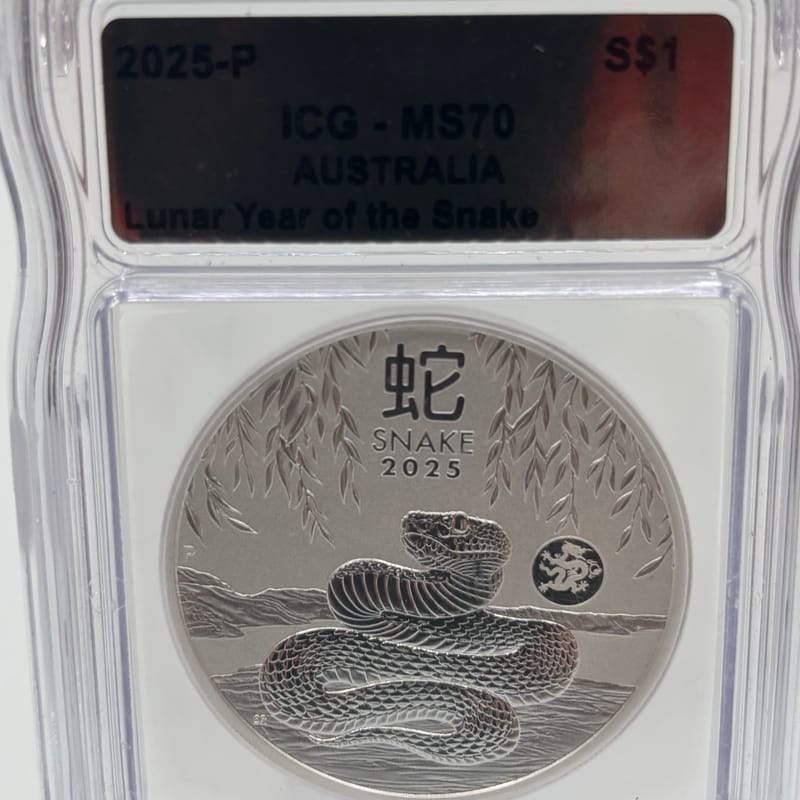
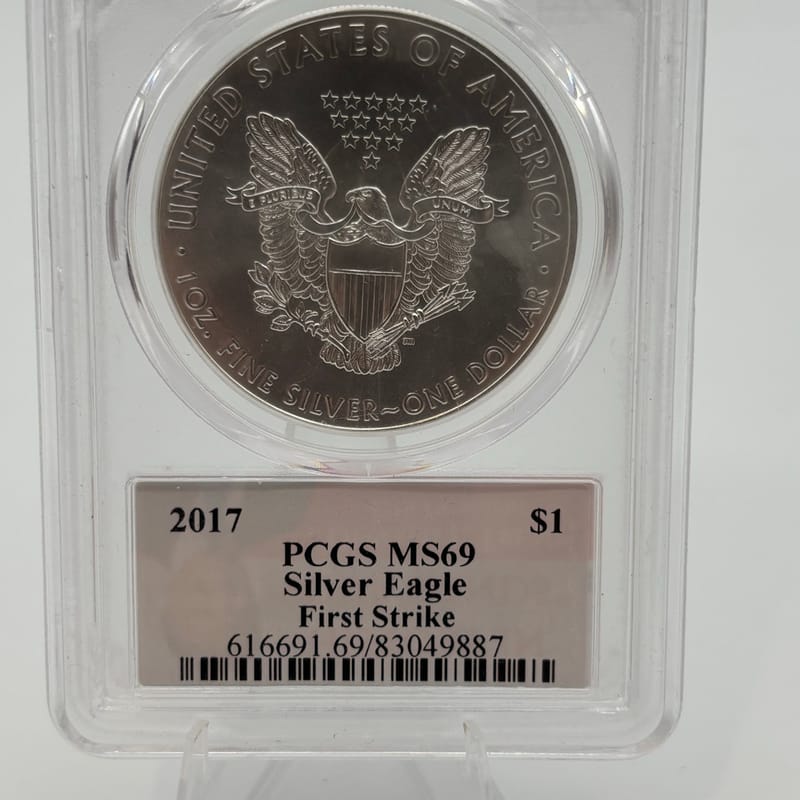
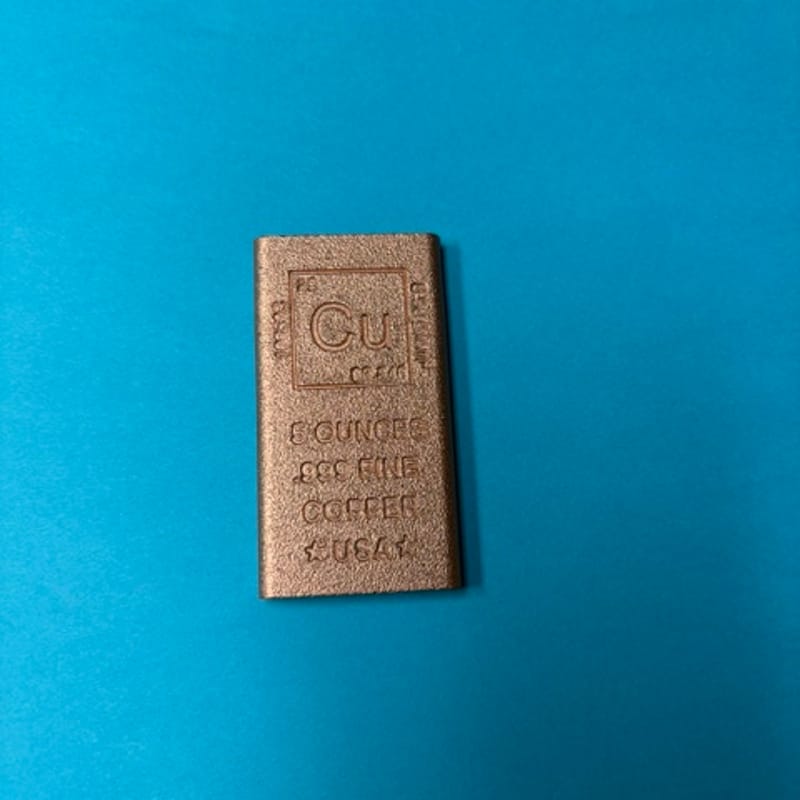
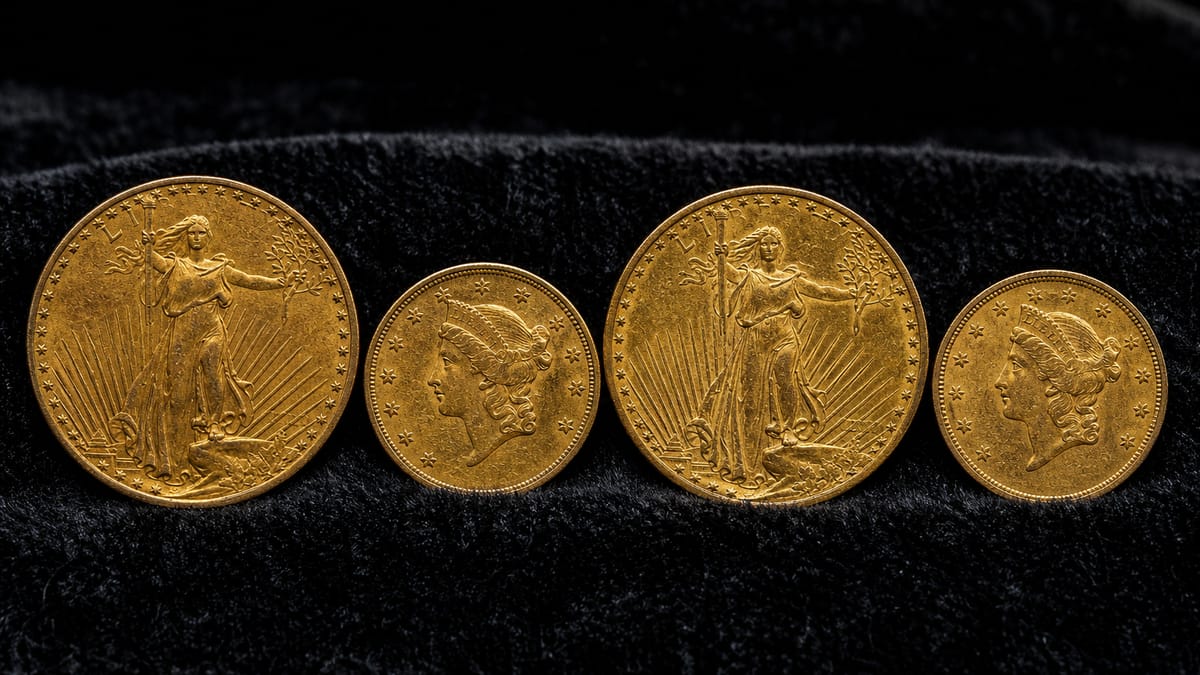
The collectibles designation is broad. It applies regardless of form -- bullion coins like American Gold Eagles or Canadian Silver Maple Leafs, bullion bars, and numismatic or rare coins are all treated the same way for capital gains purposes. Many gold and silver ETFs that hold physical metal (rather than mining stocks) are taxed the same way as direct physical ownership, which surprises investors who assume an ETF wrapper changes the tax treatment -- it generally doesn't when the fund holds the metal itself.
Dealer reporting: when a sale generates a Form 1099-B
Separately from your own obligation to report gains, dealers are required to file a Form 1099-B with the IRS when a customer sells them certain quantities of specific products, based on industry (ICTA) guidance interpreting the broker reporting rules. The commonly cited reportable thresholds include:
| Product sold to a dealer | Reportable at |
|---|---|
| Gold bars (.995+) | 1 kilo (32.15 troy oz) or more |
| Silver bars (.999+) | 1,000 troy oz or more |
| 1 oz Gold Krugerrands, Maple Leafs, or Mexican Onzas | 25 or more coins |
| U.S. 90% silver coins | $1,000 face value or more |
Two things people routinely get wrong about this list. First, American Eagles and many other products are not on the dealer-reporting list -- but that has nothing to do with whether your gain is taxable. Every gain is taxable whether or not a 1099-B was filed; the form only affects what the IRS hears about automatically. Second, splitting one sale into pieces to dodge a threshold is exactly the pattern the related-transaction rules are written to catch. The list can change -- confirm current guidance before relying on it.
Losses, netting, and the extras
Collectible losses are real capital losses: they first offset collectible gains, then other capital gains, and up to $3,000 of ordinary income per year with the remainder carried forward -- the standard capital-loss mechanics. Two additional layers can apply to higher earners: the 3.8% net investment income tax (NIIT) can stack on top of the collectibles rate above the statutory income thresholds, and state income taxes apply in most states on top of the federal bill. (State sales tax on buying metal is a separate topic entirely, and varies widely by state.)
How the gain is calculated
The taxable gain is the sale price minus your cost basis (what you originally paid, plus certain acquisition costs). Gains and losses on collectibles are also subject to specific netting rules when calculating your overall capital gains for the year, and in certain situations -- particularly where the alternative minimum tax exemption or the Section 199A deduction phases out -- the effective marginal rate on collectible gains can exceed 28%. This is genuinely complex territory; it's one of the areas where a tax professional's guidance is worth the cost.
Reporting the sale and keeping records
Sales of physical precious metals are generally reported on IRS Form 8949 and carried to Schedule D of your federal return, the same forms used for other capital asset sales -- the difference is the rate applied to the gain, not the reporting mechanism itself. The record-keeping that makes this painless later:
- Purchase receipts or order confirmations with date, product, quantity, and price -- including premium paid, which is part of your cost basis.
- Sale records with the same detail.
- For inherited metal, documentation of the fair market value at the date of death -- inherited assets generally receive a stepped-up basis, a major reason estate planning matters for stackers (see passing down gold and silver).
Without documented cost basis, the IRS may treat the entire sale proceeds as gain.
Precious metals held inside an IRA are different
The collectibles capital gains rules described here apply to metal held directly, outside a retirement account. Precious metals held inside a properly structured Gold IRA follow the IRA's own tax rules instead -- gains aren't taxed as they occur, and withdrawals are taxed according to whether the account is traditional or Roth. See our guide to what a Gold IRA actually is for how that structure works.
Sources: IRC Section 408(m); Taxpayer Relief Act of 1997; Investopedia, "Understanding Taxes on Gold and Silver Investments" (retrieved 2026-08-25); The Tax Adviser, "The taxation of collectibles" (thetaxadviser.com, retrieved 2026-08-25); APMEX, "Tax Reporting -- 1099-B IRS" and JM Bullion, "Bullion Transactions That Require a 1099-B Form" (ICTA reportable-items guidance, retrieved 2026-08-26).