Real Gold vs. Gold-Plated: Key Ways to Spot a Fake

Determining whether a gold item is solid gold or merely gold-plated is crucial for assessing its true value. While professional testing is the only definitive method, there are several reliable at-home tests you can perform to identify fakes.
Gold. For millennia, its luster has captivated humanity, and its value has anchored empires. In the modern world, it is the cornerstone of a resilient investment portfolio. But as the value of gold rises, so does the incentive for counterfeiters to create convincing fakes. The most common deception is gold-plating—applying a thin layer of real gold over a cheap base metal.
For an investor, the ability to distinguish between solid gold and a worthless imitation is not just a useful skill; it is an essential line of defense for protecting your wealth. While a professional appraisal is the only way to be 100% certain, there are numerous reliable, non-destructive tests you can perform at home to identify fakes with a high degree of confidence.
This definitive guide from PeerMetals will equip you with the knowledge to become a more discerning investor, empowering you to verify your gold and invest with greater security.
The First Inspection: Reading the Language of Hallmarks
Before you do anything else, the first step is to closely examine your item for official stamps known as hallmarks. In most countries, it is legally required for commercially sold gold items to be marked with their purity. This is your first and most powerful clue.
Hallmarks on Genuine Gold:
-
Karat Stamps: This system measures purity in 24 parts. 24K is pure gold.
-
24K: 99.9% Pure
-
18K: 75% Pure
-
14K: 58.3% Pure
-
10K: 41.7% Pure (the minimum to be legally called "gold" in the US)
-
-
Fineness Stamps: This system measures purity in parts per thousand.
-
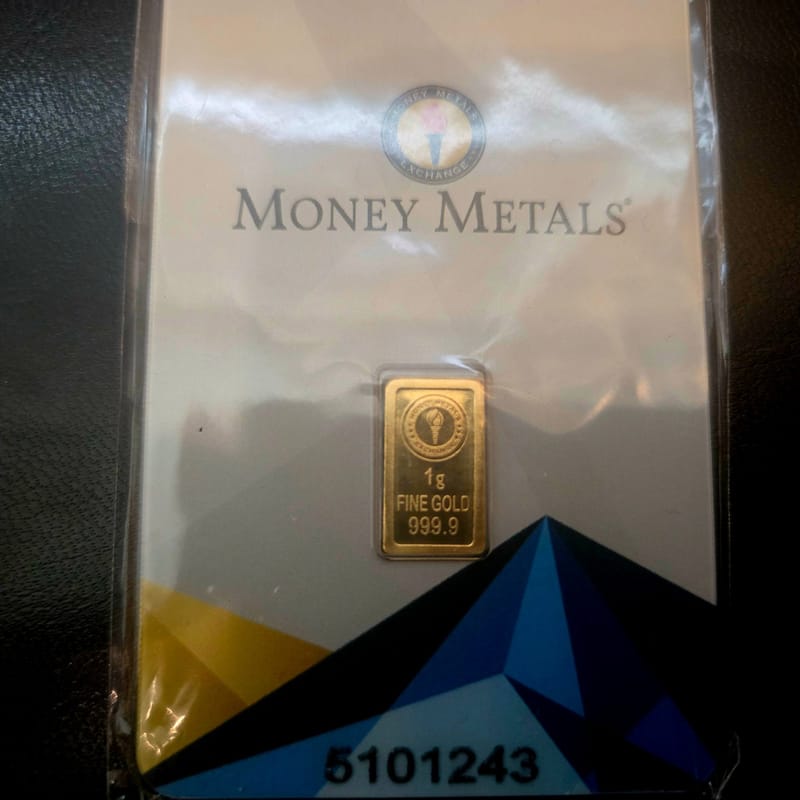
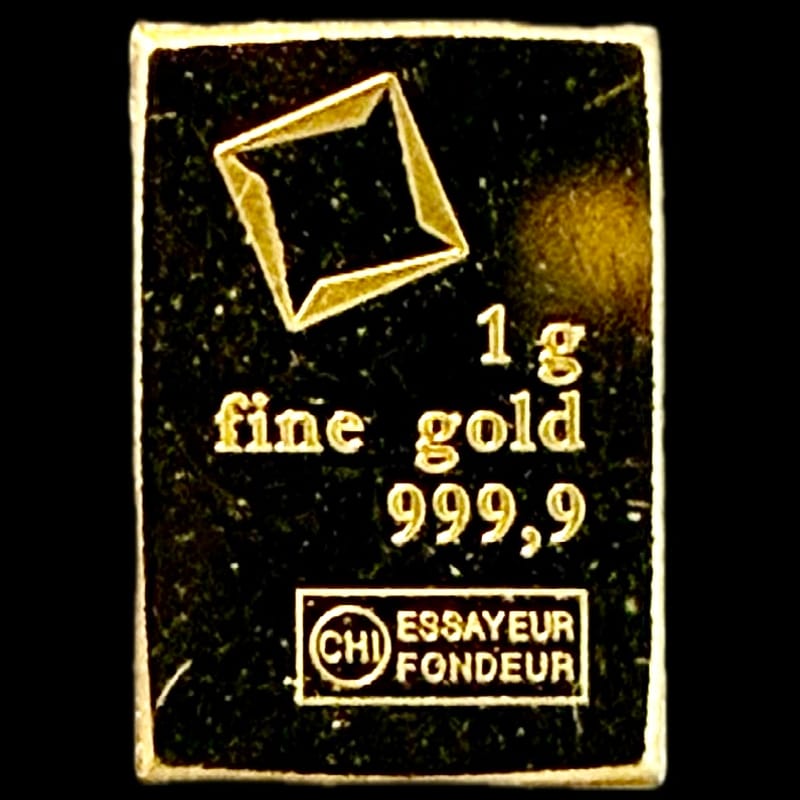
999 or 999.9: The equivalent of 24K, used on bullion.
-
750: The equivalent of 18K.
-
585: A common stamp for 14 K.
-
Hallmarks Indicating Plating (Red Flags):
Counterfeiters are often legally required to mark plated items, though they do so discreetly. If you see any of the following, your item is not solid gold:
-
GP: Gold Plated
-
HGE or HGP: Heavy Gold Electroplate
-
GF: Gold Filled
-
RGP: Rolled Gold Plate
-
EP: Electro Plated
The absence of any hallmark is a significant red flag, especially on a piece that appears to be professionally made.
PeerMetals Insight:
"A hallmark is the manufacturer's sworn testimony about the item's contents. It's the language of trust in the precious metals world. Learning to read these simple stamps is the first and most crucial skill an investor can develop. A clear, reputable hallmark is the foundation of an item's identity and your first line of defense against fraud."
Simple, Non-Destructive Tests for At-Home Verification
After checking for hallmarks, you can proceed with several physical tests that will not harm your item.
Test 1: The Magnet Test
-
Principle: Gold is a non-ferrous metal, meaning it is not magnetic.
-
How to Perform: You will need a strong magnet (a rare-earth magnet from a hardware store is ideal, not a simple fridge magnet). Hold the magnet directly to your gold item.
-
Expected Result: A real gold coin, bar, or piece of jewelry will not react to the magnet.
-
What a Failed Test Means: If the magnet sticks or pulls strongly, your item is fake. It contains an iron-based core beneath the plating.
-
Important Caveat: While this test is excellent at identifying many fakes, it is not foolproof. Counterfeiters can use non-magnetic base metals like copper, zinc, or aluminum. Therefore, an item that passes the magnet test still requires further verification.
Test 2: The Density and Weight Test
-
Principle: Gold is one of the densest metals on earth, with a density of 19.32 grams per cubic centimeter (g/cm³). It is significantly heavier than almost all common metals.
-
The "Heft Test": This is an intuitive test. If you have an item of a similar size made of another metal, the gold item should feel significantly heavier in your hand. This density is very difficult for counterfeiters to replicate.
-
Size vs. Weight: A one-ounce gold coin is noticeably smaller and more compact than a one-ounce silver coin. If an item claims to be one ounce of gold but seems unusually large, be suspicious.
Density Comparison Chart
| Metal | Density (g/cm³) |
|---|---|
| Gold | 19.32 |
| Tungsten* | 19.25 |
| Lead | 11.34 |
| Silver | 10.49 |
| Copper | 8.96 |
| Stainless Steel | ~8.0 |
*Note: Tungsten is extremely close in density to gold and is a common metal used in sophisticated counterfeits of large gold bars. This is why multiple testing methods are crucial.
Test 3: The Visual Inspection for Wear and Tear
-
Principle: Solid gold is a homogenous metal—it's gold all the way through. Gold plating is a micro-thin layer that can wear away over time.
-
How to Perform: Using a magnifying glass or a jeweler's loupe, carefully inspect the item, paying close attention to the areas that would receive the most friction.
-
What to Look For:
-
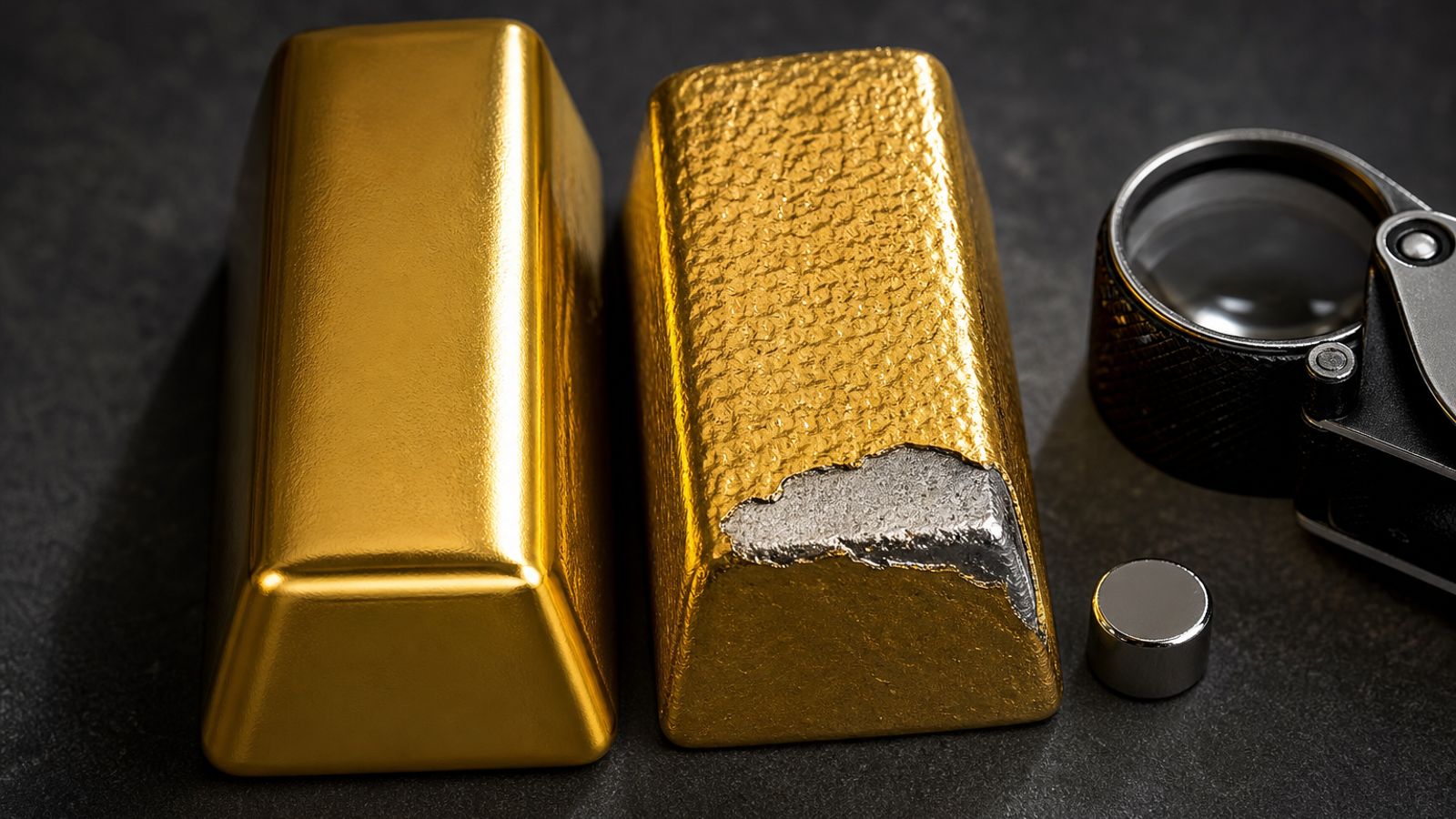
Flaking or Chipping: Look at the sharpest edges and corners of the item. Do you see any areas where the gold seems to be flaking off?
-
Discoloration: Check for a different colored metal showing through. You might see a reddish (copper), silvery (nickel), or grayish base metal.
-
Color Inconsistency: Is the color uniform across the entire piece, or are there patches that look "off"? This can be a sign that the plating is wearing thin.
-
PeerMetals Insight:
"The physical properties of gold—its density and its consistency—are its natural defense against fraud. Counterfeiters can mimic its color, but they can't easily fake its physics. By training your hands and your eyes to recognize the unique 'feel' and uniform look of real gold, you develop an intuitive sense that becomes a powerful tool for verification."
When to Seek Professional Help: The Definitive Answer
While at-home tests are excellent for screening, there are times when you need 100% certainty. For high-value items, or if you have any lingering doubts, consulting a professional is the only responsible choice.
Methods Professionals Use:
-
X-Ray Fluorescence (XRF) Spectrometry: This is the gold standard for non-destructive testing. An XRF analyzer shoots a safe beam of X-rays at the item, which causes the atoms to fluoresce. The machine reads the unique energy signatures of the atoms to provide a precise, near-instantaneous breakdown of the item's exact metallic composition without leaving so much as a scratch.
-
Acid Testing (The Destructive Method): You may see testing kits sold online that use nitric acid. This involves scratching the item on a stone and applying acid to the streak. While effective, this method is highly discouraged for investors. It is dangerous if the acid is mishandled, and, more importantly, it requires permanently scratching and damaging your item. This should only be performed by a professional, and only as a last resort.
PeerMetals Insight:
"A smart investor knows the limits of their own expertise. The goal of at-home testing is to weed out obvious fakes, not to take unnecessary risks with potentially valuable assets. Embracing professional verification, especially for significant purchases, isn't an admission of defeat; it's a sign of a disciplined and professional approach to protecting your capital."
PeerMetals Final Thoughts: Your Best Defense is a Trusted Source
Learning to spot the difference between real and plated gold is an empowering skill that every investor should cultivate. It equips you with the confidence to assess your holdings and protects you from the most common forms of fraud.
However, the ultimate strategy for avoiding fakes has nothing to do with testing. It is to purchase your gold from a highly reputable and trusted source from the very beginning.
Your time and energy are best spent on your investment strategy, not on worrying about the authenticity of every piece you own. By building relationships with trusted dealers, you remove the risk of counterfeits from the equation entirely. At PeerMetals, our entire marketplace is built upon this principle. We connect a community of vetted, knowledgeable, and trustworthy sellers with discerning buyers, creating an ecosystem where authenticity is the baseline expectation.
Invest with absolute confidence. Explore our marketplace to find authentic, verified gold bullion and coins from the most trusted sellers in the industry today!