How to Test Gold at Home: Magnet, Density, Acid and the Tests That Do Not Work

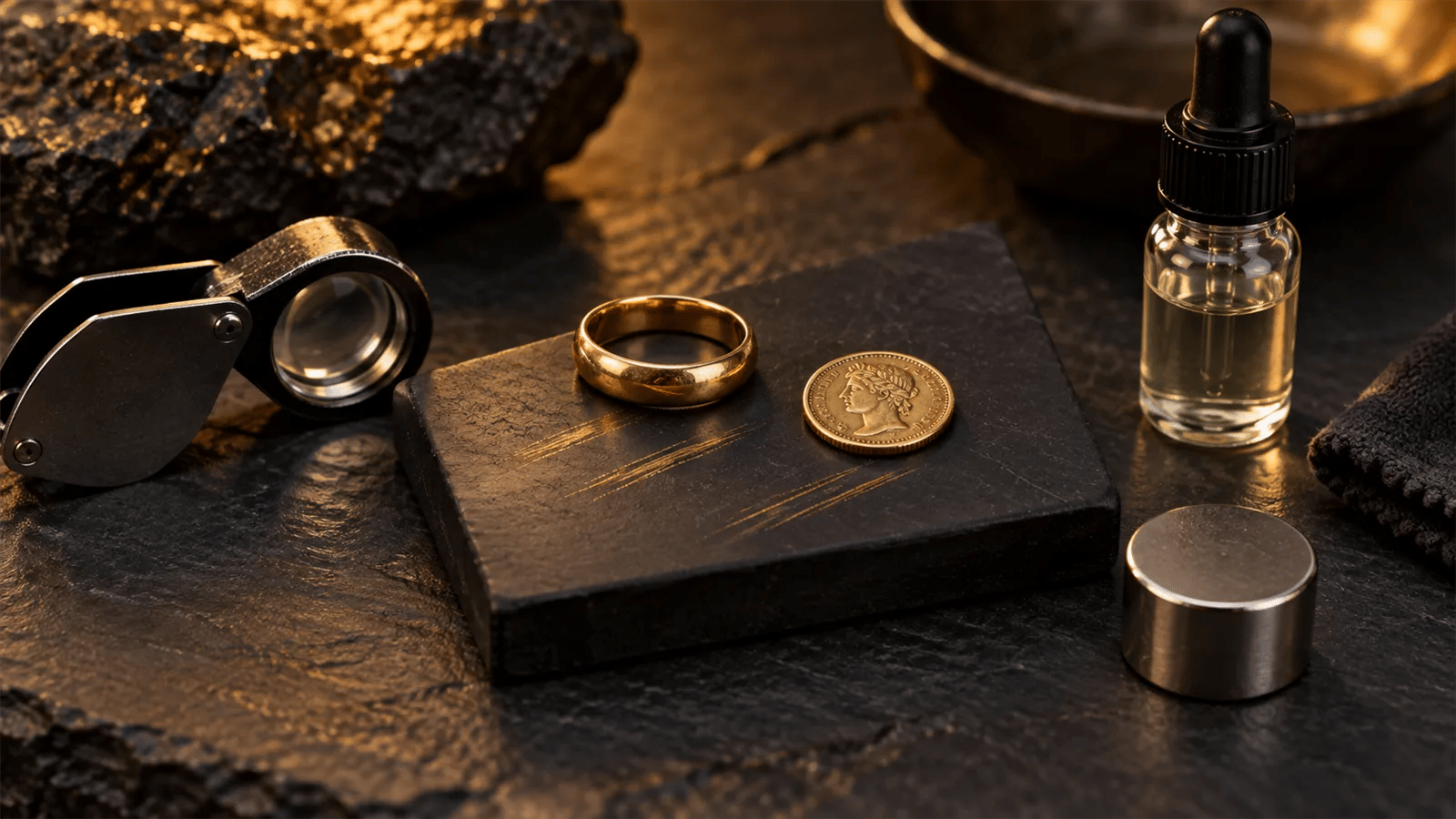
You can test gold at home well enough to catch most fakes with a magnet, a magnifier, a kitchen scale and a glass of water, and you can settle it for good with an acid test kit that costs less than a single gram of gold. What no home test can do is confirm purity to the decimal, which is what a dealer's XRF analyzer is for. This guide runs through each test in order of usefulness, explains what it can and cannot tell you, and covers the popular tests that do not work. With gold at $4,353.26 per ounce, or $139.96 per gram, the stakes on a fake are high enough to spend ten minutes checking.
Key takeaways
- A magnet, a scale and a glass of water catch most fakes; an acid kit confirms the karat.
- Density is the strongest home test: pure gold is 19.3 g/cm³, 14k is about 13 to 14.
- Toothpaste, vinegar and biting prove nothing and can damage the piece.
- Never scratch or acid-test a bullion coin or a bar in an assay card; check weight and dimensions instead.
Start with the hallmark and a magnifier
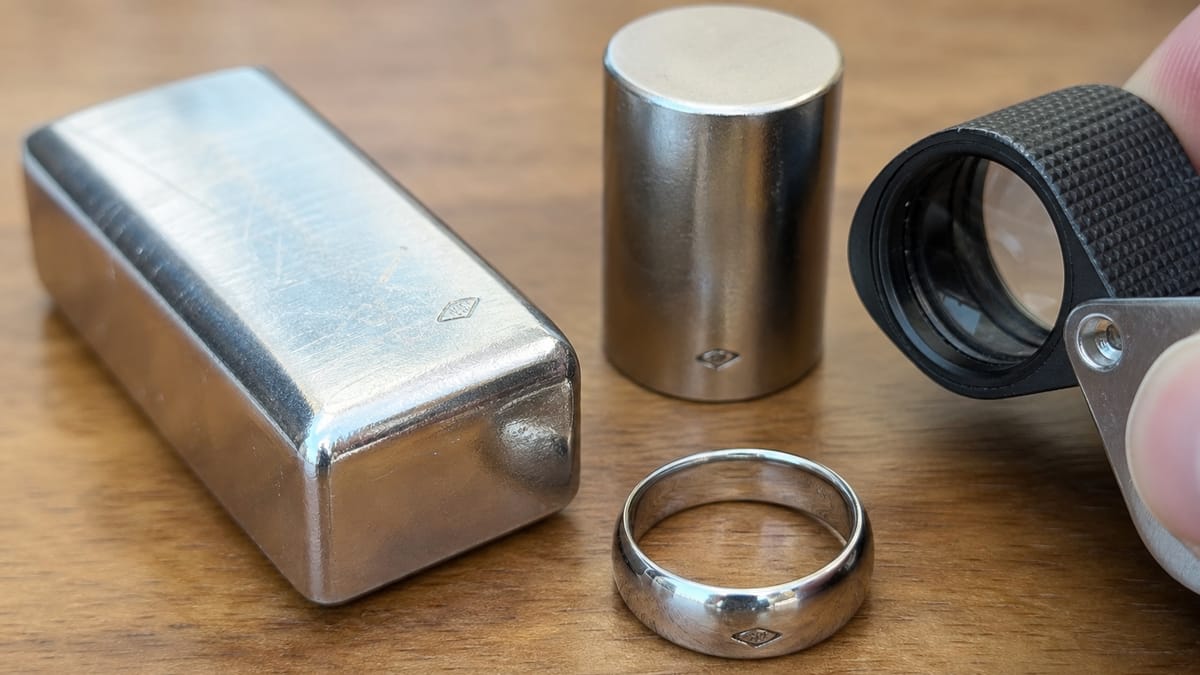
Real gold jewelry and bullion is almost always stamped with its purity: 10k, 14k, 18k or 24k on jewelry in the United States, or a three-digit fineness such as 585, 750 or 999 on European pieces and bars. Look for the stamp with a 10x loupe. A missing stamp on modern jewelry is a warning sign, and so are stamps like GP, GF, HGE or 1/20, which mean gold plated or gold filled. A clean stamp is not proof on its own, since fakes are stamped too, but it tells you what the piece claims to be so the later tests have something to check against.
The magnet test
Gold is not magnetic. Hold a strong neodymium magnet against the piece; if it pulls, the item is either not gold or has a steel core. This rules out the cheapest fakes in seconds. It does not rule out fakes made of brass, copper or tungsten, none of which are magnetic either, so a piece that passes still needs the next tests.
The density test
| Stamp | Gold content | Expected density (g/cm³) | Metal value per gram today |
|---|---|---|---|
| 24k / 999 | 99.9% | 19.0 to 19.3 | $139.96 |
| 22k / 916 | 91.7% | 17.2 to 17.8 | $128.29 |
| 18k / 750 | 75% | 15.5 to 16.5 | $104.96 |
| 14k / 585 | 58.3% | 13.0 to 14.0 | $81.62 |
| 10k / 417 | 41.7% | 11.0 to 12.0 | $58.38 |
Expected density by karat, and what a gram of each is worth at today's gold price of $4,353.26 per ounce. Alloys vary, so treat the density ranges as bands rather than exact numbers.
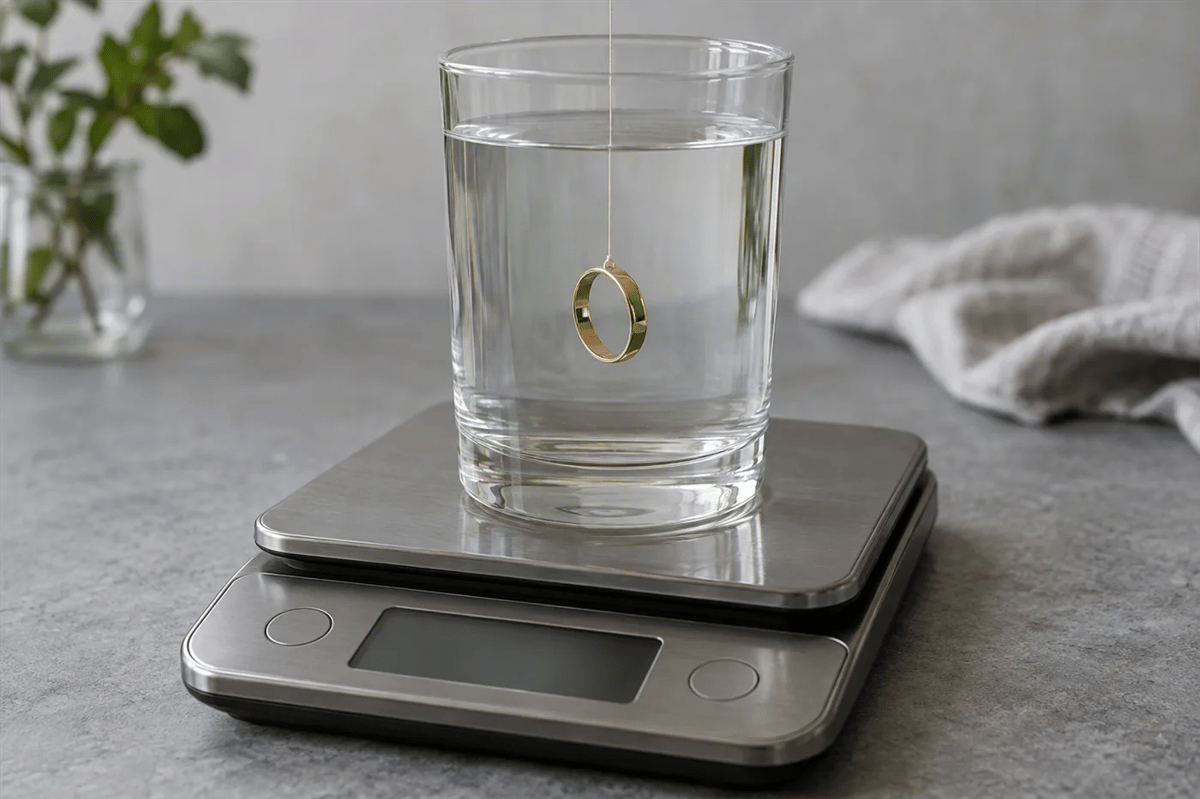
This is the most reliable home test because gold is so dense: pure gold is 19.3 grams per cubic centimeter, far above brass at about 8.5 and even tungsten's near-match is hard to fake in small pieces. Weigh the item dry on a scale that reads to 0.01 g. Then suspend it in a glass of water on the same scale without touching the sides and record the weight gain, which equals the volume in cubic centimeters. Divide dry weight by that volume. Expect about 19 for 24k, 15.5 to 16.5 for 18k, 13 to 14 for 14k and 11 to 12 for 10k. A number far below the karat stamp means the piece is plated or alloyed with something cheap.
The ceramic streak test
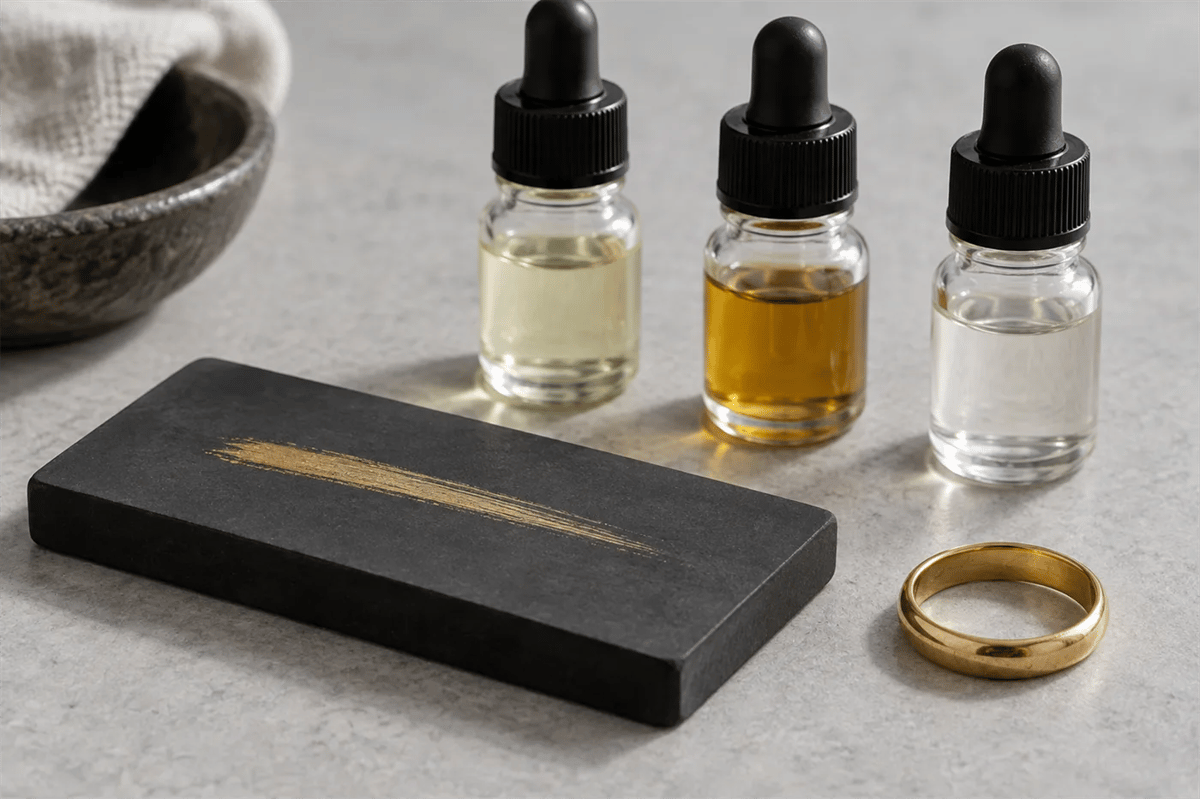
Drag the piece firmly across an unglazed ceramic tile. Gold leaves a gold-colored streak; most fakes leave a black or gray streak. It is quick and cheap, but it scratches the piece slightly, so use an edge or the clasp rather than the face of a coin or a finished bar. Do not do this to a collectible coin at all.
The acid test
A gold testing kit contains small bottles of nitric acid mixed for 10k, 14k, 18k and 22k, plus a testing stone. Rub the piece on the stone to leave a streak, then apply a drop of acid matched to the stamped karat. If the streak stays, the gold is at least that karat; if it dissolves, it is lower or not gold. Work up through the bottles to bracket the purity. Kits cost $10 to $20 and are the same tool pawn shops and small jewelers use. Wear gloves, work in a ventilated space and keep the acid off anything you value, because it will mark the metal where it touches.
Electronic testers and XRF
Handheld electronic testers measure conductivity and give a karat reading in seconds without acid; they are accurate on solid pieces but can be fooled by thick plating. XRF analyzers read the surface composition by X-ray and are the standard at coin shops and refiners. Neither is a home tool, but any dealer will test a piece for free or a few dollars, and that is the right final step before a large sale or purchase. The local coin shop directory lists dealers by state.
Tests that do not work
| Test | Cost | Catches | Misses | Marks the piece? |
|---|---|---|---|---|
| Hallmark and loupe | $5 | Plated and filled stamps | Fake stamps | No |
| Magnet | $5 | Steel-core fakes | Brass, copper, tungsten | No |
| Density | $20 scale | Plating, brass, most tungsten | Hollow or mixed pieces | No |
| Ceramic streak | $3 | Base-metal fakes | Thick plating | Slightly |
| Acid kit | $10 to $20 | Plating, wrong karat | Nothing common | Yes, at the test spot |
| Electronic tester | $100+ | Wrong karat | Thick plating | No |
| XRF at a dealer | Free to $10 | Everything on the surface | Deep cores | No |
| Toothpaste, vinegar, bite | Free | Nothing reliable | Most fakes | Bite does |
Which test proves what. Run them top to bottom and stop when one fails.
Toothpaste, vinegar and lemon juice are widely shared and prove almost nothing. Gold does not react to any of them, but neither do most base metals under a thin plating, so a piece that "passes" can still be fake. Biting a coin tests softness, damages the coin and cannot tell gold from lead. Skin discoloration only shows that some alloy metal is present, which is true of every karat below 24. The float test works only because gold is heavy, and the density test above does the same job with actual numbers.
Testing gold coins and bars
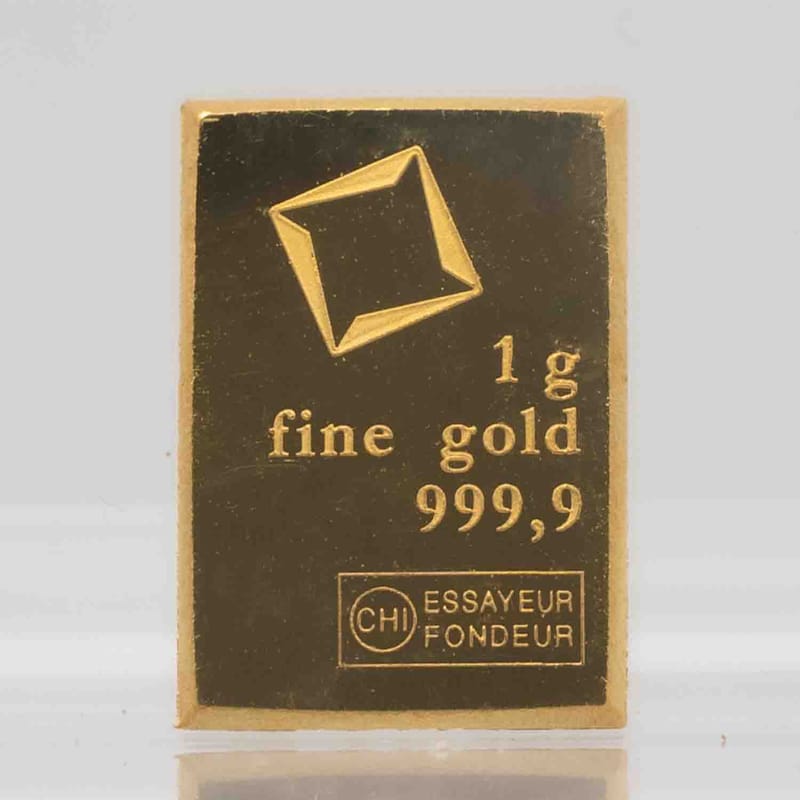
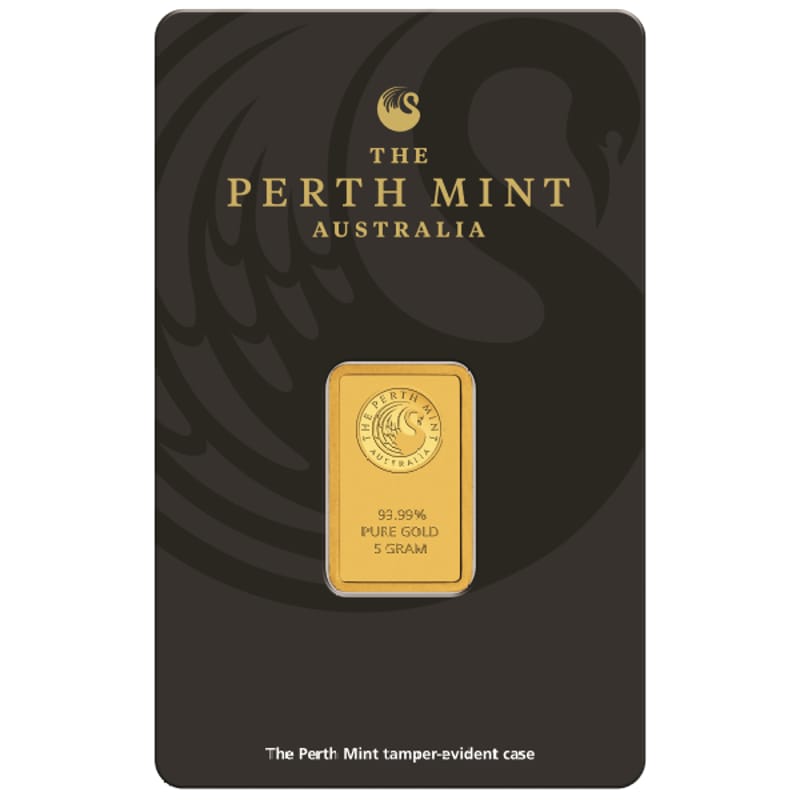
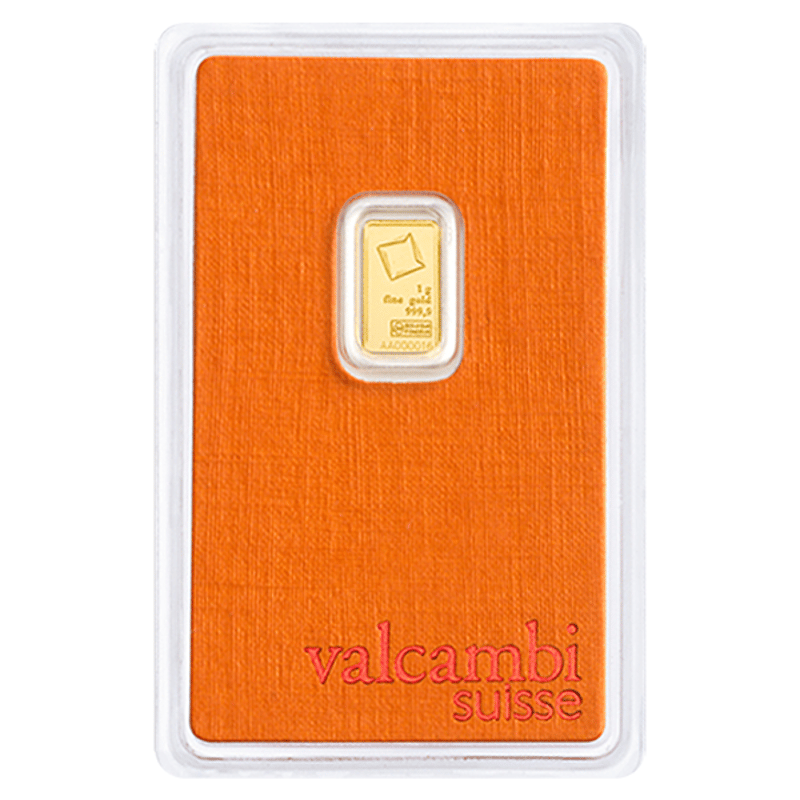
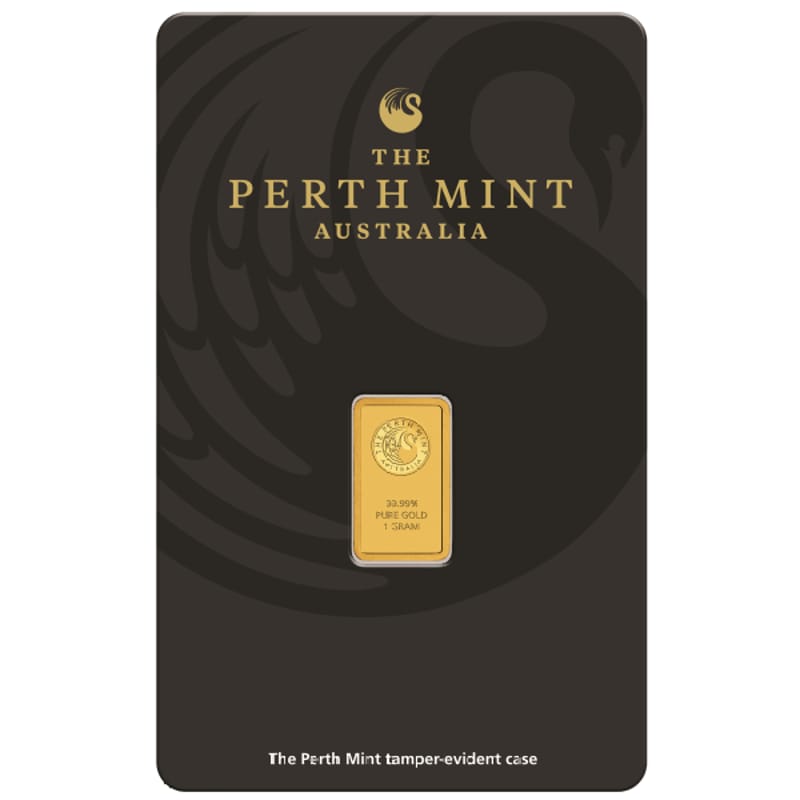
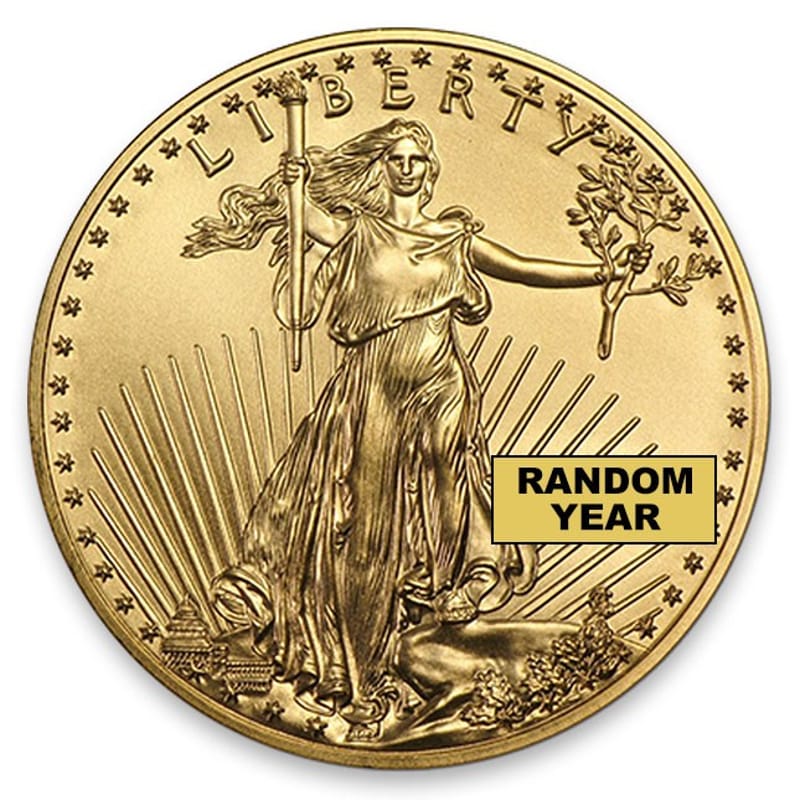
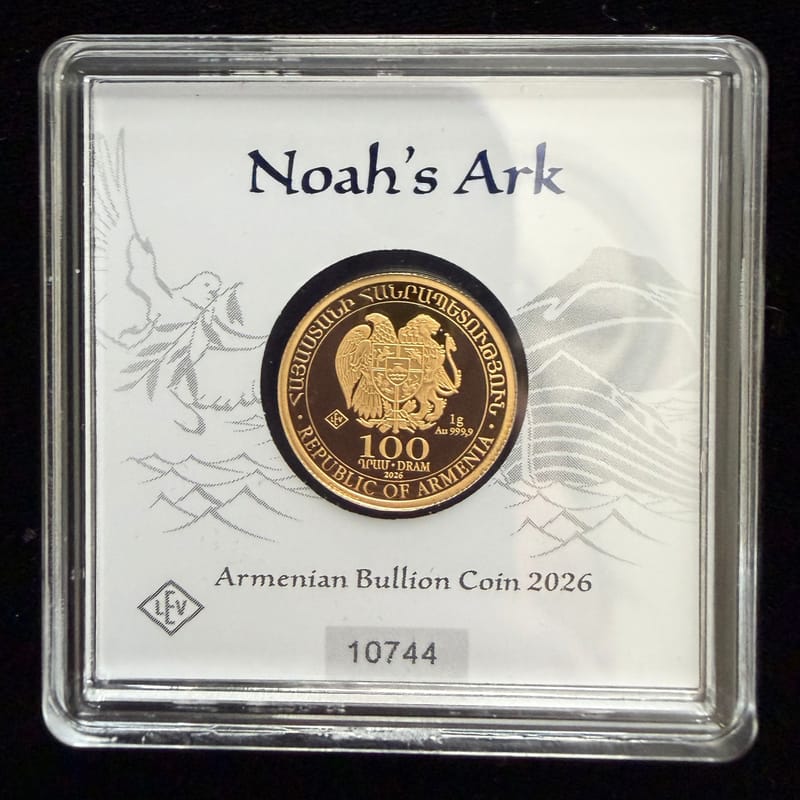
Do not scratch, acid-test or bite a bullion coin or a bar in an assay card; you will lower its value more than any fake would cost you. Instead check the exact weight and diameter against the mint's specifications, which are published for every sovereign coin, and check the density without removing the card if possible. A 1 oz American Gold Eagle weighs 33.93 g and measures 32.7 mm; a 1 oz Maple Leaf weighs 31.10 g and measures 30 mm. Tungsten fakes get the weight right but not the dimensions, because tungsten is slightly less dense than gold. Buy sealed bars from recognized refiners and coins from sellers with a verified sales history, and the testing largely takes care of itself. The real gold versus gold plated guide covers jewelry-specific signs in more depth.
{{stats:gold}} {{calc:gold}}Frequently asked questions
What is the most accurate way to test gold at home?
The density test, followed by an acid kit to confirm the karat. Together they catch plated pieces, base-metal fakes and most tungsten fakes. A dealer's XRF reading is the only way to confirm purity precisely.
Does real gold stick to a magnet?
No. Any pull means the piece is not solid gold. A piece that does not stick still needs a second test, since brass and copper are not magnetic either.
Can you test gold with toothpaste or vinegar?
Not usefully. Gold does not react to them, but neither do many fakes, so a pass means nothing. Use the density test or an acid kit instead.
How much is my gold worth once I know it is real?
Pure gold is worth $139.96 per gram today. Multiply by the purity: 14k is 58.3 percent gold, 18k is 75 percent. The scrap gold calculator does the arithmetic for any weight and karat.
{{listings:gold:coin:4}} {{updated}}