The History of Gold Prices: From Fixed Value to Free Market

The price of gold has traveled a remarkable path over the last century and a half. For decades, governments set its value by decree. Today, that value is discovered every second by an open market. Tracing this history explains why gold is regarded as a durable store of wealth and how it became the safe-haven asset investors turn to in times of crisis.
The Classical Gold Standard (c. 1871-1914)
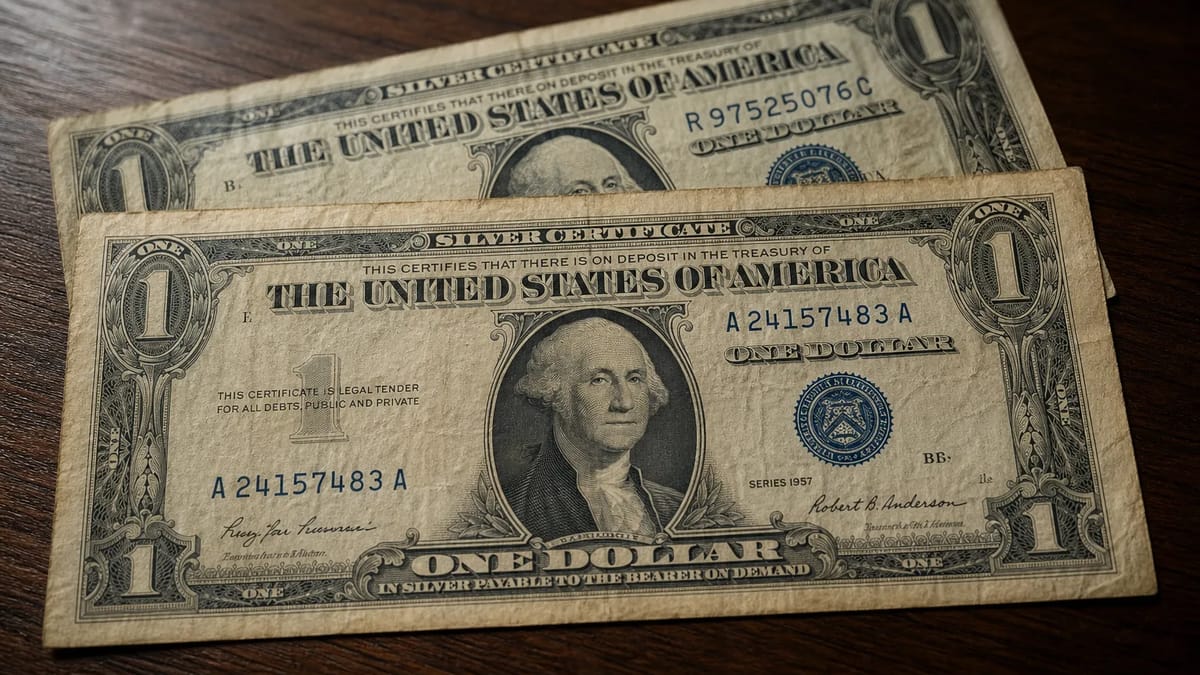
For a relatively brief but stable period, much of the world operated under the classical gold standard. A country's currency was defined by, and directly convertible into, a fixed amount of gold. In the United States, the price was set at $20.67 per troy ounce. In principle, any citizen could exchange paper dollars for physical gold coins at a bank.
The system fostered stable prices and international trade built on a shared anchor. It came with one hard limit: a government could not issue more money than it held in gold, which constrained its ability to finance large undertakings such as wars.
PeerMetals Insight
The gold standard was an early form of proof of reserves. Paper money was a claim check for the real asset. That preference for owning the thing itself, rather than a promise, is still what draws many investors to physical metal today.
FDR, Confiscation, and the $35 Fix (1933-1934)
The Great Depression broke the old system. Facing severe deflation and waves of bank failures, President Franklin D. Roosevelt took one of the most drastic steps in U.S. financial history. Executive Order 6102, issued in 1933, made it illegal for most U.S. citizens to own gold. Americans were required to sell their gold coins and bullion to the government at the official price of $20.67 per ounce.
The following year, the Gold Reserve Act of 1934 raised the official price to $35 per troy ounce. This devalued the dollar with the aim of stimulating the economy and combating deflation. In a single stroke, the direct link between ordinary citizens and their gold was severed, and only the government stood to benefit from the higher price.
Bretton Woods: The Dollar as Anchor (1944-1971)
After World War II, global leaders met at Bretton Woods, New Hampshire, to build a new international monetary order. The result pegged the world's major currencies to the U.S. dollar, while the dollar itself remained convertible to gold at $35 per ounce. The arrangement made the dollar the world's reserve currency, backed by a promise that the United States held enough gold to honor the dollars held abroad.
The system held for decades, but strains appeared by the 1960s. As the United States printed large sums to finance the Vietnam War and domestic programs, other countries, most notably France under Charles de Gaulle, recognized that far more dollars were in circulation than there was gold in U.S. vaults. They began redeeming their excess dollars for physical gold, draining American reserves.
The Nixon Shock: Gold Set Free (August 15, 1971)
With gold reserves falling to dangerous levels, President Richard Nixon acted. On the evening of August 15, 1971, he announced that the United States was closing the gold window, permanently ending the convertibility of the dollar into gold. The move, known as the Nixon Shock, marked the end of the gold standard.
From that point, the world's monetary system rested entirely on fiat currencies, money backed by government authority rather than metal. The deeper consequence was that gold's price was now free to be set by supply and demand in the open market for the first time in modern history.
PeerMetals Insight
The Nixon Shock created the modern gold market. Once the market was finally allowed to answer what gold was worth, the answer was far more than $35. Every open marketplace for metal today, including this one, traces back to that shift toward letting buyers and sellers discover the price.
Gold in the Free Market: A Barometer of Fear
Once it floated freely, gold's price became a visible gauge of global economic anxiety, and its biggest moves track the crises of the past half-century.
Through the 1970s, high inflation, the end of the fixed-dollar system, and geopolitical shocks such as the Iranian Revolution drove investors into gold. That surge peaked at a then-record of about $850 per ounce in January 1980. The next two decades told the opposite story: as high interest rates tamed inflation, gold drifted through a long, grinding decline that lasted into the early 2000s.
A powerful new bull market began around 2002. The dot-com bust, the September 11 attacks, and above all the 2008 Global Financial Crisis pushed fearful investors back toward gold, lifting it to a record near $1,900 per ounce in 2011. After a pause, the pattern resumed. The COVID-19 pandemic, vast government stimulus, and renewed inflation carried gold to roughly $2,070 in 2020 and on to new highs above $2,700 in 2024, reinforcing its role as a crisis hedge.
The Evolution of Gold's Price and Role
The timeline below summarizes gold's journey from a government-controlled anchor to a free-floating barometer of global economic health.
| Era / Period | Key Events & Policies | Official / Market Gold Price | Key Takeaway |
|---|---|---|---|
| c. 1871-1914 | The Classical Gold Standard | Fixed at $20.67/oz | Money was a direct claim on physical gold, enforcing fiscal discipline on governments. |
| 1933-1934 | FDR's gold recall & revaluation | Citizens forced to sell at $20.67/oz, then re-fixed to $35/oz for governments | The direct link between citizens and their gold was severed by government decree. |
| 1944-1971 | The Bretton Woods System | Dollar fixed to gold at $35/oz; other currencies fixed to the dollar | The dollar became the world's reserve currency, backed by a promise of convertibility. |
| 1971 | The Nixon Shock | Gold window closed; price free to float | Gold was demonetized officially, yet unleashed to find its value through supply and demand. |
| 1980 | Stagflation & geopolitical fear | Spiked to about $850/oz | The first free-market peak, driven by high inflation and global instability. |
| 2011 | Aftermath of the 2008 financial crisis | Record near $1,900/oz | Safe-haven demand surged as confidence in the financial system fell. |
| 2020-2024 | Pandemic, stimulus & inflation | From roughly $2,070/oz to above $2,700/oz | Gold reached successive all-time highs as a hedge against uncertainty. |
Gold-Backed Money vs. Fiat Money
The Nixon Shock did more than free the price of gold; it changed the nature of money itself. The global economy moved from a system anchored by a tangible asset to one based on confidence in governments. The table below sets out the core differences.
| Feature | Gold-Backed Currency (e.g., pre-1971 USD) | Fiat Currency (e.g., modern USD) |
|---|---|---|
| Source of Value | Backed by a physical, finite asset (gold). | Backed by government decree and public trust. |
| Constraint on Supply | Governments cannot issue more money than their gold reserves allow. | Governments can create new currency units at will. |
| Inflation Risk | Lower. The money supply is tied to a scarce resource. | Higher. Value can be diluted by expanding the money supply. |
| Trust Factor | Trust rests in the physical asset, which is verifiable and has no counterparty. | Trust rests in the fiscal responsibility of the issuing government. |
The Enduring Role of Gold
Gold's price history reflects a long contest between government control and market discovery. For generations its value was set by decree, but once it was allowed to float, the market consistently affirmed its standing as a store of wealth. Through inflation, debt, and geopolitical upheaval, investors have returned to gold in nearly every major crisis, not because an authority assigned it worth, but because of value the market recognizes on its own. If you want to add this timeless asset to your own holdings, you can explore gold bullion and coins from trusted sellers across the PeerMetals marketplace.