Why Are Coins Round? A Look at History and Practicality

Coins are round because the shape solves several problems at once: it is the cheapest blank to stamp from a metal sheet, it wears evenly without sharp corners that snag pockets or chip off, and it stacks, counts, and feeds through machines with no fuss. The form took hold at the very start of coinage and never had a serious rival.
The shape that won by being practical
Round did not become the standard by accident or decree. It won because it beats every other shape on the dull, repetitive demands of making and using money. Three forces pushed coinage toward the circle: how coins are produced, how people and machines handle them, and how a round edge can be protected from tampering.
Production and durability
From a manufacturing standpoint, the circle is the most efficient form for mass output.
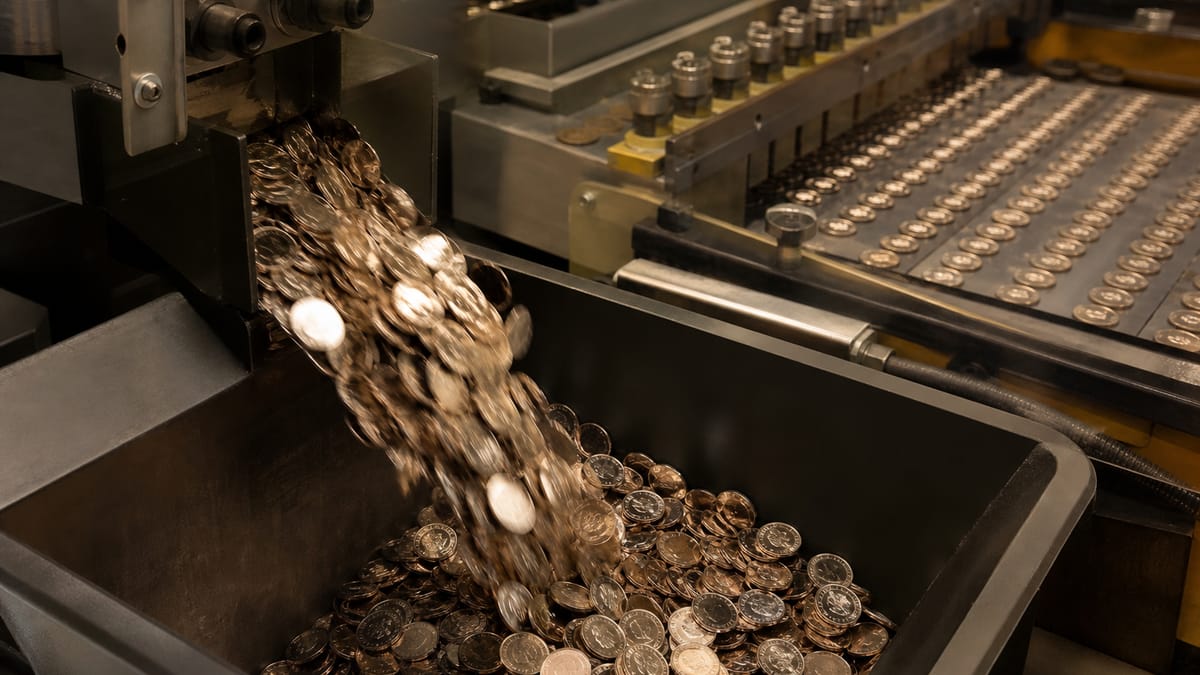
Less waste in striking. Punching round blanks from a metal sheet is fast and economical, and the act of striking a piece of metal between two dies naturally spreads it into a disc. Mints did not have to fight the material to get a round result; the process produced one on its own.
No corners to fail. A circle has no angles, and angles are where stress concentrates and metal chips, cracks, or breaks. A round coin spreads impact evenly around its rim, which is why ancient coins often turn up worn smooth from centuries of handling yet rarely broken at the edge.
Built for hands and machines
The round shape also suits everyday use, both for people and for the equipment built around coins.
Easy to handle. Round coins are comfortable to hold, stack, and count, with no sharp edges to catch on cloth or skin.
Easy to automate. Vending machines, parking meters, coin sorters, and slot machines all check a coin by its uniform diameter and weight. A consistent circular profile makes that validation simple. Any irregular shape would be harder and costlier to read mechanically.
PeerMetals Insight
The same standardization that lets a machine recognize a coin also makes bullion easy to trade. When a coin's diameter, weight, and shape are universally recognized, buyers and sellers can transact quickly and with confidence, which is what keeps a market liquid.
Where round coins came from
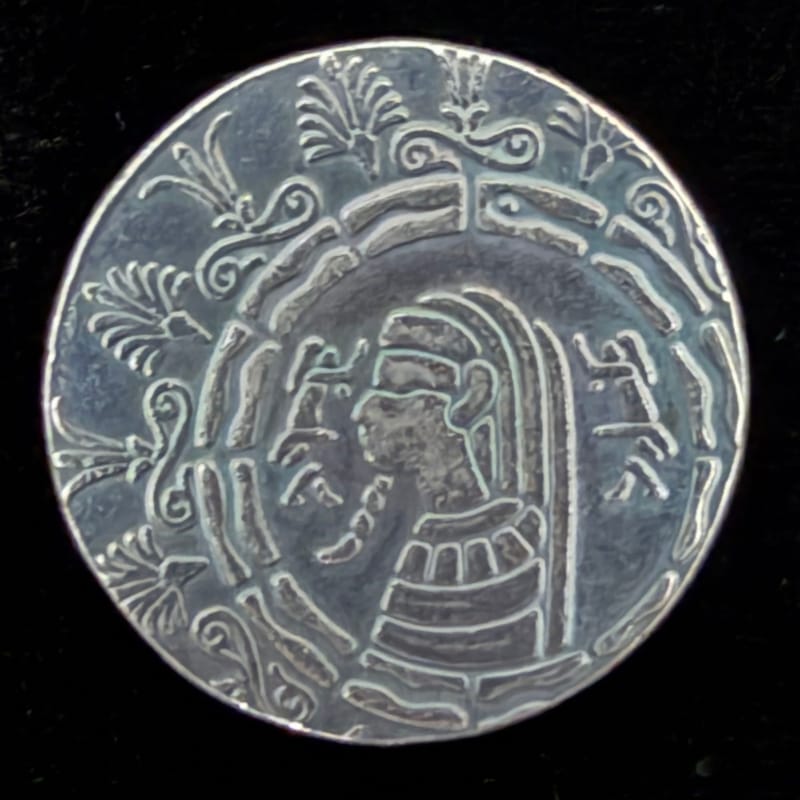
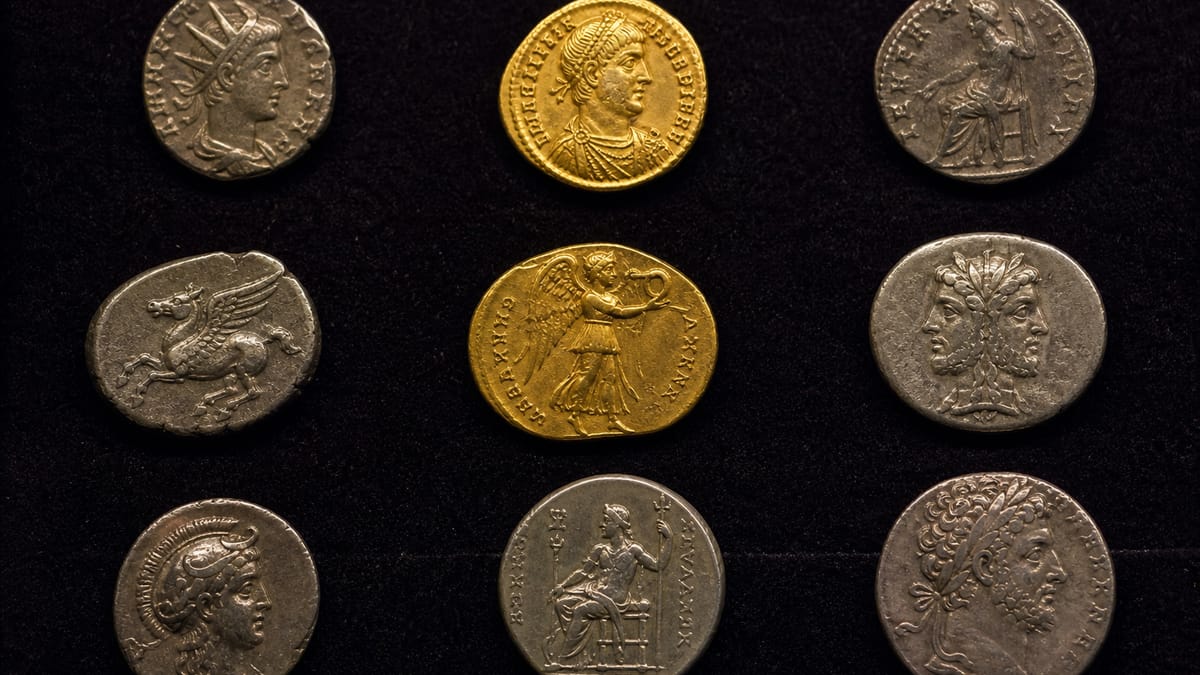
The tradition reaches back to the invention of coinage itself. The first coins were struck in Lydia around 600 BC, roughly 2,600 years ago, from electrum, a naturally occurring alloy of gold and silver. These early pieces were stamped on lumps of metal that were irregular but broadly rounded, and the striking process flattened them further toward a disc.
They were not perfect circles, but the round form quickly became the accepted standard because it simply worked better than the alternatives. That early precedent carried forward, and the circle has stayed the default for coinage ever since, giving the shape a familiarity recognized across cultures and centuries. A modern American Eagle traces its outline back to an ancient Greek drachma.
How a round edge fights tampering
One of the less obvious advantages of roundness is security. When coins were made of solid gold and silver, a common fraud was "clipping": shaving tiny slivers of metal from the edge. A clip here and there was easy to miss, but across hundreds of coins the stolen shavings added up to a real quantity of precious metal.
The geometry of a circle is what made the defense possible. Because a true circle has a constant, predictable circumference, any piece shaved from the edge throws the outline off and becomes noticeable. An irregularly shaped coin offers no such reference point, so it is far harder to tell whether metal has been removed.
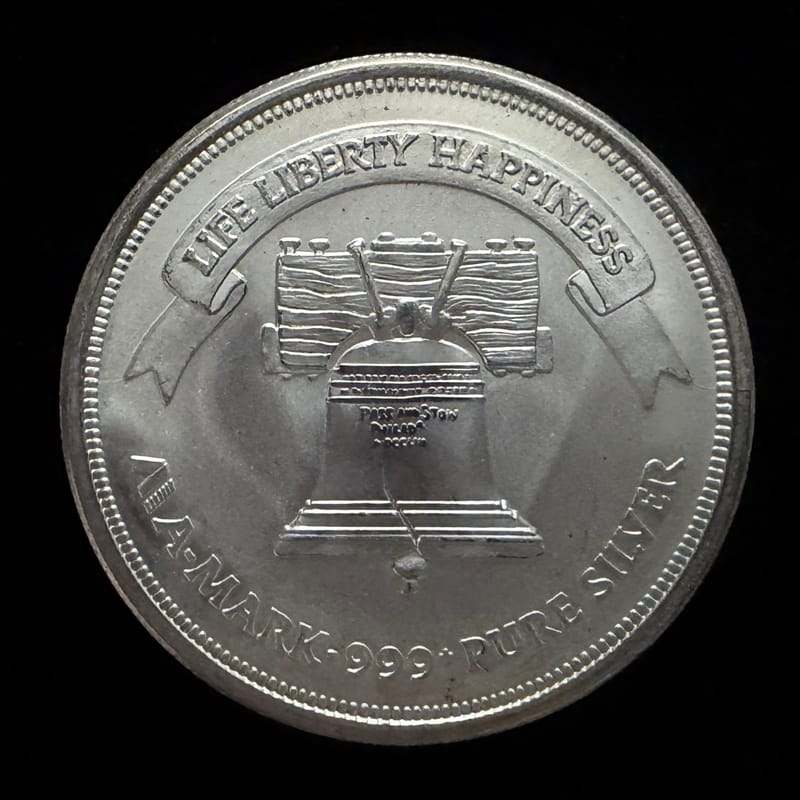
The reeded edge. Mints began cutting a pattern of fine vertical grooves, or "reeds," into the rim. Anyone who tried to shave the edge would wreck the reeding, making the tampering obvious. Reeded edges also made a coin harder to counterfeit convincingly.
Milled edges become standard. Edge-marking depended on milling machinery, which was already in use at the English Royal Mint before Isaac Newton's time there; he joined in 1696. Around that era milled and reeded edges became the established practice, helping stabilize a currency that clipping had badly degraded.
PeerMetals Insight
The reeded edge is an early ancestor of the security features on today's bullion, from micro-engraving to serial numbers. Protecting the integrity of a precious-metals asset has always mattered, and a verifiable, tamper-evident product is what lets buyers trust what they receive.
Why no one ever improved on it
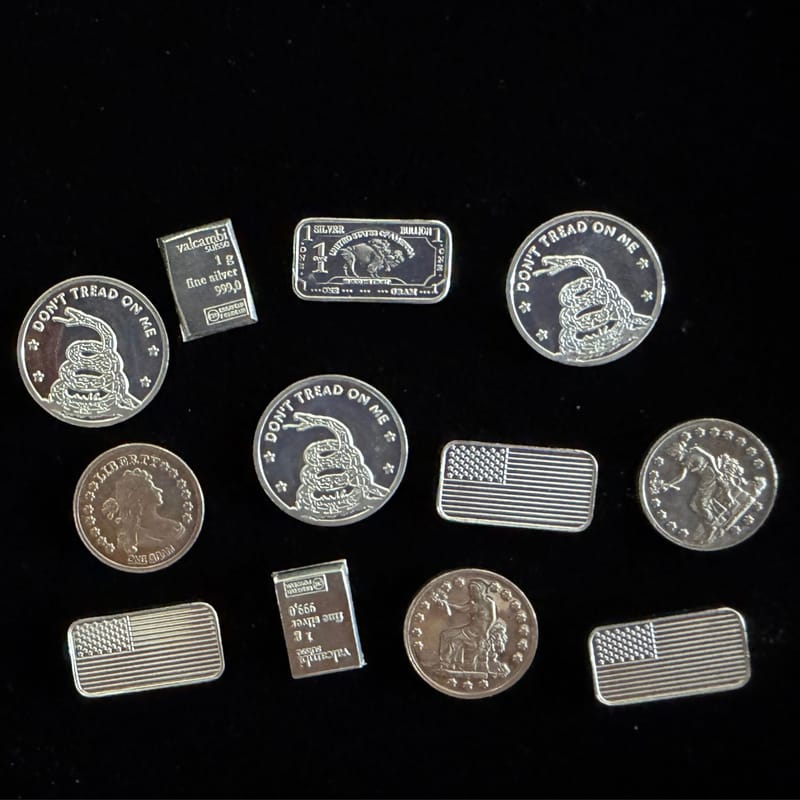
Put the pieces together and the round coin looks less like a habit and more like an answer. It is cheap to strike, tough enough to survive generations of handling, comfortable to use, simple for machines to validate, and structurally suited to anti-tampering measures. A handful of countries have issued non-round coins for novelty or denomination clarity, but those are exceptions that prove how well the circle covers the ordinary requirements of money.
So the next time you handle a coin, the shape carries a long record of trial and error behind it. It is a design that solved the practical problems of making and trusting money so completely that, after roughly 2,600 years, nothing has displaced it.
Curious about the coins behind the history? Browse the marketplace at PeerMetals to see classic and modern coins from trusted sellers.