To Clean or Not to Clean: The Ancient Coin Dilemma

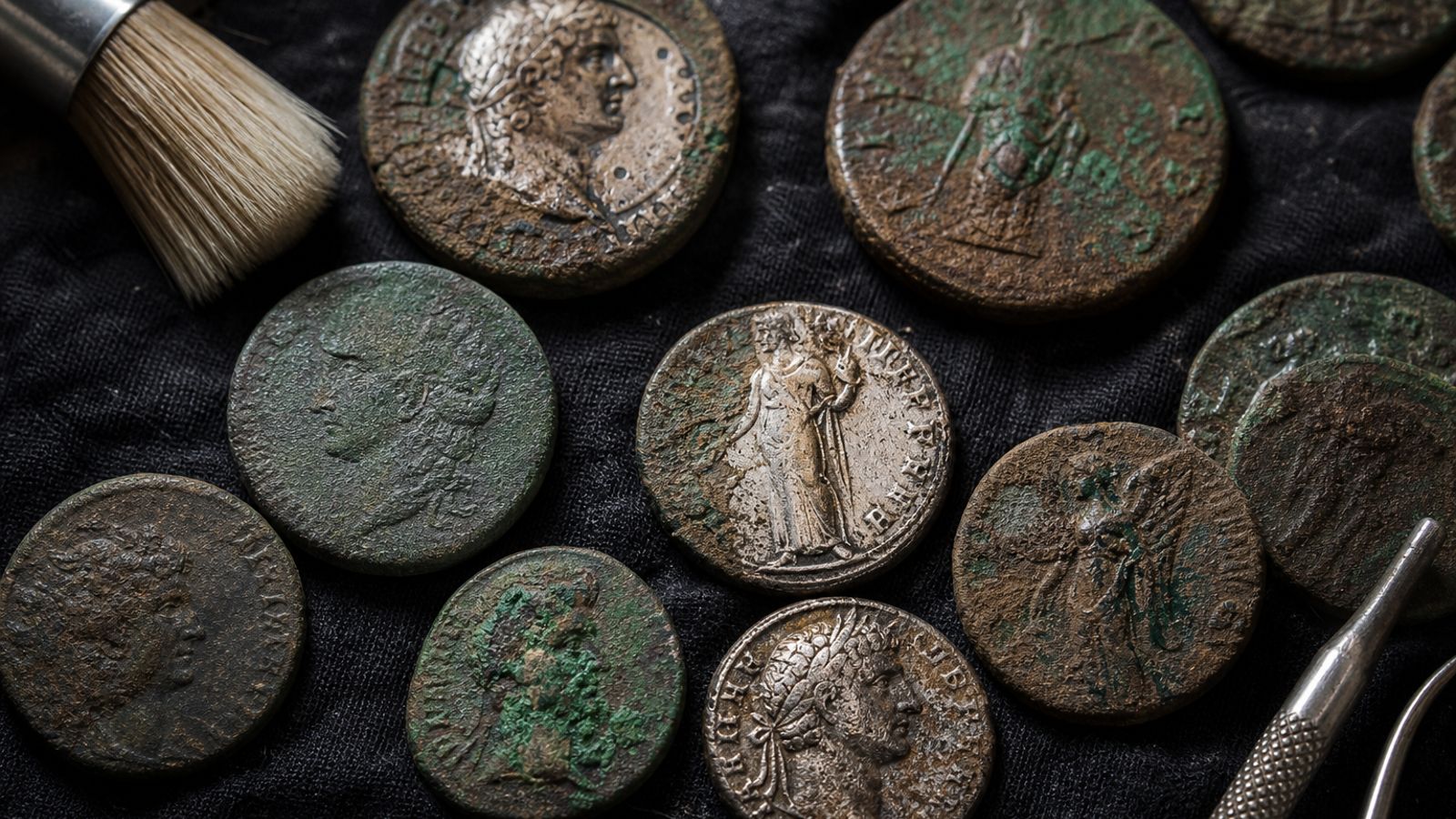
You’ve just acquired your first piece of ancient history—perhaps a Roman denarius bearing the profile of an emperor, or a Greek drachma showcasing a mythological beast. It rests in your palm, a tangible link to a world that vanished two millennia ago, covered in the dark, earthy tones of ages past. Your first instinct, a perfectly natural one, might be to make it shine, to reveal the gleaming metal beneath the "dirt."
Stop.
That single instinct, if acted upon, could be the most costly and irreversible mistake you ever make as a collector.
The question of whether to clean an ancient coin is one of the most critical and debated topics in all of numismatics. It is a dilemma that separates the novice from the seasoned collector. This definitive guide from PeerMetals will explain the vital importance of a coin's natural surface, the science behind its value, and why the golden rule is almost always to leave it alone.
The Cardinal Rule: Why "Don't Clean" is the Default
In the world of modern coins, a brilliant, mint-state finish is often the goal. For ancient coins, the opposite is true. The first, last, and most important rule is not to clean them. The "grime" you see is rarely just dirt; it is a complex, historical surface known as a patina, and it is often integral to the coin's value and authenticity.
Unlike a modern coin that might get pocket grime on it, an ancient coin has spent centuries, or even millennia, interacting with its environment. It was buried in soil with a specific mineral content, exposed to moisture, and subjected to slow chemical reactions. This process creates a surface that is a testament to its journey through time. To remove it is to erase its history.
PeerMetals Insight:
"The first lesson in ancient numismatics isn't about identifying emperors; it's about respecting the object's journey. At PeerMetals, we see ourselves as custodians of history, and we encourage our community to adopt the same mindset. The decision not to clean a coin is the first and most profound act of a responsible custodian."
What is Patina? The Soul and Story of an Ancient Coin
Patina is the thin layer of stable corrosion that forms on the surface of an ancient coin over a very long period. It is not a flaw; it is the coin's natural shield and its historical fingerprint. Think of it like the rich finish on a centuries-old piece of antique furniture—to strip it down to the bare wood would be an act of vandalism.
Patina serves three crucial functions:
-
Protection: A good, stable patina forms a hard, protective shell over the coin's metal. It seals the surface from the air and prevents further, more destructive corrosion from taking place. Removing this layer exposes the raw metal to the elements once more, potentially causing it to degrade rapidly.
-
Authentication: The formation of a natural, multi-toned, and well-adhered patina is a process that can only be created by centuries of slow, natural aging. It is incredibly difficult for forgers to fake convincingly. An expert can often identify a genuine ancient coin by the characteristics of its patina alone. Stripping it away removes one of the key proofs of its authenticity.
-
Aesthetic Beauty: Collectors find great beauty in the varied colors that patinas can produce. Depending on the soil chemistry, a bronze coin can develop a stunning range of colors: emerald green, turquoise blue, deep red, or a smooth, dark "Tiber patina" that resembles polished leather. This coloration adds a unique character and artistry to each coin that a shiny, raw metal surface lacks.
PeerMetals Insight:
"Patina is the coin's autobiography, written in the language of chemistry and time. It tells us where the coin has been and proves its authenticity in a way no certificate ever could. On the PeerMetals marketplace, a coin with a beautiful, original patina is celebrated and sought after, as it represents the pinnacle of historical integrity."
The Irreversible Damage of Improper Cleaning
If the value of patina isn't convincing enough, consider the devastating consequences of getting it wrong. Any form of abrasive or chemical cleaning by an amateur will cause irreversible damage.
-
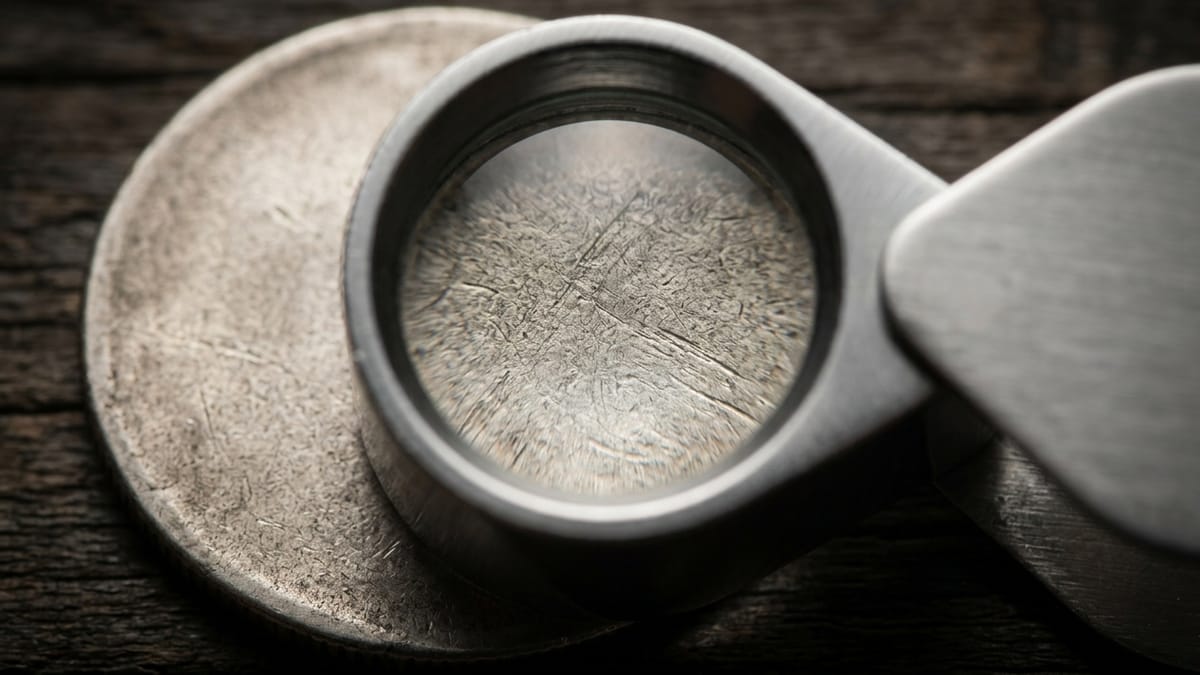
Abrasive Damage: Using a brush (even a soft one), a polishing cloth, or any kind of abrasive substance will permanently scratch the coin's surface. These tiny scratches, or "hairlines," are easily visible under magnification and instantly signal to an expert that the coin has been harshly cleaned, plummeting its value.
-
Chemical Damage: Using commercial "coin dips" or other harsh chemicals is even worse. These acids strip the patina away entirely, leaving the coin with an unnatural, lifeless, and often pitted surface. This process can expose porosity in the metal and creates a finish that is considered ugly and undesirable by virtually all serious collectors.
-
Value Destruction: Ultimately, the result is financial loss. An improperly cleaned coin can lose anywhere from 50% to over 90% of its market value. A rare coin worth thousands of dollars can be reduced to little more than its base metal worth with just a few minutes of misguided "restoration."
PeerMetals Insight:
"Your goal as an investor and collector is to preserve and enhance value. Improper cleaning is one of the few actions you can take that actively and permanently destroys it. The financial risk is simply too great. Protecting the coin's original surface is protecting your investment."
The Exception: When "Conservation" is Necessary
While the rule is "don't clean," there is a rare exception for what experts call conservation. This is not about making a coin shiny; it's about stabilizing it to prevent its destruction or making an otherwise unidentifiable artifact readable.
This work should only ever be performed by a professional conservator.
Cases that may require conservation include:
-
Unidentifiable Coins: Sometimes, coins are found in clumps of earth so thick that no detail is visible. A professional may use painstaking methods to remove this outer layer of dirt.
-
Bronze Disease: This is a form of active, harmful corrosion that appears as a powdery green substance. It is contagious to other bronze coins and will slowly eat away at the metal until the coin is destroyed. A conservator must use specific chemical treatments to neutralize the reaction and stabilize the coin.
Professional methods are delicate and time-consuming. They involve distilled water soaks that can last for months, the use of precision tools like scalpels and dental picks under a microscope, and a deep understanding of chemistry. This is a world away from a toothbrush and polish.
PeerMetals Insight:
"Distinguishing between 'cleaning' and 'conservation' is vital. Conservation is a science performed by experts to save an artifact from ruin. Cleaning is an action often performed by amateurs that causes ruin. Knowing your limits and respecting the expertise of a professional conservator is the hallmark of a wise and mature collector."
A Tale of Two Coins: The Visual Difference
| Feature | The Properly Preserved Coin | The Improperly Cleaned Coin |
| Surface Texture | Smooth, hard, often with varied but stable toning. | Dull, lifeless, or unnaturally shiny. Covered in hairlines. |
| Color | Rich, deep, and complex tones (brown, green, blue, red). | A flat, uniform color. Often looks "stripped" or unnaturally bright. |
| Details | Details are clear and blend naturally with the patina. | Details can appear sharp but sit on a scratched or pitted field. |
| Value | Commands full market value; highly desirable. | Value is drastically reduced; shunned by serious collectors. |
PeerMetals Final Thoughts: A Custodian of History
The ancient coin in your hand has survived the fall of empires, the shifting of continents, and the passage of centuries. It has earned its surface. To alter it is to disrespect its incredible journey.
Choosing not to clean an ancient coin is an act of insight and preservation. It demonstrates an understanding that you are not merely its owner, but its current custodian, responsible for passing it on to the next generation with its historical integrity intact. The greatest value of an ancient coin lies not in the metal it's made from, but in the history it carries. And that history resides in its patina.
At PeerMetals, we champion the cause of preservation. Our marketplace is a community for collectors who understand this profound principle, a place where the rich, authentic surfaces of ancient coins are not just accepted, but celebrated.
Hold history, preserved as it should be. Explore our curated marketplace to find authentic ancient coins, each valued for its unique story and untouched patina, from trusted sellers today!