Kennedy Half Dollar Value by Year: 1964 Silver, 40% Halves, Bicentennial and Clad

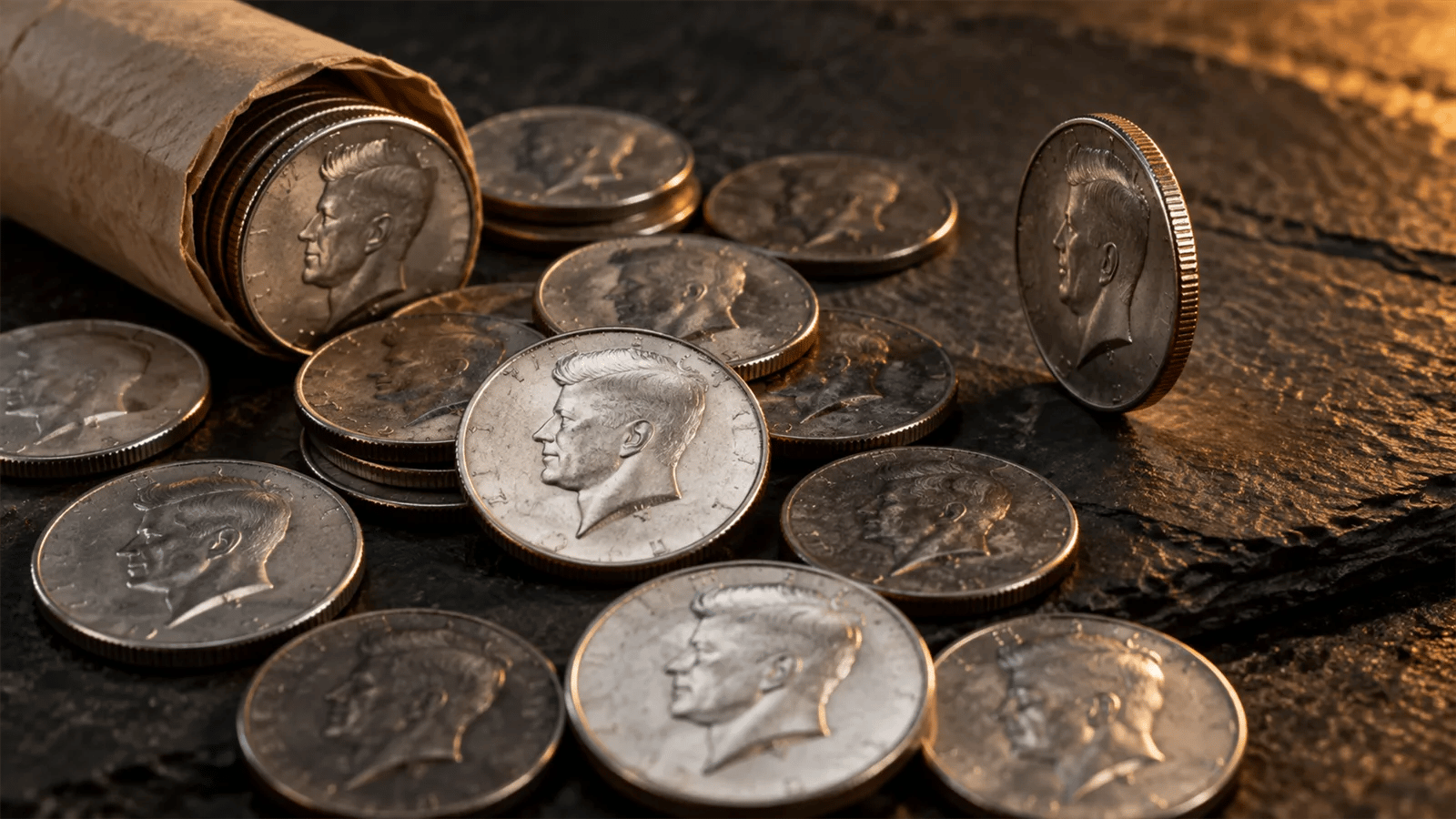
A Kennedy half dollar is worth anywhere from 50 cents to several hundred dollars, and the date tells you which. Every 1964 half is 90 percent silver and holds $23.35 of metal at today's spot price of $64.57 per ounce. Halves from 1965 to 1970 are 40 percent silver and hold $9.55. From 1971 onward the coin is copper-nickel clad and worth face value in circulated condition, with exceptions for proofs, uncirculated mint-set coins, special finishes and errors. This guide gives the value for every era and the dates worth pulling out of a roll.
Key takeaways
- 1964 halves are 90 percent silver and worth $23.35 each in metal today.
- 1965 to 1970 halves are 40 percent silver, worth $9.55, and look identical to clad coins.
- Everything from 1971 on is clad and worth 50 cents circulated, apart from proofs, mint-set coins, special finishes and errors.
- A 1974 half with no mint mark is the normal Philadelphia coin, not an error.
Kennedy half dollar values at a glance
| Years | Composition | Silver content | Metal value today | Typical circulated value |
|---|---|---|---|---|
| 1964 | 90% silver | 0.3617 oz | $23.35 | Melt value |
| 1965–1970 | 40% silver | 0.1479 oz | $9.55 | Melt value |
| 1971–present | Copper-nickel clad | None | $0.50 face | Face value |
| 1976 S (silver) | 40% silver | 0.1479 oz | $9.55 | Melt value or more |
The silver rows move with the market. This is where silver has been over the last month:
Source: PeerMetals live spot feed, USD per troy ounce, updated on every page load.
Use the junk silver calculator to price a stack of 1964 halves by face value, or the silver melt calculator for 40 percent coins.
1964 Kennedy half dollar value
{{calc:silver}}The first year of issue, struck in 90 percent silver at Philadelphia and Denver, with over 400 million minted. That mintage keeps circulated coins at melt value, which is $23.35 today. Uncirculated examples sell for a few dollars over melt, and gem coins graded MS65 or better bring more. The 1964 proof is common, but the "Accented Hair" variety, an early proof die with heavier hair detail above Kennedy's ear, sells for many times a normal proof. Any 1964 half is worth keeping out of circulation for its silver alone.
1965 to 1970: the 40 percent silver years
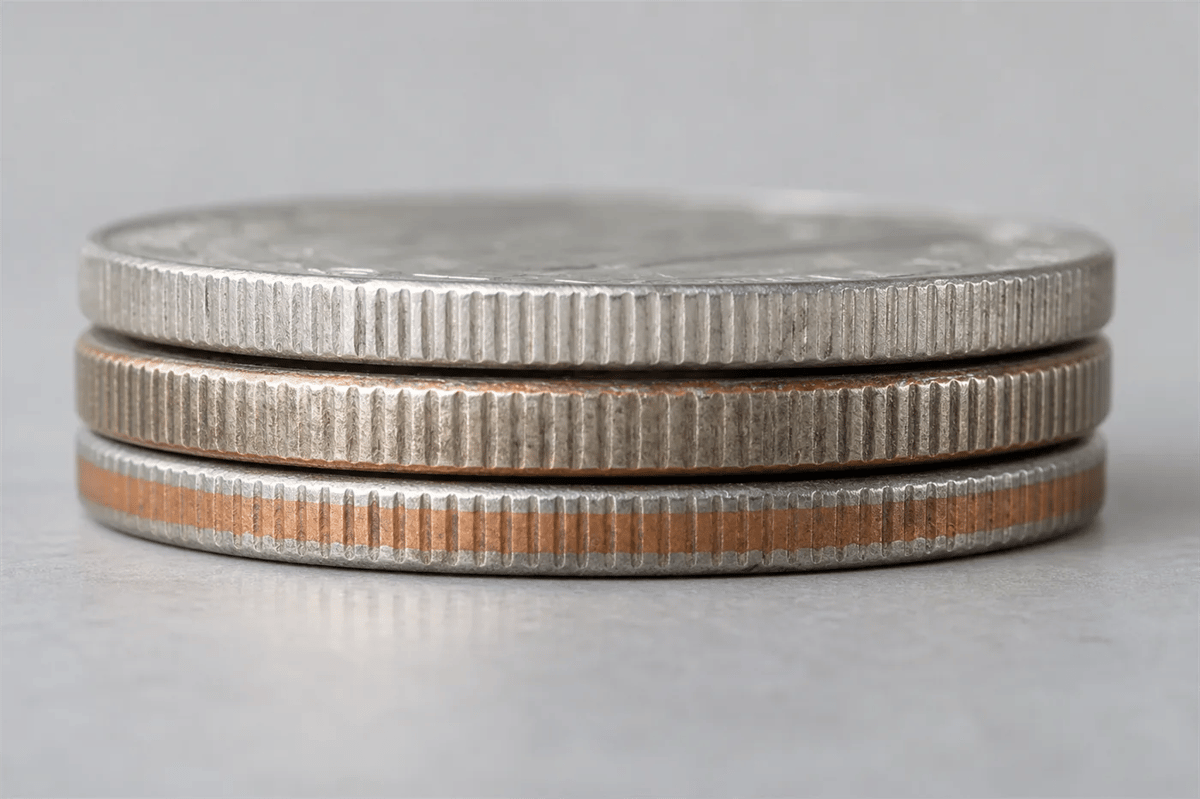
The Coinage Act of 1965 removed silver from dimes and quarters but left the half dollar at 40 percent, with a silver outer layer bonded to a silver-copper core. Each holds 0.1479 oz of silver, worth $9.55 today. Dealers buy these by face value at a lower rate than 90 percent coins, and they are the most commonly overlooked silver in circulation because they look identical to clad halves. The 1970-D was issued only in mint sets, so it carries a collector premium over its silver, typically $10 to $20 in original packaging.
1971 to 1976: clad halves and the Bicentennial
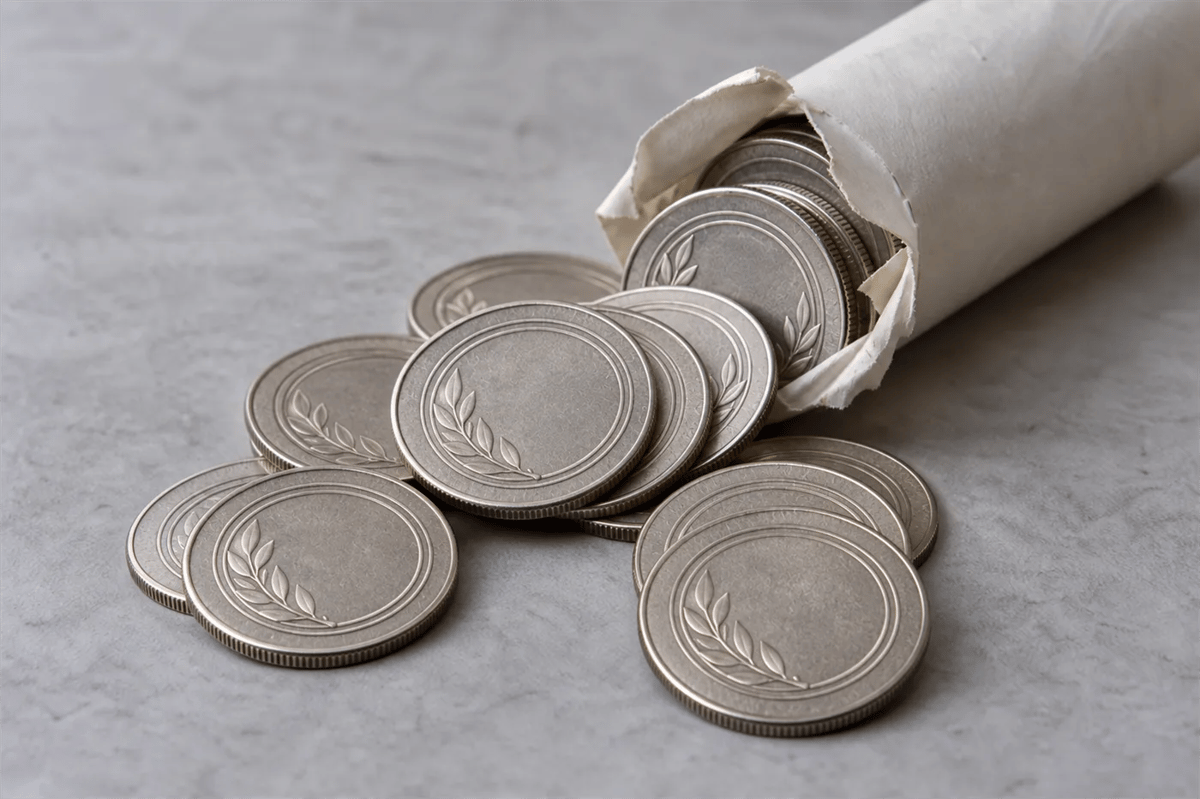
From 1971 the Kennedy half is copper-nickel clad with no silver, and hundreds of millions were struck. A circulated 1971, 1972, 1973 or 1974 half is worth 50 cents. The 1974 half with no mint mark is simply the Philadelphia issue, not an error, and is worth face value unless uncirculated, where a few dollars is typical. The Bicentennial half, dated 1776–1976 with the Independence Hall reverse, was struck in 1975 and 1976 in enormous numbers; the clad versions are worth face value, and the 40 percent silver versions sold in special sets, with an S mint mark, are worth their silver of $9.55 or a little more.
1977 to today: which modern halves have value
Most clad halves from 1977 onward are worth 50 cents circulated and $1 to $3 uncirculated. The exceptions are worth knowing. From 1987 and again from 2002 to 2020, halves were struck only for collectors in mint sets and rolls, not for circulation, so uncirculated examples carry modest premiums. The 1998-S matte finish half from the Kennedy Collectors Set is scarce and sells for well over $100. The 2014 50th anniversary issues include a 3/4 oz .9999 gold half worth $3,264.95 in metal, and a four-coin silver set. Proof halves from the San Francisco Mint are worth a few dollars each, more for the silver proofs struck from 1992 onward, which contain the same 0.3617 oz as a 1964 coin, worth $23.35.
Errors and varieties worth checking
| Date or issue | What to look for | Typical value |
|---|---|---|
| 1964 Accented Hair proof | Heavier hair detail above the ear; early proof dies | Several times a normal 1964 proof |
| 1970-D | Mint sets only, 40% silver | $10 to $20 in original packaging |
| 1974-D doubled die obverse | Doubling on TRUST and the date | $20 to $100 by grade |
| 1976-S 40% silver | S mint mark, from special Bicentennial sets | Silver value, $9.55, or a little more |
| 1987 P and D | Mint sets only, none for circulation | $3 to $10 uncirculated |
| 1998-S matte finish | Kennedy Collectors Set only | Over $100 |
| 2014-W gold | 3/4 oz .9999 gold, 50th anniversary | Gold value of $3,264.95 plus a premium |
| Missing clad layer | One face copper-colored | $50 to $200 |
Key dates, varieties and special issues worth pulling from a roll. Values are typical retail ranges from published price guides and move with grade and market.
Doubled dies, off-center strikes, missing clad layers and wrong-planchet strikes turn a 50-cent coin into one worth tens or hundreds of dollars. The 1964 Accented Hair proof and the 1974-D doubled die obverse are the best known. A missing clad layer shows as a copper-colored face on a coin that should be silver-colored. Anything unusual should be compared against the coin value guides before it goes back into a roll.
How to sell Kennedy half dollars
Silver halves from 1964 and 1965 to 1970 sell by face value as junk silver; coin shops pay close to melt and private buyers on PeerMetals pay at or above it. Clad halves are worth face value and are best spent or deposited, unless they are uncirculated rolls or special issues, which sell individually. The how to sell silver coins guide covers the options in detail, and the junk silver listings show what sellers are asking today.
Frequently asked questions
How much is a 1964 Kennedy half dollar worth?
Its silver content is worth $23.35 at today's spot price, and a circulated coin sells for about that. Uncirculated and proof examples bring more, and the Accented Hair proof is the valuable variety.
Are Kennedy half dollars from 1965 to 1970 silver?
Yes, 40 percent. Each contains 0.1479 oz of silver worth $9.55 today. They look identical to clad coins, so check the date and the edge, which shows a faint silver layer rather than a solid copper stripe.
Is a 1974 half dollar with no mint mark valuable?
No. Philadelphia coins carried no mint mark in 1974, so this is the normal coin. It is worth 50 cents circulated and a few dollars uncirculated. The 1974-D doubled die is the variety worth looking for.
How much is a 1776–1976 Bicentennial half dollar worth?
Clad examples are worth face value, since hundreds of millions were struck. The 40 percent silver S-mint versions from the special sets are worth their silver, $9.55, and a little more in original packaging.
{{listings:silver:kennedy:4}} {{sold:silver:4}} {{updated}}