PCGS, NGC, and ANA Grading Standards Explained

Coin grading is the process of assessing a coin's condition on a standardized numeric scale, and it's the single biggest factor -- alongside date, mint mark, and rarity -- in determining what a coin is actually worth. Two companies, PCGS and NGC, dominate third-party grading in the U.S. market today; the American Numismatic Association's role is different, and understanding the distinction matters for anyone buying graded coins.
The Sheldon scale: 1 to 70
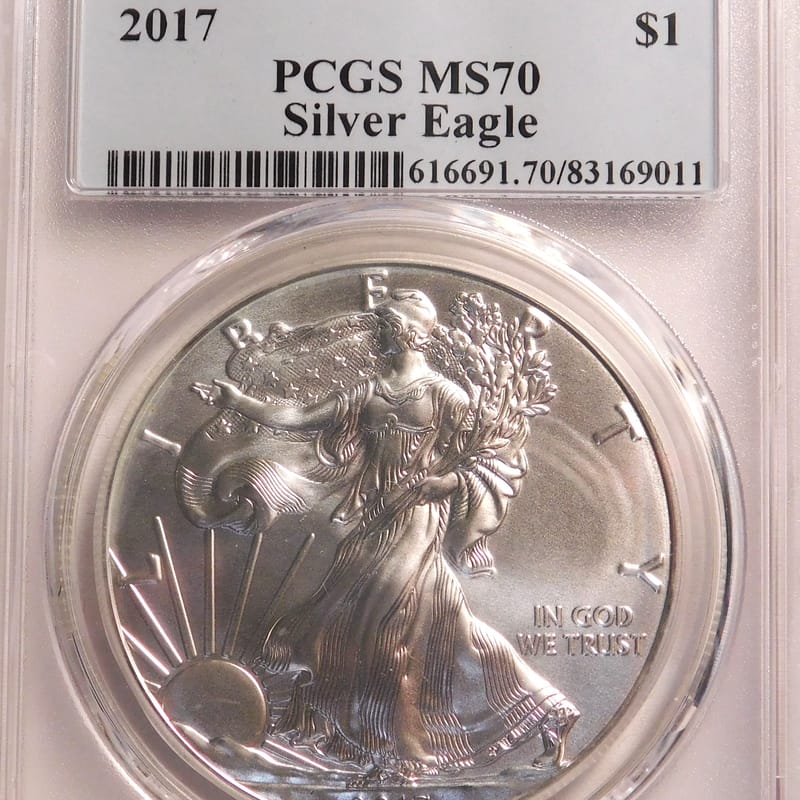
Nearly all U.S. coin grading uses some version of the Sheldon scale, introduced by numismatist William Sheldon in his 1949 study of early American large cents. Sheldon originally designed the 1-70 numbering as a pricing formula -- a cent graded 70 was, in his day, meant to be worth 70 times one graded 1. The pricing relationship didn't survive, but the scale did: the American Numismatic Association adopted a refined version of it as the standard for all U.S. coins in the 1970s, and it has anchored the hobby ever since. It runs from 1 (Poor, barely identifiable) to 70 (a theoretically perfect coin, no imperfections even under magnification). Circulated coins are graded from roughly Good (G-4) through About Uncirculated (AU-58); uncirculated and proof coins are graded from Mint State 60 (MS-60) or Proof 60 (PR-60) up through the perfect 70.
| Range | General condition |
|---|---|
| G-4 to VG-8 | Good to Very Good -- heavily worn, major details visible |
| F-12 to VF-30 | Fine to Very Fine -- moderate wear, most details clear |
| EF-40 to AU-58 | Extremely Fine to About Uncirculated -- light wear, high points show |
| MS-60 to MS-70 / PR-60 to PR-70 | Mint State / Proof -- no wear, graded on strike quality and surface preservation |
What graders actually evaluate
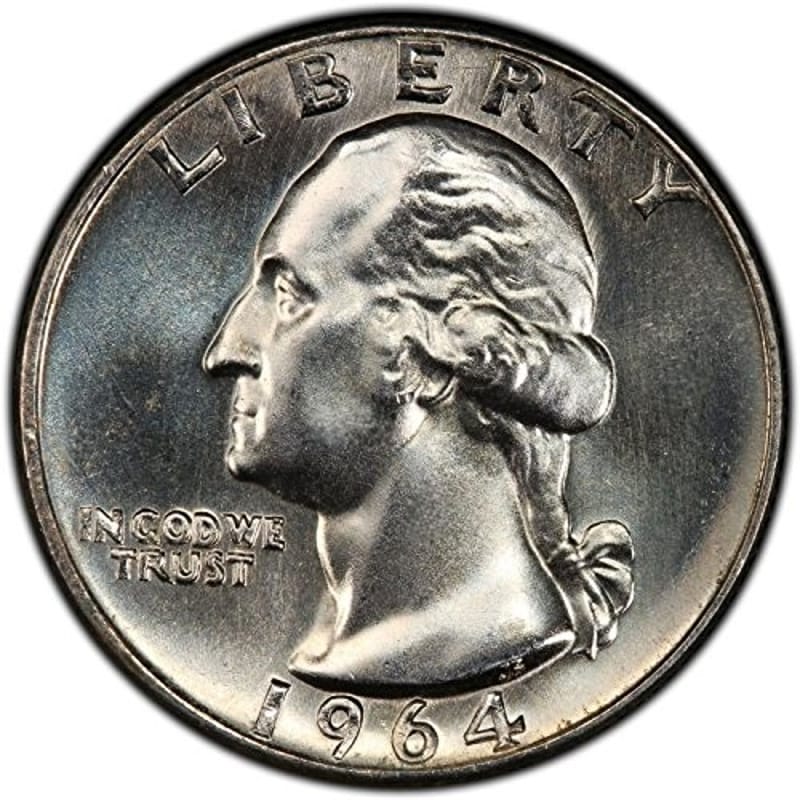
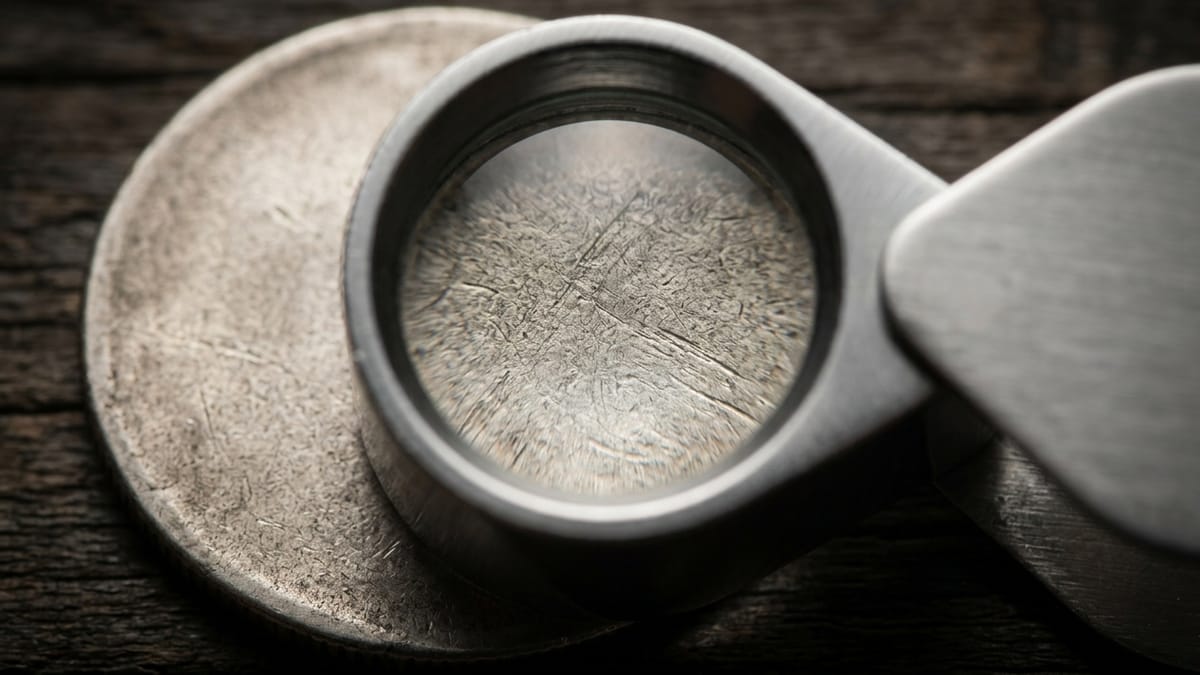
Within the Mint State range especially, the number comes down to four things: strike (how completely the design was impressed), luster (the original surface sheen), contact marks (nicks and bag marks from handling), and eye appeal (the overall impression, including toning). One distracting mark in a focal area -- a scratch across a cheek -- can cost a coin more points than several hidden in the design. That's also why value doesn't climb linearly: in many series the price difference between MS-64 and MS-65, or MS-66 and MS-67, is a multiple rather than an increment, because each step up may cut the surviving population dramatically.
PCGS and NGC: third-party grading and encapsulation
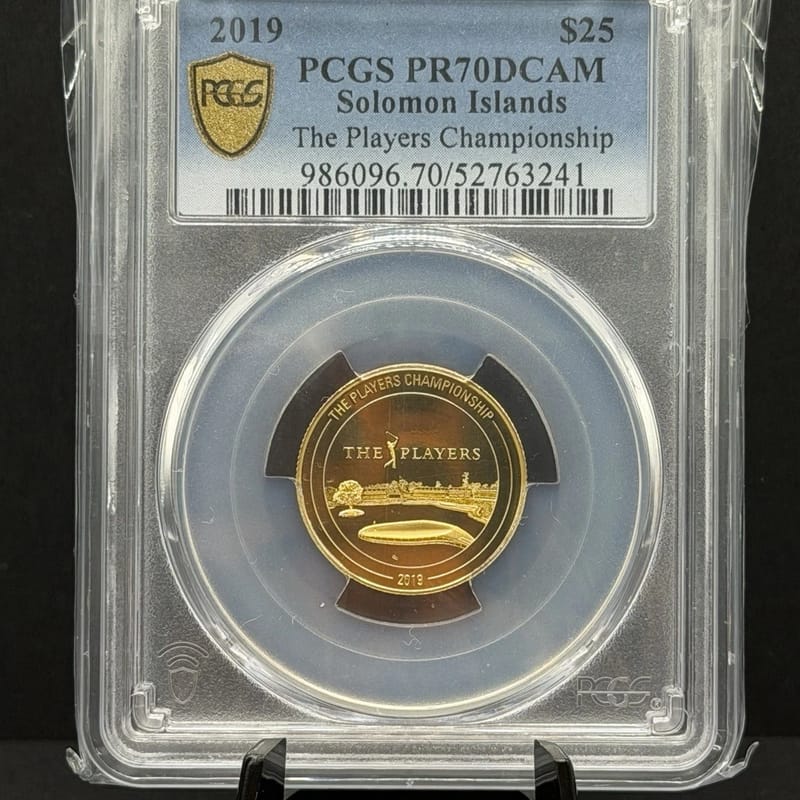
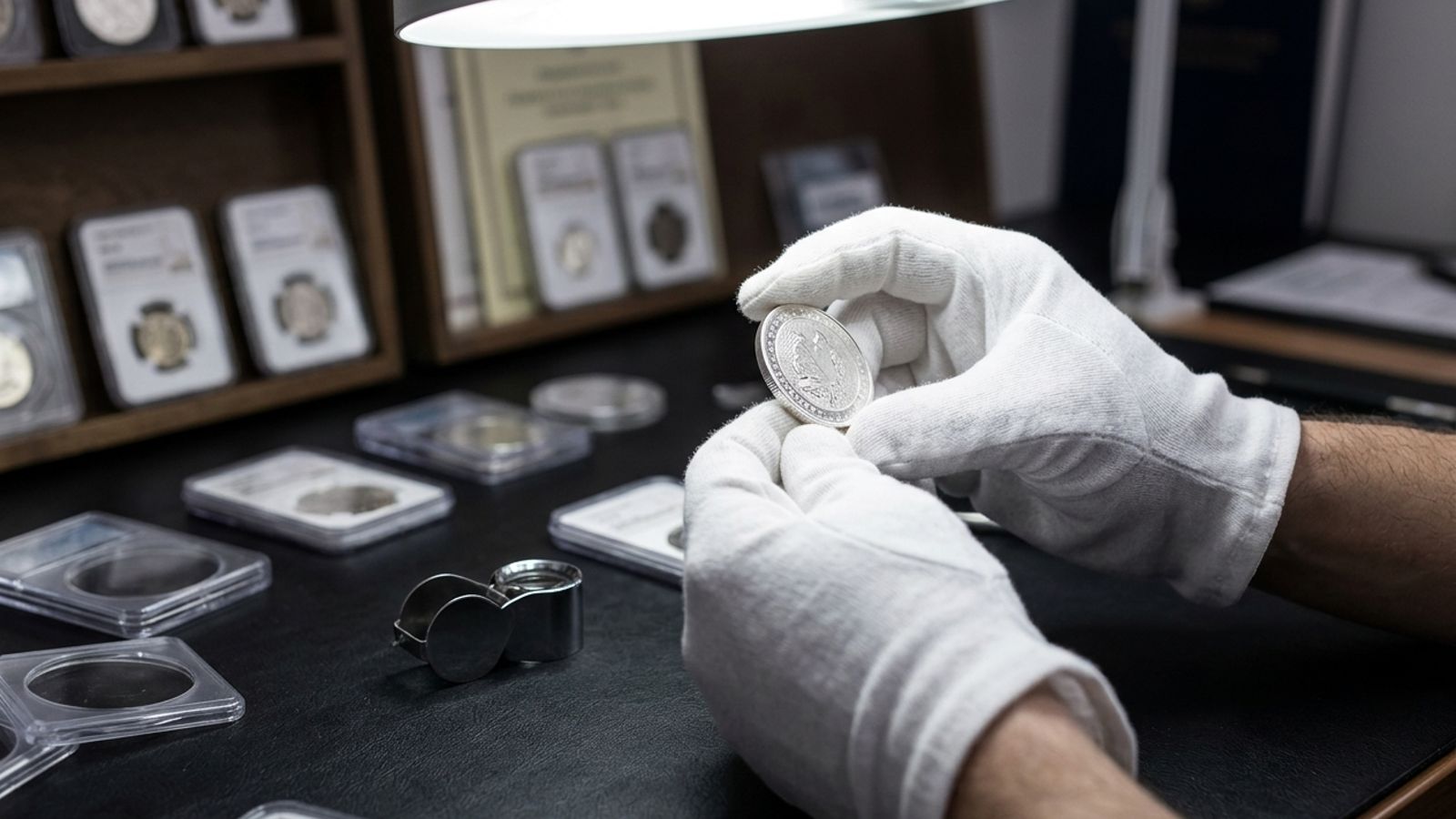
The Professional Coin Grading Service (PCGS, founded 1985) and Numismatic Guaranty Company (NGC, founded 1987) are the two dominant third-party grading services. Both work the same way at a high level: a submitted coin is examined by multiple graders independently, assigned a numeric grade (and, for some coins, a designation like "Red" for copper color or "Full Bands" for strike detail), then sealed -- "slabbed" -- in a tamper-evident plastic holder along with a certification number that buyers can look up in the company's public database. That slab and certification number are what let a buyer trust a coin's grade without personally re-examining it, which is a large part of why certified coins typically sell at a premium over the same coin sold raw (ungraded).
Both services also publish population reports -- how many examples of each coin they've certified at each grade -- which have become market data in their own right: a coin that's "pop 3, none finer" trades on that scarcity. And both offer a grade guarantee backing their assessment. PCGS and NGC compete directly and their standards are broadly comparable, though the market does place slightly different premiums on certain coins depending on which company graded them, particularly for older or more subjective grades in the Mint State and Proof ranges. A third player, CAC (founded 2007), doesn't assign initial grades but verifies already-slabbed coins, applying a sticker to those it judges solid for the grade -- a second opinion the market rewards with an additional premium.
Details grades: when a coin doesn't get a number
Not every submitted coin receives a numeric grade. Coins that have been cleaned, polished, repaired, scratched, or environmentally damaged are typically returned in a holder marked "Details" with the problem named -- authenticated and described, but not numerically graded. A Details coin is still genuine and still sellable, but it trades at a meaningful discount to a numerically graded example, which is why improper cleaning is one of the most expensive mistakes an owner can make. If a coin looks dirty, the almost-universal professional advice is: leave it alone.
Where the ANA fits in
The American Numismatic Association (ANA), founded in 1891, is a nonprofit educational organization, not a for-profit grading company. Its most relevant contribution to grading is the Official ANA Grading Standards for United States Coins, a reference book that codified much of the descriptive language and criteria that PCGS, NGC, and independent graders still use today. The ANA does not currently operate its own commercial third-party grading and slabbing service -- for a certified, market-tradable grade, PCGS or NGC (or one of a handful of smaller services) is what buyers and sellers actually rely on.
Is grading worth the cost?
Submitting a coin for professional grading costs money and takes time, and it doesn't make sense for every coin -- a common-date, worn coin worth a few dollars in melt value gains little from a grading fee that may exceed the coin's value. It's worth it when a coin's value is genuinely sensitive to its exact condition or authenticity: a potential key date or scarce mint mark (see how to read mint marks), a coin with a valuable error or variety, an uncirculated coin near a grade cliff, or anything where an independent buyer would otherwise reasonably doubt the seller's own assessment. For a current comparison of the major services' submission process and market standing, see PCGS vs. NGC vs. CACG, and for how slabs function as trust infrastructure when buying, certificates of authenticity, slabs, and population reports. To sanity-check whether a coin's value is condition-driven at all, compare its asking price against its date-and-mint value in our coin value guides.
Sources: PCGS and NGC company histories and grading methodology (pcgs.com, ngccoin.com, retrieved 2026-08-25); American Numismatic Association, Official ANA Grading Standards for United States Coins; William Sheldon, Early American Cents (1949) as origin of the 70-point scale, per standard numismatic references; CAC company background (founded 2007).