Where Is Gold Mined? A Global Quest for Treasure

Gold is mined on every inhabited continent, but most of the world's supply comes from a handful of countries led by China, Australia, Russia, Canada, and the United States. Each year, mines pull roughly 3,000 to 3,300 tonnes of gold from the ground using two main techniques: hard-rock mining, which digs ore out of solid rock, and placer mining, which recovers gold that rivers have already loosened and sorted. This guide walks through where that gold comes from, how it is extracted, and why the spread of production matters to anyone who owns the metal.
The Global Gold Landscape: Top Producing Nations
Antarctica is the only continent without commercial gold mining. Everywhere else, production happens at some scale, but it concentrates heavily in a few nations. That concentration still leaves output spread across multiple countries and political systems, which is part of what keeps the gold market steady.
The figures below reflect 2023 estimates from the U.S. Geological Survey and the World Gold Council. Numbers are estimates and vary slightly by source.
| Rank | Country | Estimated Production (tonnes) | Key Facts |
|---|---|---|---|
| 1 | China | ~370 | The world's largest producer for over a decade, and a major consumer as well. |
| 2 | Australia | ~310 | Home to some of the world's largest open-pit gold mines. |
| 3 | Russia | ~310 | Holds vast, still-developing reserves in regions like Siberia. |
| 4 | Canada | ~200 | A politically stable region with a long history of gold mining. |
| 5 | United States | ~170 | Production is heavily concentrated in the state of Nevada. |
A few patterns stand out behind these rankings:
- China has held the top spot for years, but it also consumes most of what it mines, which makes it a heavyweight on both the supply and demand sides of the market.
- Australia and Russia trade places near the second slot. Australia leans on large, technically advanced operations, while Russia's strength lies in enormous reserves that are still being opened up.
- Canada and the United States offer stable, transparent regulatory environments, which keeps their output highly valued. Much of U.S. production comes from the Carlin Trend goldfields in Nevada.
The takeaway is that no single country or political bloc controls gold output. A disruption in one region can be absorbed by steady production elsewhere, so gold's value does not rise or fall with the fortunes of any one nation.
From Earth to Ingot: The Methods of Gold Extraction
Mining gold is difficult and expensive, and that cost feeds directly into what the metal is worth. Two methods account for nearly all of it.
Lode Mining (Hard-Rock Mining)
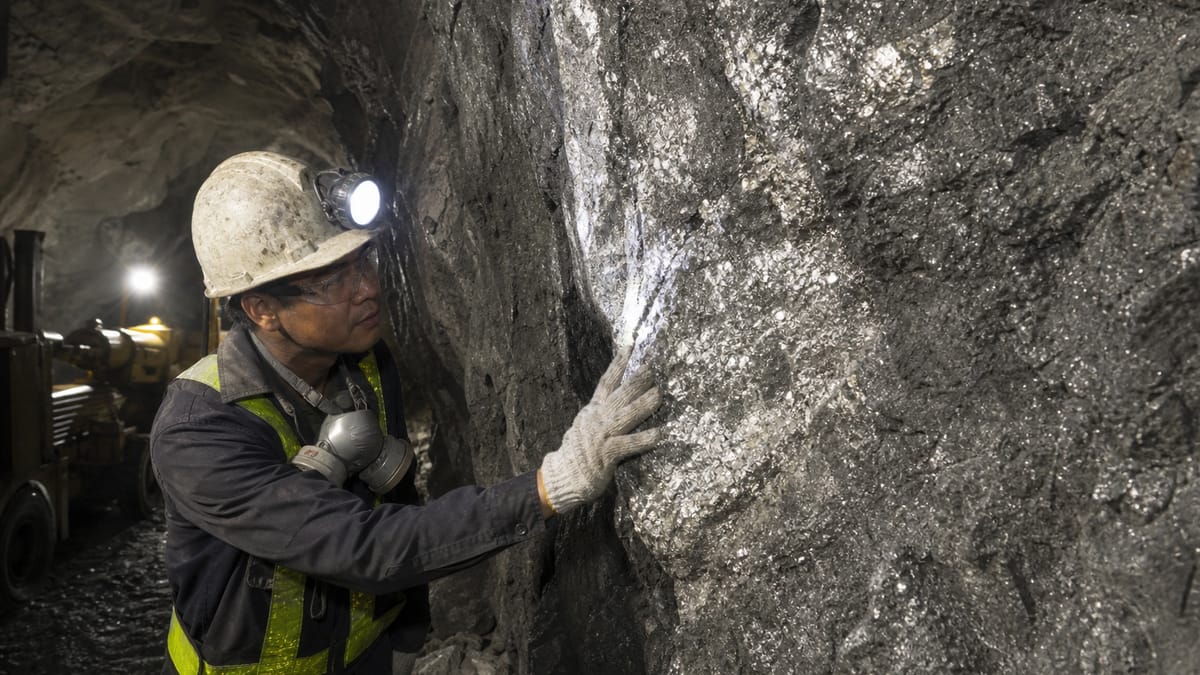
Most of the gold produced today comes from lode mining, which targets gold still locked inside its original rock vein. There are two common approaches:
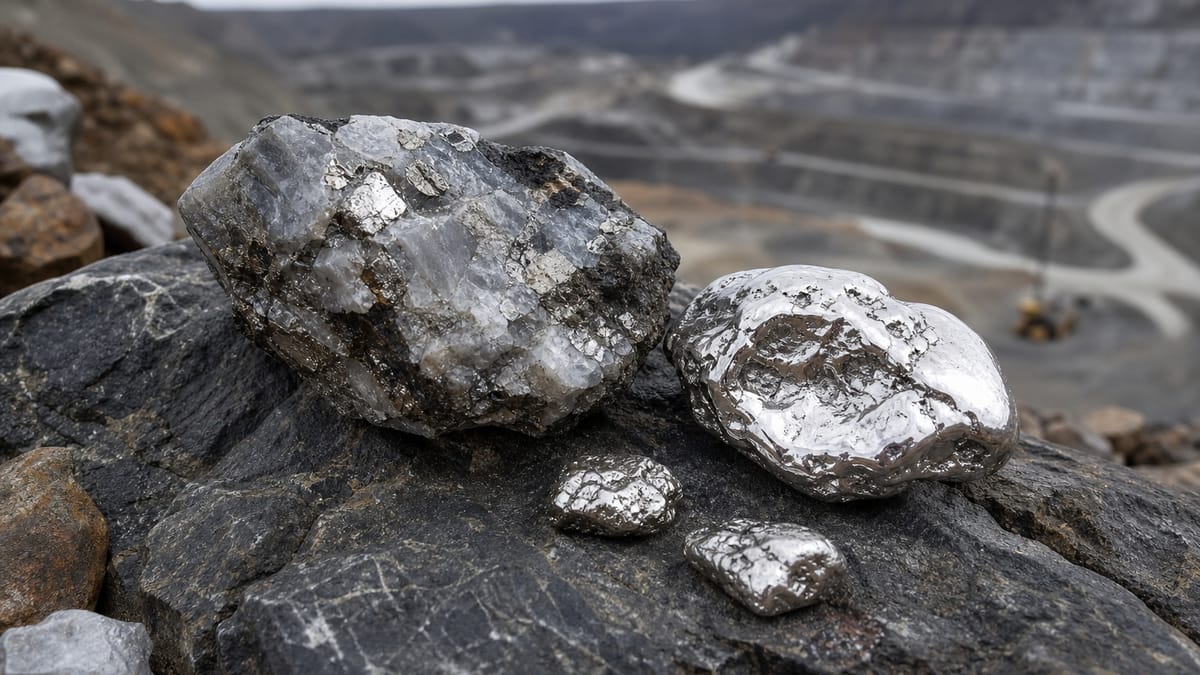
- Open-pit mining is used when deposits are broad and near the surface. Crews carve a wide, terraced pit and excavate the ore in stages. The Super Pit in Western Australia is one of the largest examples, stretching several kilometers across.
- Underground mining is used when veins sit deep below the surface. Miners sink shafts and drive tunnels to reach the gold. The approach is more precise than open-pit work but also more dangerous and costly.
Once the ore is out of the ground, it is crushed into a fine powder, and the gold is separated from the surrounding rock through a series of metallurgical processes.
Placer Mining
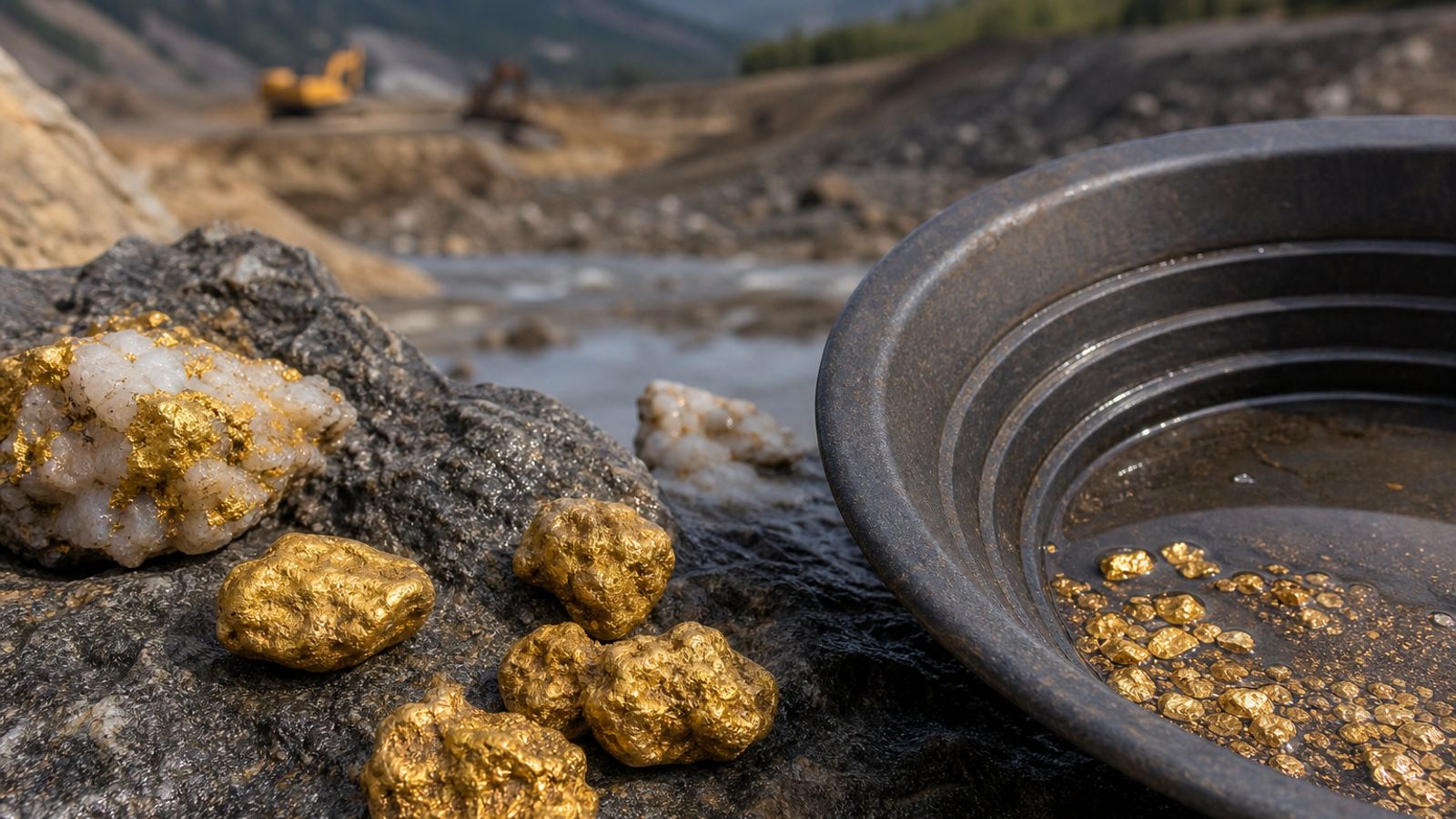
Placer mining recovers gold that has already broken free from its original vein. The key force here is water: over long stretches of time, flowing rivers and streams erode gold-bearing rock, and gravity concentrates the freed flakes and nuggets into deposits called placers. Wind plays almost no role in forming them.
This is the method behind the great gold rushes of the 19th century. Techniques range from a lone prospector working a pan in a streambed to industrial dredges that scoop up and sift entire riverbeds.
PeerMetals Insight
For every struck coin or poured bar, enormous energy and capital went into pulling the metal out of the earth. That effort is part of why each ounce holds its value: gold is not just rare, it is hard to win, and the difficulty of extraction is built into its price.
Why a Global Supply Chain Matters for Your Portfolio
For an investor, the geography of gold mining is more than trivia. It shapes the case for owning the metal in three concrete ways.
- Insulation from sovereign risk: Because supply is spread across many countries, your holding is not tied to the stability, policies, or currency of any one of them. If a single nation nationalized its mines or fell into crisis, the broader market would adapt. Nationally based assets like a single country's stocks or bonds do not offer that buffer.
- Universally recognized value: Gold is accepted everywhere, and its production is genuinely global. That makes it a store of value that sits outside any single government's direct control, which is why it remains a standard tool for preserving wealth.
- Slow-moving supply: Mine output is a major part of the annual gold supply, but it responds slowly to price. Bringing a new mine online can take a decade or more. That inelasticity means short-term supply cannot easily flood the market, which helps preserve scarcity and value.
PeerMetals Insight
Buying physical gold means diversifying across geography, not just across asset classes. You hold something whose origins are global and whose worth is recognized worldwide, which insulates it from risks that can hit paper assets tied to a single country or currency.
Gold's Value Runs as Deep as Its Mines
The story of where gold comes from is one of geology, engineering, and economics. From the open pits of Australia to the deep shafts of North America, extracting gold takes serious effort, and that effort reflects the value the world places on it. The fact that no single entity controls production is one of the strongest reasons gold has endured as a safe-haven asset for centuries.
At PeerMetals, you can buy and sell this genuinely global metal in a secure, transparent marketplace. Explore the listings to start building your own holdings, one ounce at a time.