A Practical Guide to Verifying Platinum at Home

Is It Real Platinum? Simple At-Home Tests
Platinum is one of the world's rarest and most valuable precious metals, prized for its silvery-white luster, its significant industrial applications, and its role as a key investment asset. However, its high value and similarity in appearance to other white metals make it a target for counterfeiting.
For any serious investor, the ability to perform preliminary verification tests on your holdings is not just a skill—it's a crucial part of asset protection. While professional, non-destructive analysis from a reputable dealer is the only way to be 100% certain, there are several reliable methods you can use at home to gain a high degree of confidence in your platinum's authenticity.
This guide from PeerMetals will walk you through the science behind platinum's properties, the official markings to look for, and a series of simple, non-destructive tests you can perform at home.
The First Line of Defense: Understanding Hallmarks and Purity Stamps
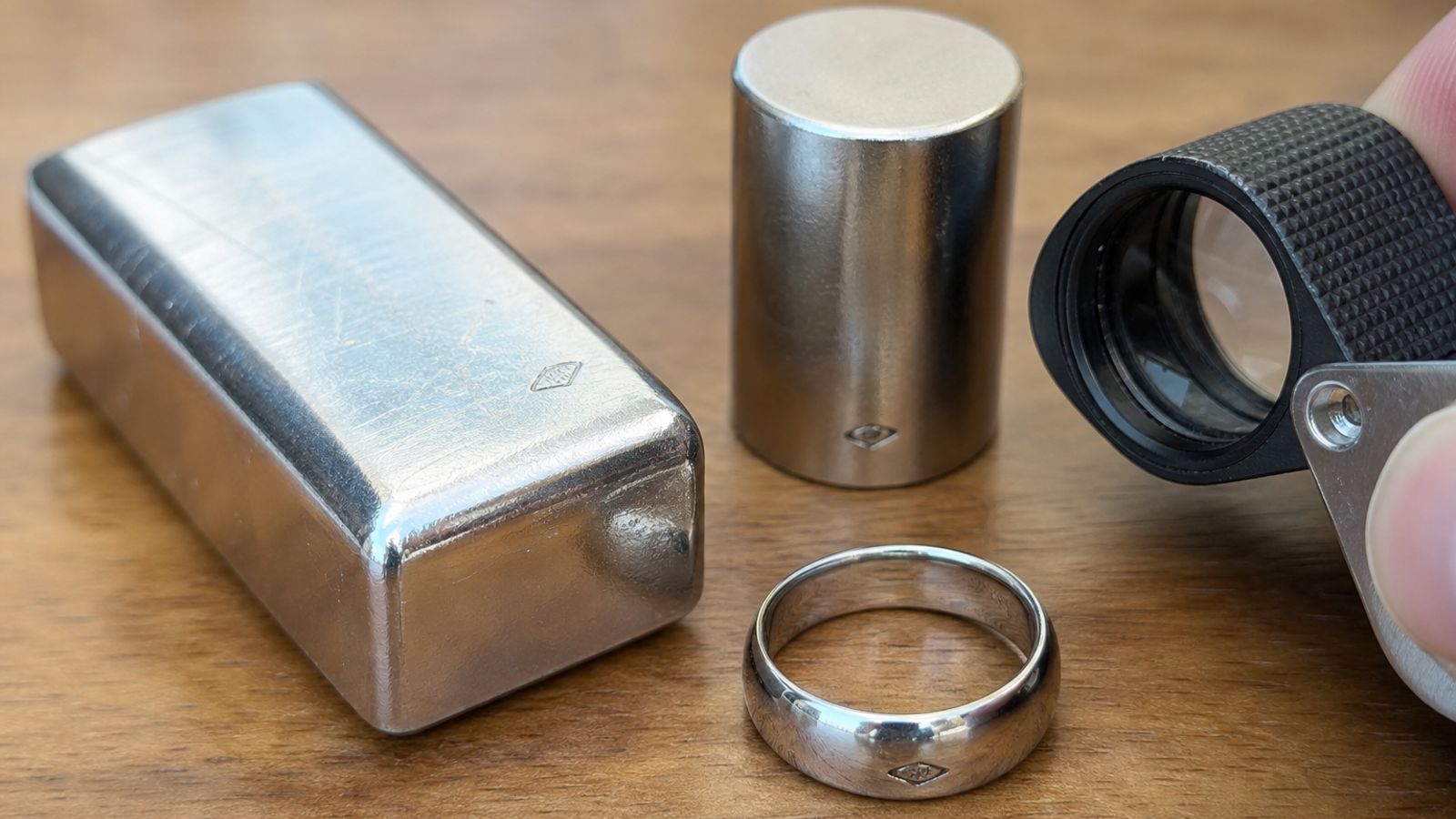
Before you perform any physical tests, the most important initial step is to closely examine the item for official markings. Legally produced platinum bullion and jewelry are required to be stamped with a hallmark that certifies their purity and, often, their manufacturer.
What to Look For:
-
Purity Marks: The most common hallmark indicates the percentage of pure platinum in the alloy. Look for stamps such as:
-
950 PLAT or PT950: This is the most common standard, signifying 95% pure platinum.
-
900 PLAT or PT900: Signifies 90% pure platinum, often found in older jewelry.
-
999 PLAT or PT999: Signifies 99.9% pure platinum, common for investment-grade bullion bars and coins.
-
-
Manufacturer's Mark: Reputable mints and jewelers will stamp their logo or name on the item (e.g., PAMP Suisse, Valcambi, Johnson Matthey). Familiarize yourself with the marks of trusted producers.
-
Weight: Investment-grade bars and coins should always have their weight clearly marked (e.g., "1 OUNCE," "10g"); check a coin's official weight with the coin weight and purity lookup.
Red Flags to Watch For:
-
Absence of Marks: A complete lack of any markings is a major warning sign.
-
Vague or Unfamiliar Stamps: Be cautious of stamps that are poorly defined, blurry, or unfamiliar. Counterfeiters often use crude imitations of official marks.
-
Plating Marks: Stamps like "HGP" (Heavy Gold Plated) or other indicators of plating mean the item is not solid platinum.
PeerMetals Insight:
"Hallmarks are the language of authenticity in precious metals. They are a mint's or manufacturer's promise of quality, backed by law and reputation. At PeerMetals, we encourage every investor to treat these markings as the item's first resume. Learning to read them is the first and most powerful step in becoming a confident and self-assured owner of precious metals. A clear, reputable hallmark is the foundation of trust."
Simple, Non-Destructive Physical Tests You Can Do at Home
Once you’ve examined the hallmarks, you can proceed with a few simple physical tests. These methods are safe and will not damage your potential investment.
Test #1: The Magnet Test
-
Principle: Platinum is paramagnetic, which means it has a very weak attraction to a magnetic field—so weak that it is imperceptible in a home setting. For all practical purposes, it is non-magnetic.
-
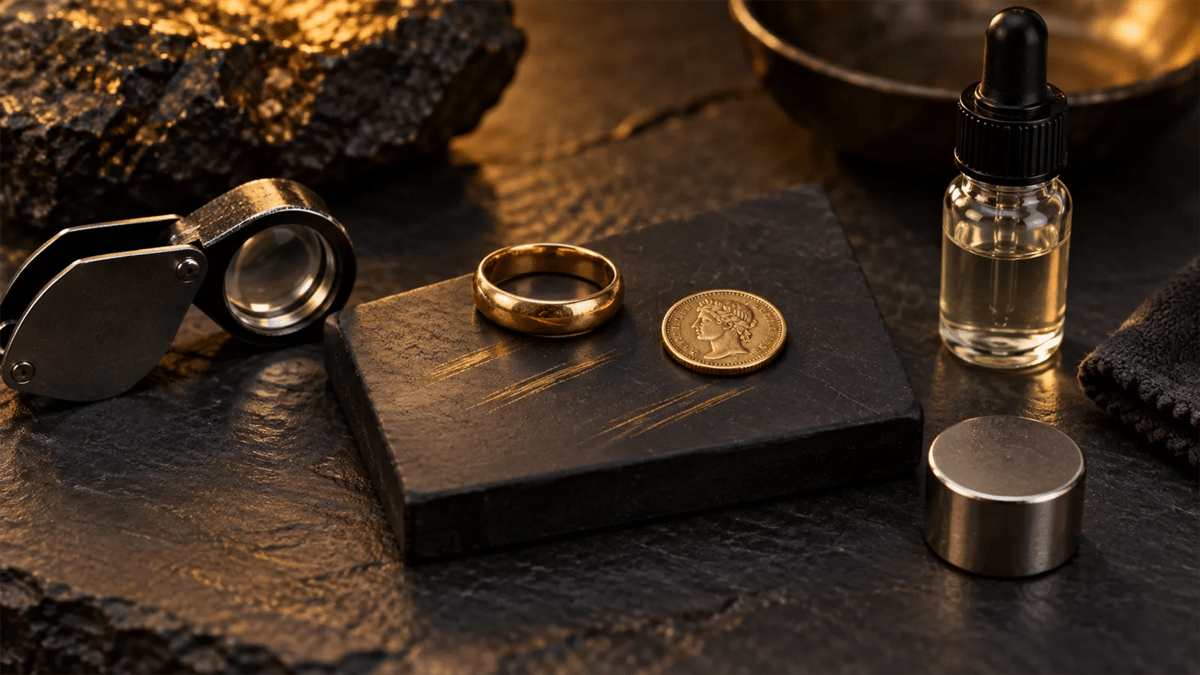
How to Perform: Obtain a strong magnet, preferably a rare-earth magnet like neodymium. Hold it directly against your platinum item.
-
Expected Result: Real platinum will not react to the magnet. There should be no pull or attraction whatsoever.
-
What a Failed Test Means: If the magnet sticks firmly to the item, it is definitively not platinum. It is likely a base metal like iron or nickel that has been plated to look like platinum.
-
Limitations: While this test is excellent for ruling out fakes, it's not foolproof for confirming authenticity. Many counterfeit base metals (like certain types of stainless steel or copper) are also non-magnetic. Therefore, this test should be used in conjunction with others.
Test #2: Density and Weight Verification
-
Principle: Platinum is one of the densest elements on Earth, with a density of 21.45 grams per cubic centimeter (g/cm³). This makes it significantly heavier than almost any other metal. It is nearly twice as dense as silver and about 11% denser than gold.
-
How to Perform (The "Heft Test"): This is a simple comparison. If you have a confirmed piece of gold or silver of the same dimensions, the platinum item should feel noticeably heavier. A one-ounce platinum coin will be smaller than a one-ounce silver coin because it packs more mass into a smaller volume.
-
For Advanced Users (The Water Displacement Test): For a more precise measurement, you can calculate the item's density. You will need a high-precision digital scale and a beaker of water.
-
Weigh the item in grams.
-
Place the beaker of water on the scale and tare it to zero.
-
Submerge the item fully in the water (using a thin string or stand) and record the weight in grams shown on the scale. This number is the item's volume in cubic centimeters.
-
Divide the item's original weight by its volume. The result should be very close to 21.45 g/cm³.
-
Density Comparison Chart
| Metal | Density (g/cm³) |
| Platinum | 21.45 |
| Gold | 19.32 |
| Tungsten | 19.25 |
| Palladium | 12.02 |
| Silver | 10.49 |
| Stainless Steel | ~8.0 |
Reference: For more scientific data, you can consult sources like the Royal Society of Chemistry's Periodic Table.
PeerMetals Insight:
"Density is platinum's silent authenticator. You can fake a color or a stamp, but it is incredibly difficult and expensive to fake density. The characteristic 'heft' of platinum is one of its most defining features. An experienced hand can often feel the difference immediately. For investors, understanding this property is key to appreciating why platinum is so unique. It’s a physical law that works in your favor."
The Final Check: Professional Methods and When to Seek Help
While at-home tests provide a strong indication, there are times when you need absolute certainty.
The Scratch Test: A Word of Caution
You may find information online about using an unglazed ceramic plate or an acid kit to test platinum.
-
Ceramic Scratch Test: This involves rubbing the metal on an unglazed ceramic surface. Real platinum should leave a grayish-white streak. We do not recommend this for investment-grade items as it will leave a permanent scratch, damaging the finish and potentially lowering the value of your coin or bar.
-
Acid Test: This requires using highly corrosive acids to check for a reaction. This method is dangerous if handled improperly and will permanently damage your item. Leave this test to professionals.
When to Consult a Professional
If you have any doubts after performing the non-destructive tests, or if you are considering a major purchase from an unfamiliar source, it is always best to seek professional verification. A reputable coin dealer or jeweler has access to advanced tools that are both non-destructive and highly accurate:
-
X-Ray Fluorescence (XRF) Spectrometry: This is the industry standard. An XRF gun shoots X-rays at the metal, causing the atoms to fluoresce. The machine reads the energy signature to provide a precise breakdown of the item's elemental composition without leaving a single mark.
-
Electronic Testers: Devices that measure the electrical conductivity of the metal can also be used to distinguish platinum from other metals.
PeerMetals Insight:
"Knowing your limits is as important as knowing the tests. The goal of at-home testing is to build confidence, not to take unnecessary risks. Damaging a valuable item in an attempt to verify it is counterproductive. The true professional knows when to bring in an expert. At PeerMetals, we advocate for a community built on trust, and a key part of that trust is relying on professional verification for high-stakes transactions."
PeerMetals Final Thoughts: Your Confidence is Your Greatest Asset
Learning how to verify your platinum is an act of empowerment. It deepens your understanding of the precious metals you own and equips you with the knowledge to protect your portfolio from fraud. While the allure of platinum is its beauty and rarity, its true value to an investor is also its reliability—a reliability you can, and should, verify.
By combining the knowledge of hallmarks, the simplicity of the magnet test, and an appreciation for platinum's unique density, you can build a powerful, at-home verification routine. But above all, the ultimate strategy is to buy from reputable sources.
The PeerMetals marketplace is built on this very principle of trust. We connect a community of vetted, knowledgeable sellers with savvy buyers, creating an ecosystem where authenticity is the standard. Your journey as an investor should be focused on growth and strategy, not on worrying about the authenticity of your holdings. Test what you have, trust who you buy from, and build your wealth on a foundation of certainty.
Invest with confidence in genuine precious metals. Explore our marketplace to find platinum coins and bars from trusted sellers at PeerMetals today!