How Much Is a Silver Dollar Worth? Melt Floor, Grades and Key Dates

A common silver dollar is worth about $50.57 in silver alone today, and most worn examples sell for $55 to $70. That floor comes from the coin's 0.7734 troy ounces of pure silver at a silver spot price of $65.39/oz on 3 September 2026, and it moves with the metal every day. Above the floor, date, mint mark, and condition take over: a worn 1921 Morgan brings a few dollars over melt, a worn 1928 Peace dollar brings about $99, and a worn 1893-S Morgan brings about $3,000. You can get the live melt figure at any time from the silver melt value calculator.
This guide gives the numbers behind those ranges. It covers every U.S. silver dollar type and its silver content, values by grade for common Morgan and Peace dollars, the key dates and what they bring, how to read mint marks, Carson City and GSA hoard coins, VAM varieties, what cleaning does to a coin, what dealers actually pay versus what price guides print, and how to sell. Every price below is attributed to the page it came from, with the date it was retrieved.
Quick answer: silver dollar value at a glance
The table uses a silver spot price of $65.39/oz (PeerMetals live price, 3 September 2026). Price ranges are for problem-free coins and come from the sources named in each section.
| Coin | Silver content | Melt value at $65.39 | What it sells for |
|---|---|---|---|
| Common-date Morgan dollar, worn (1878-1921) | 0.7734 oz | $50.57 | $60 to $63 guide; $35 to $45 in dealer offers |
| Common-date Peace dollar, worn (1922-1935) | 0.7734 oz | $50.57 | $51 to $53 guide |
| 1921 Morgan, uncirculated | 0.7734 oz | $50.57 | $111 to $122 |
| 1921 Peace (high relief), worn | 0.7734 oz | $50.57 | $111 to $214 |
| 1928 Peace, worn | 0.7734 oz | $50.57 | $99 to $235 |
| 1889-CC Morgan, worn | 0.7734 oz | $50.57 | $692 to $3,184 |
| 1893-S Morgan, worn | 0.7734 oz | $50.57 | $3,038 to $12,625 |
| 1895 Morgan (proof only) | 0.7734 oz | $50.57 | $21,000 to $40,000 |
| Eisenhower dollar, 40% silver, 1971-1976 S mint | 0.3161 oz | $20.67 | Small premium over melt |
| Eisenhower clad and Susan B. Anthony dollars | None | $0 | Face value |
| American Silver Eagle ($1 face, 1986-date) | 1.000 oz | $65.39 | Spot plus a premium |
Melt value: the floor under every silver dollar
Every Morgan and Peace dollar was struck from 90 percent silver and 10 percent copper at a gross weight of 26.73 grams. NGC's melt table lists the actual silver weight as 0.7734 troy ounces, and Wikipedia's Morgan dollar entry gives the same figure as 371.25 grains, or 24.057 grams of pure silver (both retrieved 3 September 2026). The formula is:
Melt value = 0.7734 x silver spot price per troy ounce
Worked example at today's price: 0.7734 x $65.39 = $50.57. A roll of 20 common dollars holds 15.468 ounces of silver, worth $1,011.45 in metal. For comparison, NGC's melt table showed $50.67 on 2 September 2026, using its ask price of $65.51 rather than the bid. Silver moves daily, so treat any printed melt figure as a snapshot and check the live silver price or the silver melt value calculator before you buy or sell.
Melt value matters because it is the one number that does not depend on anyone's opinion. A dealer can argue about whether a coin grades Fine or Very Fine. Nobody can argue about 0.7734 ounces. That is why heavily worn, cleaned, or damaged silver dollars, which the trade calls culls, trade at or near this figure, and why a coin with a rare date sits far above it.
Every U.S. silver dollar type and how much silver it holds
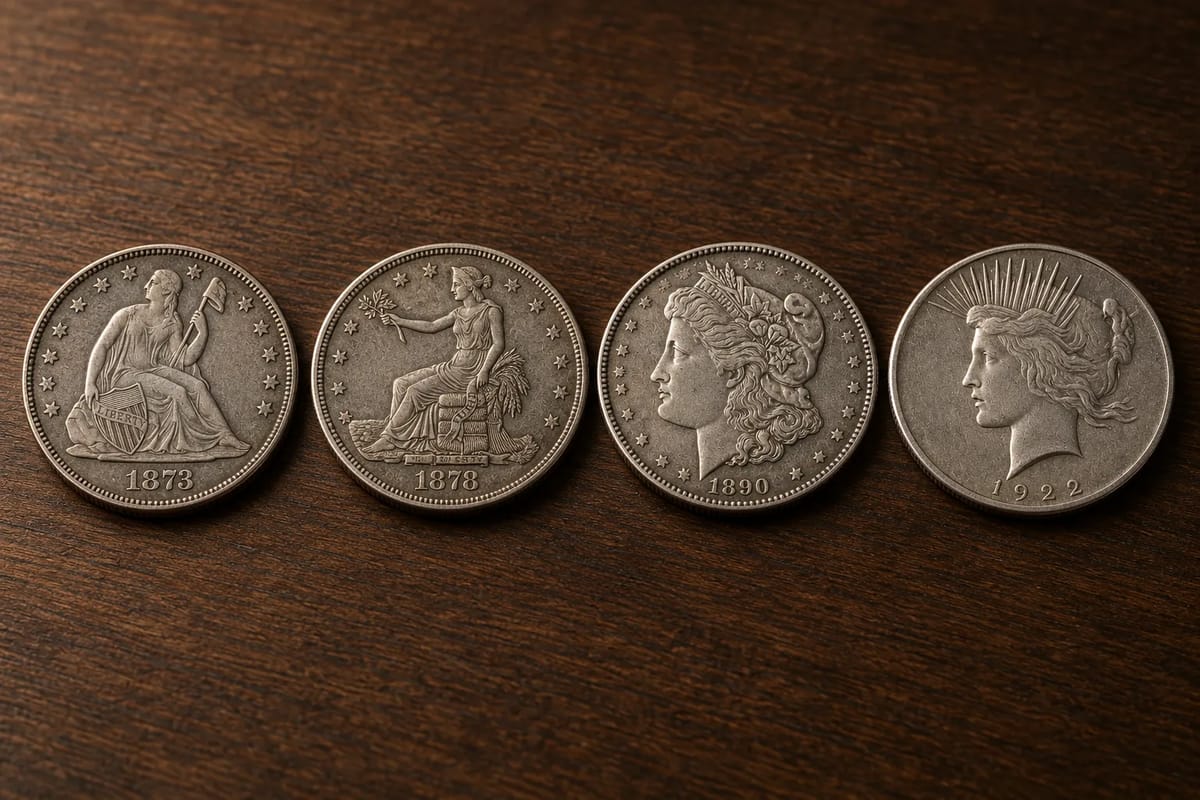
"Silver dollar" covers seven classic designs, one 40 percent silver modern issue, and one bullion coin. Specifications below come from NGC's melt table and the Wikipedia entries for each series (all retrieved 3 September 2026). Use the coin weight and purity lookup to check any other U.S. coin.
| Type | Years | Gross weight | Fineness | Pure silver | Melt at $65.39 |
|---|---|---|---|---|---|
| Flowing Hair | 1794-1795 | 26.96 g (416 grains) | 0.892 by law | About 0.773 oz | About $50.55 |
| Draped Bust | 1795-1804 | 26.96 g | 0.892 by law | About 0.773 oz | About $50.55 |
| Seated Liberty | 1840-1873 | 26.73 g | 0.900 | 0.7734 oz | $50.57 |
| Trade dollar | 1873-1885 | 27.2 g (420 grains) | 0.900 | 0.7875 oz (378 grains) | $51.49 |
| Morgan | 1878-1904, 1921 | 26.73 g | 0.900 | 0.7734 oz | $50.57 |
| Peace | 1921-1935 | 26.73 g | 0.900 | 0.7734 oz | $50.57 |
| Eisenhower, 40% silver (S mint only) | 1971-1976 | 24.59 g | 0.400 | 0.3161 oz | $20.67 |
| Eisenhower, clad | 1971-1978 | 22.68 g | Copper-nickel | None | $0 |
| Susan B. Anthony | 1979-1981, 1999 | Clad | Copper-nickel | None | $0 |
| American Silver Eagle | 1986-date | 31.101 g | 0.999 | 1.000 oz | $65.39 |
Three notes on that table. First, the Coinage Act of 1792 set early dollars at 0.892 fine, but Wikipedia's Draped Bust entry records that Mint officers actually used 0.900 at first without authorization, so individual early coins vary slightly. Second, sources disagree on the Trade dollar: Wikipedia's Dollar coin page gives 378 grains of fine silver (24.49 g, or 0.7875 oz), while its Trade dollar page rounds to "approximately 0.7734 oz". The 420-grain gross weight at 0.900 fine supports the higher figure. Third, the only Eisenhower dollars with silver are the San Francisco collector issues; Money Metals calls the uncirculated ones "Blue Ikes" and the proofs "Brown Ikes", after their original packaging. A clad Ike from your change jar is worth one dollar.
The early types are almost never priced on silver. Wikipedia's Flowing Hair entry records the finest known 1794 dollar selling for $10,016,875 in January 2013, and its Draped Bust entry notes an 1804 dollar bringing $4,140,000 in 1999. Seated Liberty and Trade dollars are scarcer than Morgans and trade on numismatic value in every grade. The rest of this guide focuses on the Morgan and Peace dollars, because those are the coins almost everyone actually has.
Morgan silver dollar value by grade (common dates)
Grades below follow the Sheldon scale used by PCGS and NGC: Good (G-4), Fine (F-12), Extremely Fine (EF-40), and Uncirculated (MS-60 and up). If you are unsure how to place a coin on that scale, read the grading standards guide. Values are from CoinStudy's date pages, updated 31 August 2026 at a silver price of $66.33/oz. For the full date-by-date picture see the Morgan silver dollar value hub.
| Date and mint | Good (G-4) | Fine (F-12) | Extremely Fine (EF-40) | Uncirculated (MS-60) |
|---|---|---|---|---|
| 1881-S | $62.73 | $62.73 | $69.63 | $127.57 |
| 1885 | $62.73 | $62.73 | $69.63 | $127.57 |
| 1885-O | $66.59 | $66.59 | $72.95 | $127.57 |
| 1896 | $62.73 | $62.73 | $69.63 | $127.57 |
| 1903 | $81.24 | $91.46 | $97.82 | $180.46 |
| 1921 (no mint mark) | $60.53 | $62.73 | $69.63 | $111.43 |
| 1921-D | $60.53 | $62.73 | $69.63 | $122.04 |
| 1921-S | $60.53 | $62.73 | $69.63 | $122.04 |
Two things stand out. A worn common Morgan carries a premium of roughly $10 to $12 over its $50.57 melt in these guide figures, and uncirculated coins of the most common dates roughly double that. Above MS-60 the curve steepens fast: Bullion Exchanges' 1921 guide (posted 20 February 2025) puts a 1921 Morgan at $60 to $150 in MS-60 to MS-63 and $200 to $500 or more in MS-65, and Xenia Coin Shop's guide (5 December 2025) lists a common 1880 at $57 to $85 in MS-60 to MS-63. The 1921 issues are the cheapest Morgans in every grade because 86.7 million were struck that year across three mints (Wikipedia). See the 1921 Morgan dollar value guide for that date in detail.
Peace silver dollar value by grade (common dates)
Same grade scale, same source and date (CoinStudy, 31 August 2026, silver at $66.33). Notice that a worn Peace dollar sits about $10 below a worn Morgan on these pages: Peace dollars carry a smaller collector premium, so their circulated prices track melt more closely. The Peace dollar value hub covers every date.
| Date and mint | Good (G-4) | Fine (F-12) | Extremely Fine (EF-40) | Uncirculated (MS-60) |
|---|---|---|---|---|
| 1922 | $51.04 | $52.59 | $61.19 | $68.49 |
| 1922-D | $51.04 | $52.59 | $61.19 | $82.13 |
| 1922-S | $51.04 | $52.59 | $61.19 | $82.13 |
| 1923 | $51.04 | $52.59 | $61.19 | $68.49 |
| 1923-D | $51.04 | $52.59 | $61.19 | $106.22 |
| 1923-S | $51.04 | $52.59 | $61.19 | $82.13 |
| 1934 | $78.89 | $82.32 | $87.13 | $167 |
| 1934-D | $78.89 | $82.32 | $87.13 | $149 |
The 1922 Philadelphia issue, with 51.7 million struck (Wikipedia), is the single most common silver dollar of any type, and the 1922 Peace dollar value guide explains why even uncirculated pieces stay close to $70. Money Metals' guide (6 July 2026) gives a broader range of $28 to $250 or more for Peace dollars overall, which reflects lower silver prices earlier in the year at the bottom and better dates at the top.
Key dates: the silver dollars that bring real money
A handful of dates carry most of the value in both series. Mintages below are from Wikipedia's Morgan and Peace dollar entries and CoinWeek; prices are from CoinStudy (31 August 2026) with CoinValues' Extremely Fine-40 retail figures for comparison (retrieved 3 September 2026). Where the two disagree, both are shown.
| Coin | Mintage | Good (G-4) | Fine (F-12) | Extremely Fine (EF-40) | Uncirculated (MS-60) |
|---|---|---|---|---|---|
| 1893-S Morgan | 100,000 | $3,038 | $3,675 | $12,625 (CoinValues: $9,500) | Rare; CoinStudy cites a $19,500 sale |
| 1889-CC Morgan | 350,000 | $692 | $1,253 | $3,184 (CoinValues: $8,100) | Rare; CoinStudy cites a $29,500 sale |
| 1895 Morgan (proof only) | 880 proofs | n/a | CoinValues: $21,000 in VG-8 | $38,000 | About $40,000 |
| 1893-CC Morgan | 677,000 | $355 | $619 | $2,085 (CoinValues: $1,450) | $5,325 |
| 1895-S Morgan | 400,000 | $324 | $582 | $1,672 (CoinValues: $1,325) | $5,494 |
| 1903-O Morgan | 4,450,000 | $413 | $533 | $636 (CoinValues: $390) | $638 |
| 1921 Peace (high relief) | 1,006,473 | $111 | $139 | $214 | $537 |
| 1928 Peace | 360,649 | $99 | $190 | $235 (CoinValues: $385) | $477 |
| 1934-S Peace | 1,011,000 | $82.32 | $93.49 | $161 | $3,280 |
1893-S Morgan
The rarest regular-issue Morgan. Only 100,000 were struck at San Francisco and, as CoinValues puts it, "few survive to this day." CoinStudy lists it at $3,038 in Good and $12,625 in Extremely Fine; CoinValues prints $9,500 for the same EF-40 grade, a reminder that guides differ and that certification matters for a coin at this level. Money Metals notes that Mint State examples "can fetch hundreds of thousands of dollars at auction." Counterfeits and added mint marks are common, so buy only PCGS or NGC certified pieces.
1889-CC Morgan
The key Carson City date. 350,000 were struck, and many were later melted. The spread between sources is wide: CoinStudy's Extremely Fine figure is $3,184 while CoinValues' is $8,100. Only one 1889-CC turned up in the entire GSA hoard (Southgate Coins), which is why it is the one CC date the Treasury sales did nothing to cheapen.
1895 Morgan, proof only
No business strikes of the 1895 Philadelphia dollar are known. Wikipedia lists 880 proofs; CoinValues cites the Mint's recorded figure of 12,880 and values the coin from about $21,000 in Very Good-8 to about $40,000 uncirculated. Money Metals calls it "a true numismatic prize." If someone offers you a circulated 1895 with no mint mark at a bargain price, it is either an altered 1895-O or 1895-S, or a fake.
1903-O Morgan
Unusual because its 4.45 million mintage looks common, yet CoinStudy prices it at $413 even in Good. CoinStudy's note that "scarcity and demand combine to raise the minimum value" of the branch-mint 1903 dollars explains the floor. Notice the tiny gap between Extremely Fine ($636) and Uncirculated ($638): uncirculated 1903-O dollars are relatively available, so the premium is for the date, not the grade.
1921 Peace dollar, high relief
The first Peace dollar and the only one struck in high relief. Wikipedia records that "excessive pressure had to be applied to fully bring out the design" and dies broke rapidly, so the Mint moved to a low-relief version by February 1922. All 1,006,473 were struck at Philadelphia with no mint mark. CoinStudy lists $111 in Good and $537 uncirculated; Bullion Exchanges gives $100 to $300 circulated, $400 to $800 in MS-60 to MS-63, and $1,000 to $100,000 or more in MS-65 and above.
1928 Peace dollar
The lowest mintage of any regular-strike Peace dollar at 360,649 (Wikipedia and Money Metals; Hero Bullion gives the same figure). CoinStudy lists $99 in Good and $477 uncirculated; Hero Bullion's guide (21 January 2026) says values "begin at $185" and cites an auction record of $129,250 for an MS-66+ in 2023. The 1928-S is far more common: $70.84 in Good and $208 uncirculated on CoinStudy.
1934-S Peace dollar
The condition key of the series. CoinWeek (16 July 2024) records a mintage of 1,011,000 but notes that "only three or four bags worth were preserved in Mint State," so worn coins are cheap and uncirculated coins are not: CoinStudy lists $82.32 in Good and $3,280 uncirculated, and CoinWeek gives MS-65 auction results of $6,300 to $9,988 and a record of $79,312 for a PCGS MS-66+ CAC coin in December 2019.
Other Morgan dates worth checking before you sell at melt: 1884-S, 1901, 1892-S, 1893-O, 1894, 1895-O, and 1896-S, all of which appear in CoinValues' top 25. On CoinStudy, an 1896-S is $76.82 in Good but $2,775 uncirculated, and an 1885-CC is $503 even in Good.
Mint marks: where to look and how much they matter
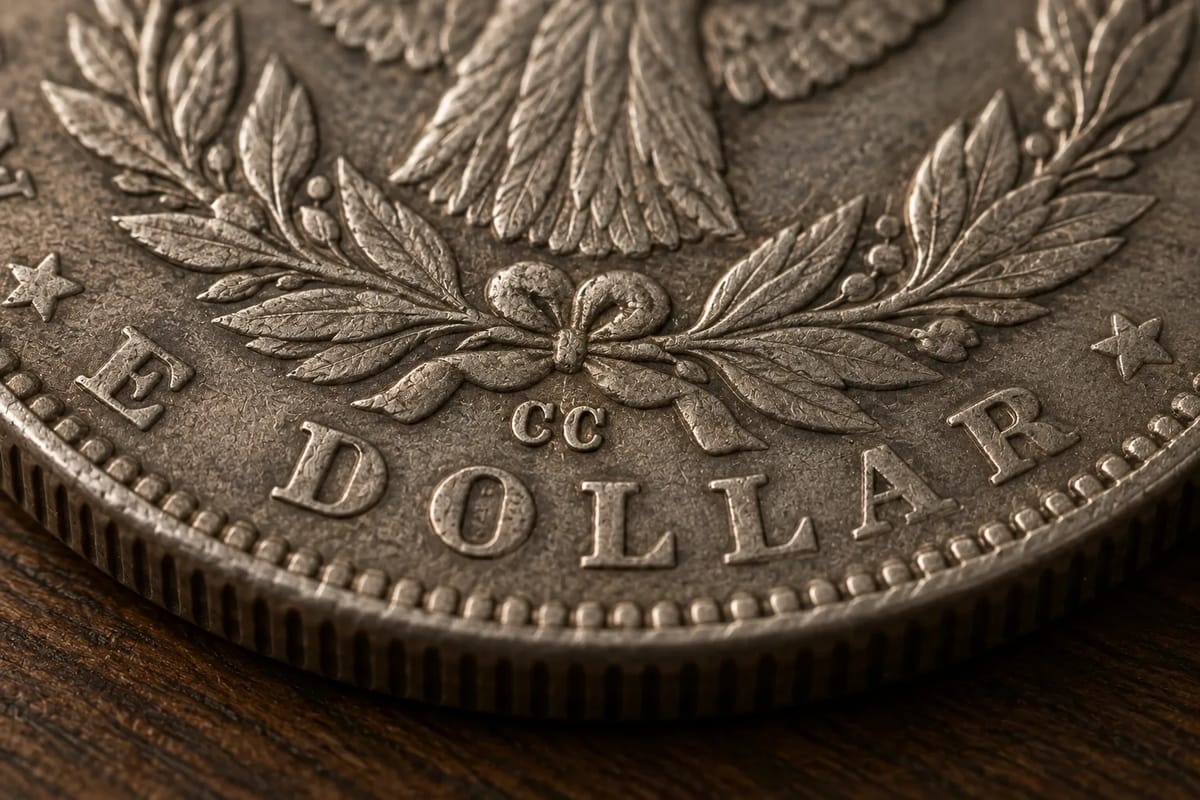
The mint mark is a small letter that tells you which mint struck the coin, and on silver dollars it can multiply the value by ten or more for the same date. Five mints struck Morgan and Peace dollars:
- No mint mark: Philadelphia. The most common for nearly every date.
- O: New Orleans, Morgan dollars only.
- S: San Francisco, both series.
- CC: Carson City, Morgan dollars 1878-1893. Always a premium.
- D: Denver. Morgan dollars in 1921 only, Peace dollars 1922-1934.
On a Morgan dollar, turn the coin over and look directly below the wreath, just above the letters "DO" in DOLLAR (CoinStudy and Wikipedia agree on this). On a Peace dollar, the mark sits on the reverse at lower left, just above the tip of the eagle's wing (Wikipedia). Both marks are small, so use a loupe in good light. Compare the mark's shape and position with a certified example, because adding a "CC" or "S" to a common Philadelphia coin is the oldest trick in the silver dollar trade. The mint marks field guide shows photographs for every U.S. series.
How much does the letter matter? On CoinStudy's 31 August 2026 pages, an 1881 Philadelphia Morgan is $62.73 in Good while an 1881-CC is $234; an 1885 is $62.73 while an 1885-CC is $503; an 1896 is $62.73 while an 1896-S is $76.82 in Good and $2,775 uncirculated. For Peace dollars the effect is smaller in worn grades and larger in Mint State: a 1923 and 1923-D are identical at $51.04 in Good, but $68.49 versus $106.22 uncirculated.
Carson City dollars and GSA hoard holders
Carson City struck Morgan dollars from 1878 to 1893, and every "CC" coin carries a premium because the mintages were small and because the mint's frontier history sells. Most CC dollars on the market today trace back to a single event. Wikipedia records that between 1972 and 1980 the General Services Administration held seven mail-bid sales of Carson City dollars that the Treasury had found in its vaults, raising $107 million. Southgate Coins puts the find at about 2.9 million Carson City coins and the opening minimum bid at $30 a coin in the first sale on 31 October 1972.
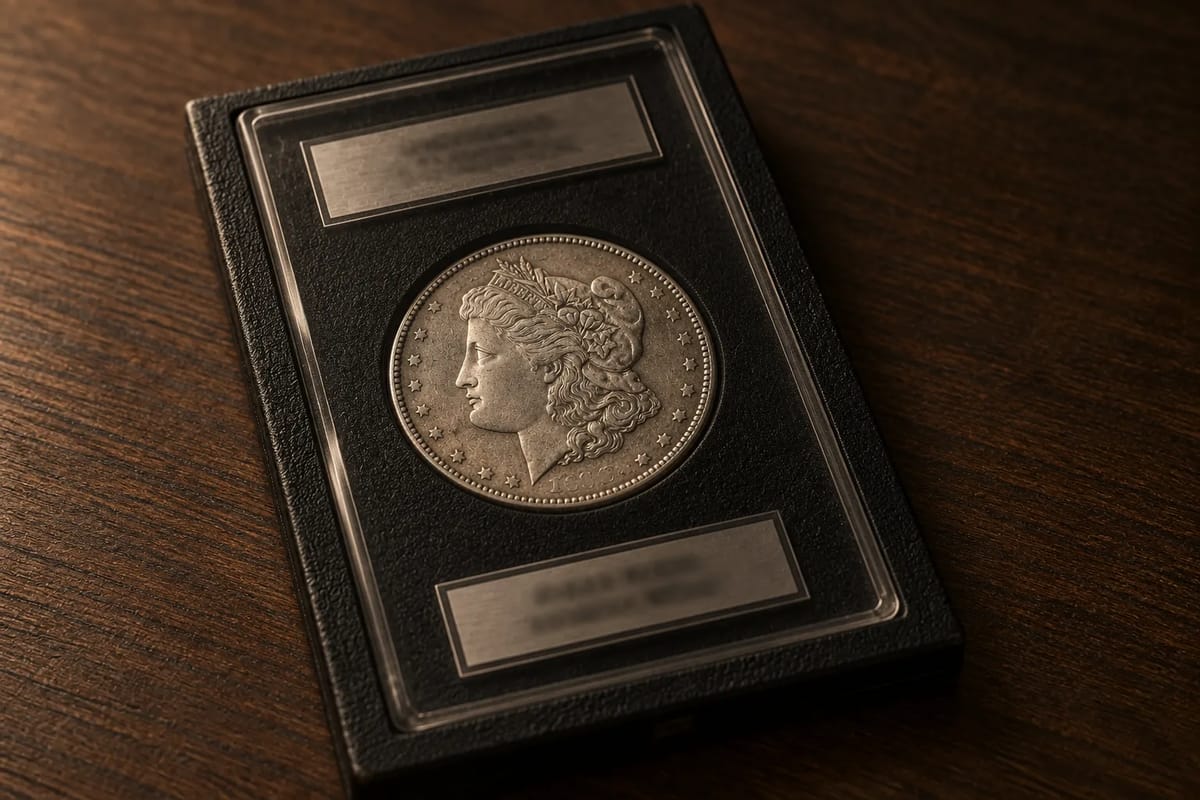
The hoard was lopsided. Southgate Coins lists 962,638 pieces of 1884-CC, 755,518 of 1883-CC, 605,029 of 1882-CC, and 148,285 of 1885-CC, against just 4,123 of 1879-CC, 3,949 of 1890-CC, 5,687 of 1891-CC, and a single 1889-CC. Atlanta Gold and Coin adds 60,993 of 1878-CC. The effect on prices was permanent: the 1882 to 1884 CC dollars became the affordable way into the Carson City series, and the dates that barely appeared in the hoard stayed expensive.
GSA coins came sealed in a rigid plastic holder inside a hinged black box with a certificate of authenticity (Atlanta Gold and Coin). Coins the GSA judged better were marked "Uncirculated" with numbered certificates; the rest went out in unmarked holders. Both grading services will now certify a coin without cracking it out: NGC wraps a grading band around the original holder (collectors call these "NGC banded"), and PCGS developed its own case to hold the GSA package. Keep the box and certificate. Atlanta Gold and Coin reports that an original certificate can add up to $450 on the scarce 1879, 1890, and 1891 dates. An 1882-CC or 1883-CC in a GSA holder, by contrast, trades only modestly above the same coin raw.
VAM varieties in one paragraph
VAM stands for Van Allen and Mallis, the two researchers whose catalog of Morgan and Peace dollar die varieties (first published in the 1970s) gives every known die pairing a number. Wikipedia counts more than 3,000 VAMs, of which PCGS recognizes 317 Morgan and 52 Peace varieties for attribution. Most add nothing to the price. A short list does, and CoinValues' top 25 shows how far: the 1888-O "Hot Lips" doubled-profile variety at $600 in EF-40, the 1901 doubled die reverse at $1,850, the 1903-S micro "S" at $1,150, the 1879-CC "capped CC" at $640, and the 1880-CC overdates at $285 to $335. Wikipedia's example of a dramatic VAM is the 1899-S VAM 7 with its repunched date. Attribution needs a loupe, a reference such as The Top 100 Morgan Dollar Varieties: The VAM Keys, and, for anything valuable, a PCGS or NGC label that names the VAM. Do not pay a variety premium for a raw coin on a seller's say-so.
Cleaned, polished, and damaged silver dollars
Cleaning is the most expensive mistake an owner can make. Money Metals is blunt: "Do not clean a silver dollar. It almost always reduces the coin's value." Xenia Coin Shop quantifies it: Morgans "with harsh cleaning (polished surfaces, hairlines) can lose 30-70% of value," and Cash 4 Gold Trading Post warns that cleaning "can permanently remove most of a key date's premium." A grading service will label a cleaned coin "Details" rather than assign a numeric grade, and Details coins sell for a fraction of straight-graded ones. Dark or rainbow toning is not damage. Collectors pay more for original toned surfaces than for a coin that has been made shiny.
Damaged coins (holes, deep scratches, rim dings, bent, used as jewelry) drop to cull status and are priced as silver. That is not zero. Money Metals sells culls at $56.62 and buys them at $39.62 (retrieved 3 September 2026), so even a holed 1885 is worth about 40 dollars. A damaged key date keeps some premium: an 1893-S with a hole is still an 1893-S, and a dealer will pay well for it, just far less than for a clean one.
Is it real? Three checks before you price it
- Weigh it. A genuine Morgan or Peace dollar weighs 26.73 grams new and rarely loses more than a few tenths of a gram in circulation. Money Metals notes that "major weight differences can indicate a fake." A kitchen scale that reads to 0.1 g is enough.
- Check the edge and the magnet. A real coin shows a solid silver-colored reeded edge with no copper stripe, and silver is not magnetic. If it sticks to a magnet, it is not silver.
- Look at the surfaces. Money Metals lists "grainy surfaces, soft details, incorrect fonts, and strange coloring" as counterfeit tells. Compare the date and mint mark against certified photographs of the same issue.
What a dealer actually pays versus what the guide says
Price guides print retail. CoinValues states that its figures "are about 10 to 30 percent higher than what a coin dealer might pay if you were to sell your coins." For common silver dollars the gap is larger than that in practice, because dealers buy them as bullion. Two current examples:
- Money Metals Exchange lists a "Sell to Us" price of $39.62 each for common circulated cull Morgan dollars, dates of its choice, and sells the same coins at $56.62 (product page retrieved 3 September 2026, with silver at $65.36 bid on NGC the previous evening). That buy price is below the $50.57 melt value, which shows how much a dealer discounts worn, ungraded coins for handling and resale risk.
- Xenia Coin Shop says it expects to offer $35 to $45 for common circulated Morgans, basing offers on Greysheet wholesale pricing and recent auction results, and lists better dates at $50 to $150 circulated (guide dated 5 December 2025, when silver was lower).
Set those against the guide figure of $60.53 to $62.73 for the same coins in Good on CoinStudy. A realistic expectation for a bag of worn common-date dollars is somewhere between 75 percent and 95 percent of melt from a bullion dealer, and melt to a little over melt from a coin shop that can retail them individually. Uncirculated common dates, Carson City coins, and anything on the key date list are a different conversation, and there you should expect the dealer to check every coin with a loupe and price each one on its own. Never accept a bulk "silver price" for a pile of dollars until each date and mint mark has been checked. Money Metals lists the same items as the ones worth grading first: rare dates, Carson City coins, high-grade coins, and anything likely to be worth more than $150 to $200.
How to sell silver dollars
- Sort first. Pull out every CC, every 1921 Peace, every date on the key list above, and every coin with no wear on Liberty's hair and the eagle's breast. Price the rest as common.
- Do not clean anything. See above.
- Get the live melt number. Run the count through the silver melt calculator so you know the floor before anyone makes an offer.
- Grade the exceptions. Certification by PCGS or NGC costs a fee, so submit only coins whose value is likely to exceed $150 to $200 (Money Metals' threshold) and any key date regardless of grade. A slab removes the argument about condition and authenticity.
- Get more than one offer. Money Metals recommends several quotes from local shops because each shop grades to its own standard. Online bullion dealers publish buy prices and often beat local shops on common coins; auction houses and peer-to-peer marketplaces do best on rare and high-grade coins, at the cost of fees or more work.
- Ship insured. Money Metals requires USPS Registered Mail insured for full value, noting that "UPS and FedEx exempt precious metals from the insurance they provide."
On PeerMetals, sellers list silver dollars directly to buyers and every listing shows the seller's price against live spot, so a buyer can see at a glance whether a common 1922 is priced at melt or at a collector premium. Browse the marketplace or, if you have coins to move, start selling. For 90 percent dimes, quarters, and halves the same logic applies, and the junk silver guide covers those.
American Silver Eagles are $1 coins but not "silver dollars"
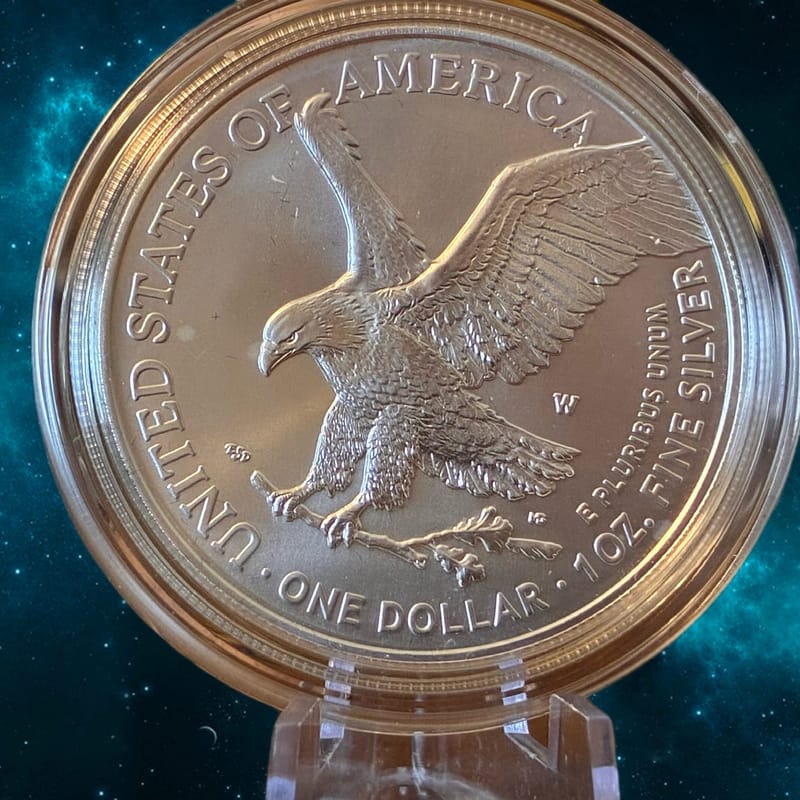
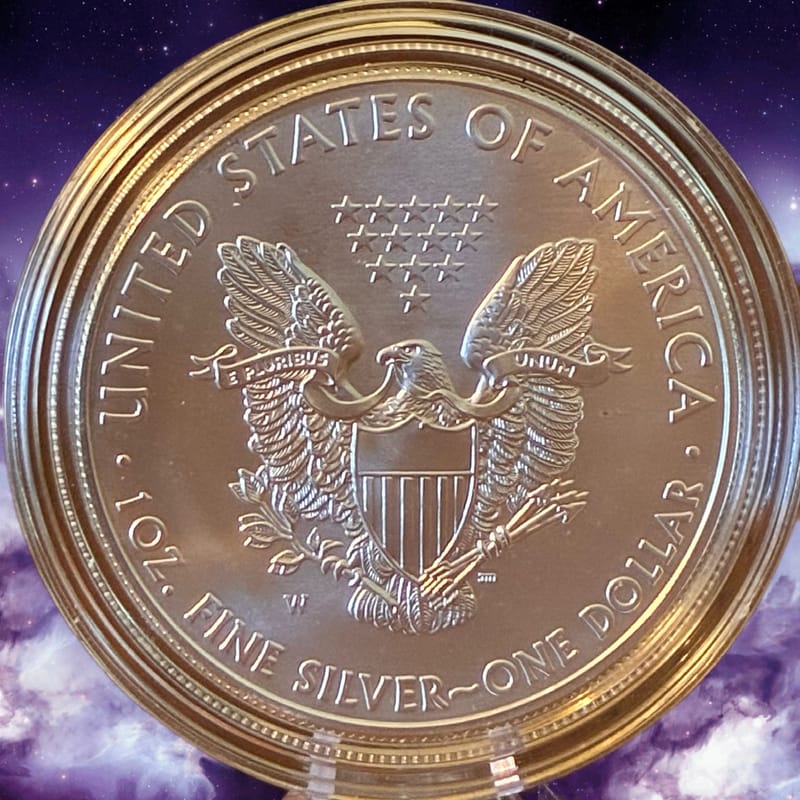
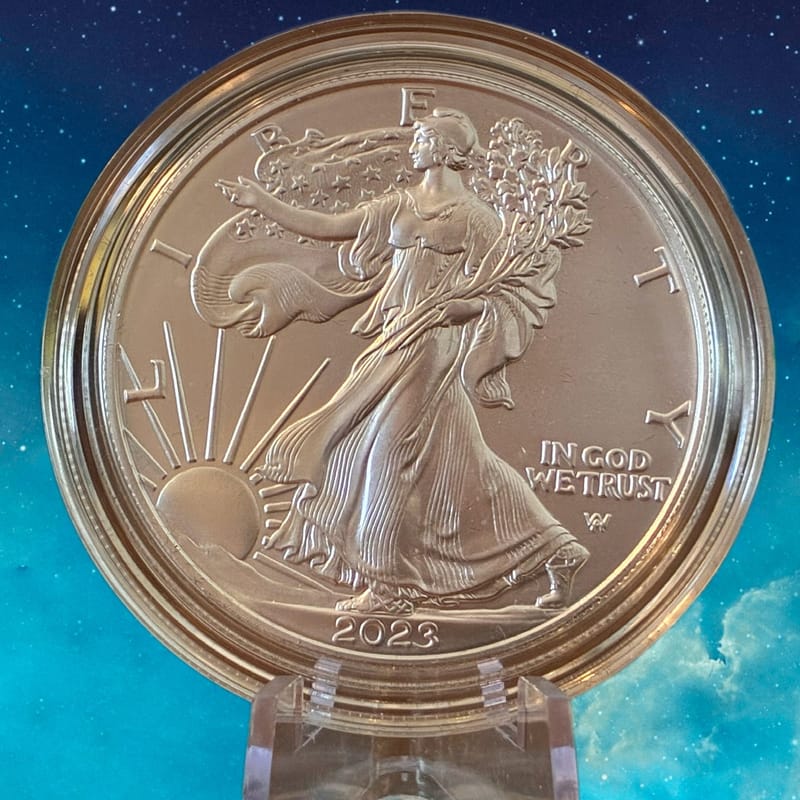
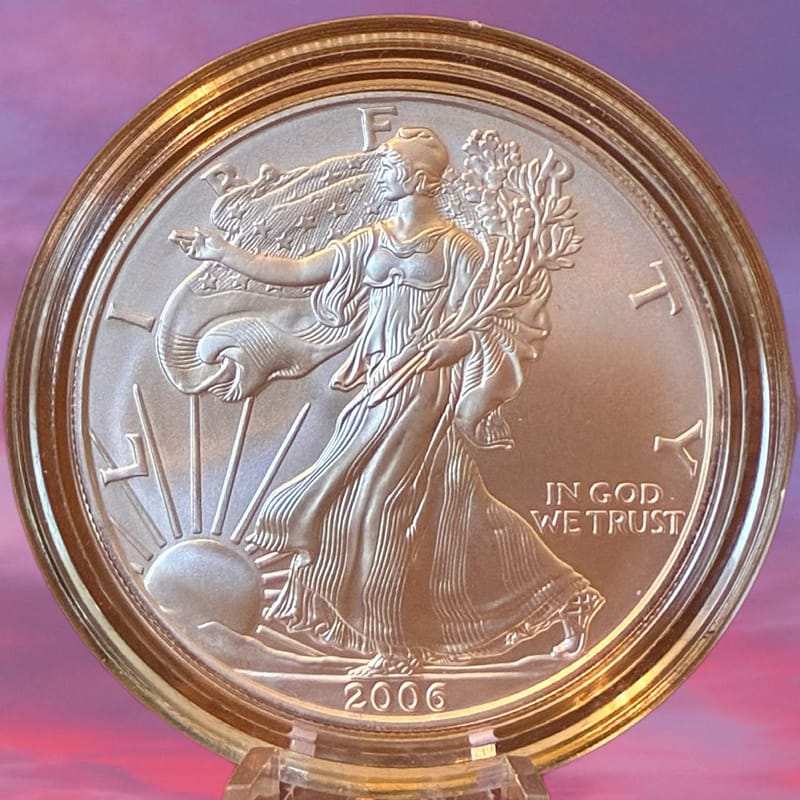
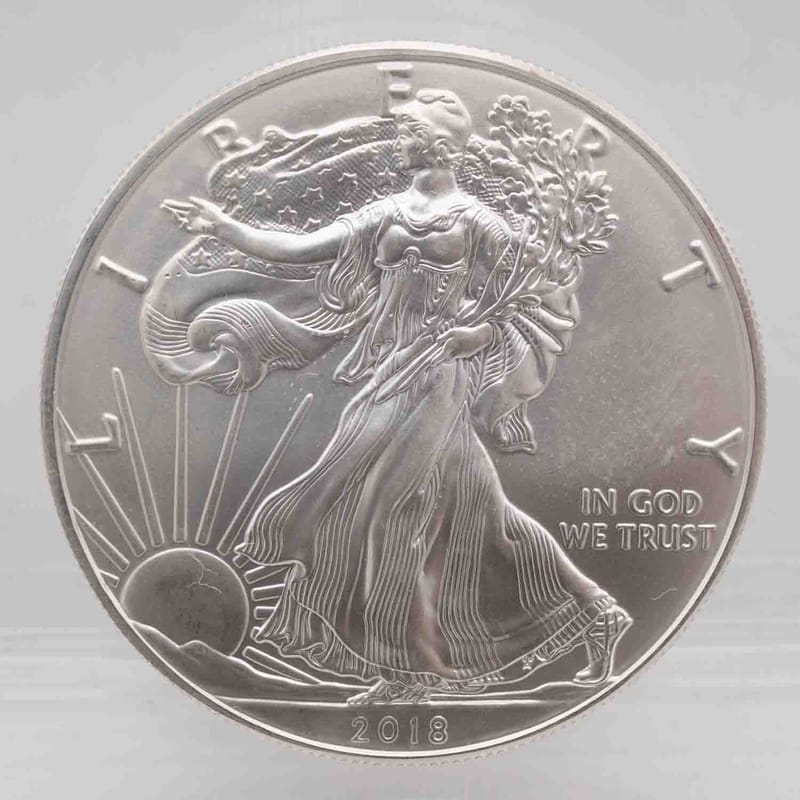
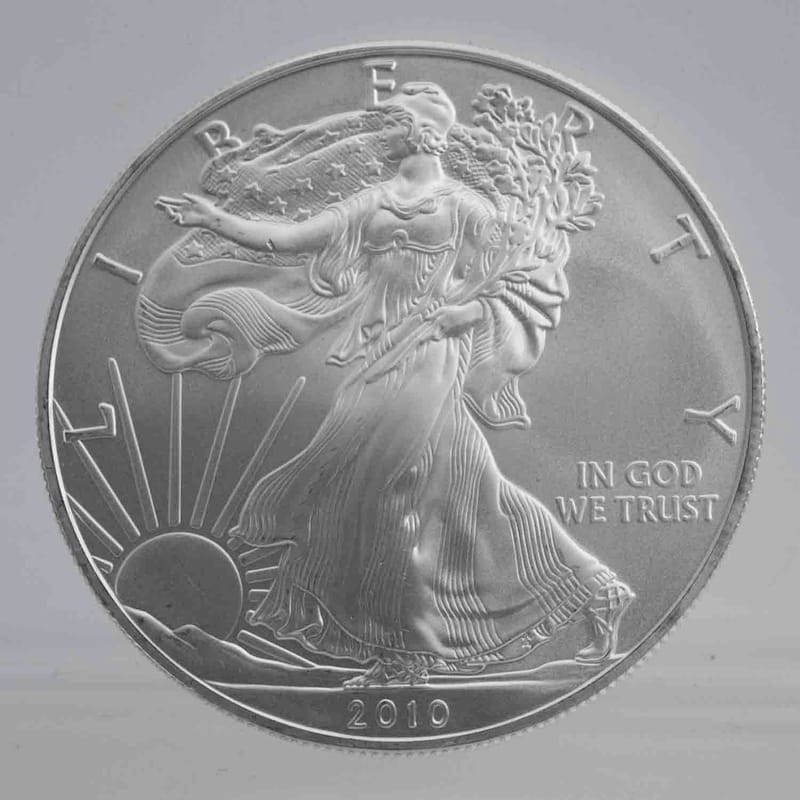
The American Silver Eagle carries a one-dollar face value and is legal tender, so people often call it a silver dollar. It is a different animal. NGC's melt table lists it at 31.101 grams of 0.999 fine silver, exactly one troy ounce, with a melt value of $65.51 on 2 September 2026, and Money Metals reports Eagles trading at $80 to $95 for much of 2026. It has never circulated, it is priced as bullion (spot plus a premium), and it holds 29 percent more silver than a Morgan or Peace dollar. The U.S. Mint's modern Morgan and Peace dollars, struck since 2021, are the same kind of product: Wikipedia lists them at 0.999 silver with 0.858 troy ounces, and their price follows spot and Mint issue price rather than the 1878-1935 grading tables above.
Frequently asked questions
How much is a 1921 silver dollar worth?
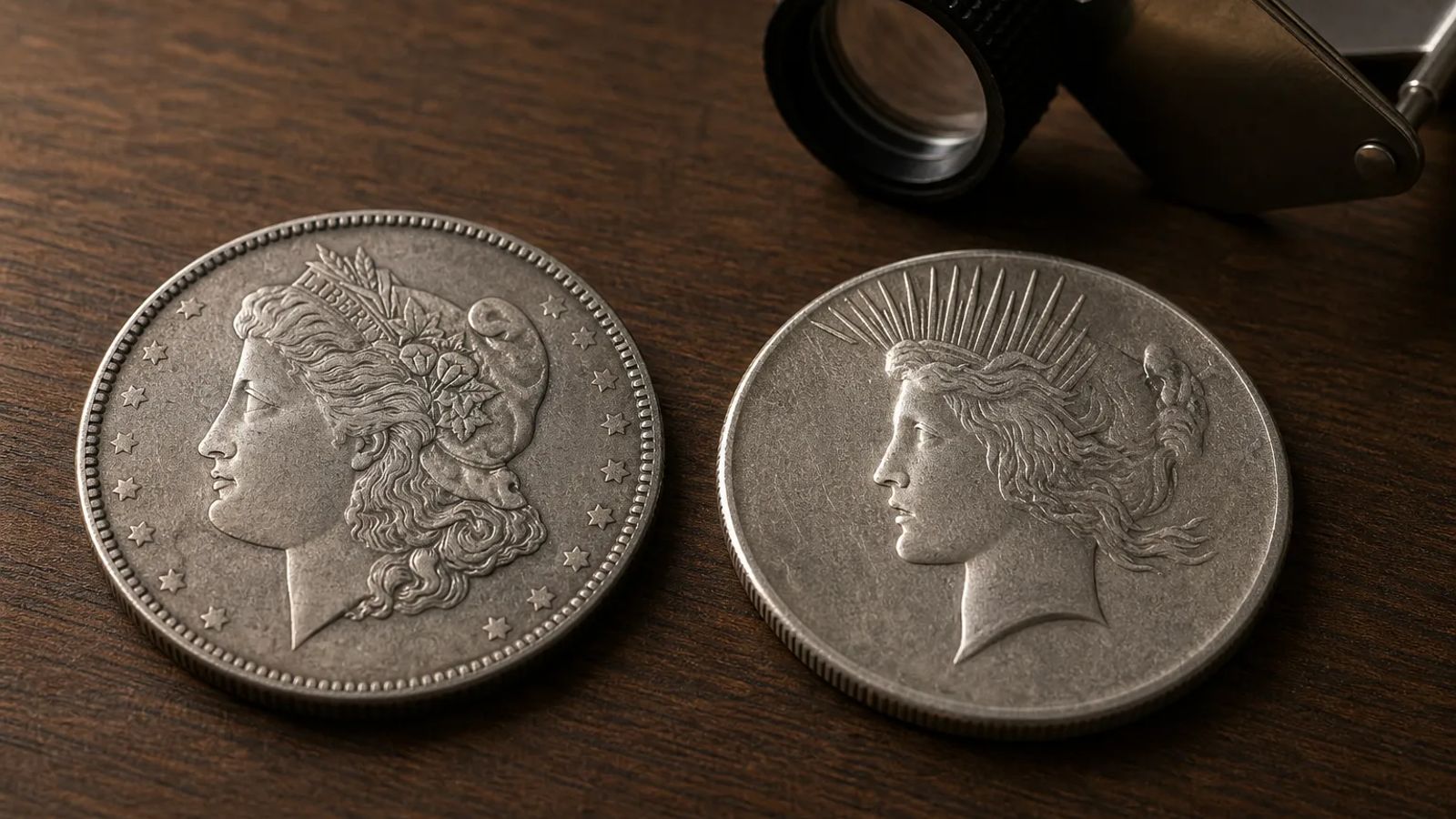
It depends on which 1921 you have. A 1921 Morgan is the most common Morgan of all, with 86.7 million struck across Philadelphia, Denver, and San Francisco; CoinStudy lists it at $60.53 in Good and $111 to $122 uncirculated (31 August 2026). A 1921 Peace dollar is the scarce first-year high-relief issue with 1,006,473 struck; CoinStudy lists $111 in Good and $537 uncirculated, and Bullion Exchanges gives $400 to $800 in MS-60 to MS-63. Peace dollars show Liberty with a spiked crown; Morgans show her with a cap and wreath.
How much is a silver dollar with no mint mark worth?
No mint mark means Philadelphia, which is the most common mint for almost every date, so a no-mint-mark coin is usually the least valuable version of its year. The exceptions are the 1895 proof-only Morgan (about $21,000 to $40,000 per CoinValues), the 1921 Peace, the 1928 Peace (from $99 in Good on CoinStudy), and the 1901 and 1893 Morgans, which are scarce in high grades.
Are all silver dollars actually silver?
No. Every dollar coin dated 1794 through 1935 is 90 percent silver (or 0.892 fine for the earliest). Eisenhower dollars from 1971 to 1978 are copper-nickel clad unless they are San Francisco collector issues, which are 40 percent silver with 0.3161 ounces. Susan B. Anthony dollars are copper-nickel clad with no silver (Wikipedia). When in doubt, weigh the coin: 26.73 grams is silver, 22.68 grams is clad.
What is the rarest silver dollar?
Among coins you might realistically own, the 1893-S Morgan (100,000 struck) and the proof-only 1895 Morgan (880 proofs) lead the list, followed by the 1889-CC. Among all U.S. dollars, the 1794 Flowing Hair, of which 1,758 were struck, holds the record; Wikipedia records the finest known selling for $10,016,875 in 2013. The 1964-D Peace dollar would beat them all, but Wikipedia notes that all 316,076 were reportedly melted and none are confirmed to exist.
How much silver is in a silver dollar?
A Morgan or Peace dollar contains 0.7734 troy ounces of pure silver (371.25 grains, 24.057 grams) in a 26.73 gram coin. A Trade dollar has slightly more at 378 grains. A 40 percent Eisenhower has 0.3161 ounces. An American Silver Eagle has exactly one ounce. Multiply by the spot price for melt value: at $65.39 that is $50.57, $51.49, $20.67, and $65.39 respectively.
Should I clean my silver dollars before selling?
No. Cleaning removes original surfaces and can cut a coin's value by 30 to 70 percent according to Xenia Coin Shop, and a grading service will refuse to assign a numeric grade to a cleaned coin. Leave toning alone. If a coin is dirty rather than tarnished, a rinse in distilled water and air drying is the most you should do.
Why did so many silver dollars get melted?
The Pittman Act of 1918 authorized melting up to 350 million silver dollars for sale to Britain, and Wikipedia records that 270,232,722 were destroyed. That is why some dates with large mintages, including the 1903-O and several Carson City issues, are far scarcer today than their original production suggests, and why the Treasury's remaining bags, including the GSA's Carson City hoard, mattered so much when they were finally released.
Sources
- Silver Price Today, Live Silver Spot Price Chart, PeerMetals (retrieved 2026-09-03)
- U.S. Silver Coin Melt Values, NGC (retrieved 2026-09-03)
- How Much Is a Silver Dollar Worth?, Money Metals Exchange (retrieved 2026-09-03)
- Cull Morgan Dollar, Common Circulated, Sell to Us price, Money Metals Exchange (retrieved 2026-09-03)
- 1921 Morgan Silver Dollar Value, CoinStudy (retrieved 2026-09-03)
- 1881 Morgan Silver Dollar Value, CoinStudy (retrieved 2026-09-03)
- 1885 Morgan Silver Dollar Value, CoinStudy (retrieved 2026-09-03)
- 1896 Morgan Silver Dollar Value, CoinStudy (retrieved 2026-09-03)
- 1889 Morgan Silver Dollar Value, CoinStudy (retrieved 2026-09-03)
- 1893 Morgan Silver Dollar Value, CoinStudy (retrieved 2026-09-03)
- 1895 Morgan Silver Dollar Value, CoinStudy (retrieved 2026-09-03)
- 1903 Morgan Silver Dollar Value, CoinStudy (retrieved 2026-09-03)
- 1921 Peace Silver Dollar Value, CoinStudy (retrieved 2026-09-03)
- 1922 Peace Silver Dollar Value, CoinStudy (retrieved 2026-09-03)
- 1923 Peace Silver Dollar Value, CoinStudy (retrieved 2026-09-03)
- 1928 Peace Silver Dollar Value, CoinStudy (retrieved 2026-09-03)
- 1934 Peace Silver Dollar Value, CoinStudy (retrieved 2026-09-03)
- The Top 25 Most Valuable U.S. Silver Dollars, CoinValues.com (retrieved 2026-09-03)
- 1921 Silver Dollar Value Guide: Morgan vs. Peace Dollars, Bullion Exchanges (retrieved 2026-09-03)
- How Much Is a 1921 Silver Dollar Worth?, Hero Bullion (retrieved 2026-09-03)
- What is the Rarest Peace Silver Dollar?, Hero Bullion (retrieved 2026-09-03)
- 1934-S Peace Dollar: History and Value, CoinWeek (retrieved 2026-09-03)
- Morgan Dollar Value Guide 2026, Xenia Coin Shop (retrieved 2026-09-03)
- What Silver Dollars Are Worth in 2026, Cash 4 Gold Trading Post (retrieved 2026-09-03)
- The History Behind Carson City Morgan Silver Dollars in GSA Holders, Atlanta Gold and Coin (retrieved 2026-09-03)
- GSA Carson City Morgan Dollar Hoard History, Southgate Coins (retrieved 2026-09-03)
- The GSA Hoard of CC-Mint Morgan Silver Dollars, CoinWeek (retrieved 2026-09-03)
- Morgan dollar, Wikipedia (retrieved 2026-09-03)
- Peace dollar, Wikipedia (retrieved 2026-09-03)
- Dollar coin (United States), Wikipedia (retrieved 2026-09-03)
- Flowing Hair dollar, Wikipedia (retrieved 2026-09-03)
- Draped Bust dollar, Wikipedia (retrieved 2026-09-03)
- Trade dollar (United States coin), Wikipedia (retrieved 2026-09-03)
- Eisenhower dollar, Wikipedia (retrieved 2026-09-03)
- VAM (Morgan and Peace dollar die varieties), Wikipedia (retrieved 2026-09-03)